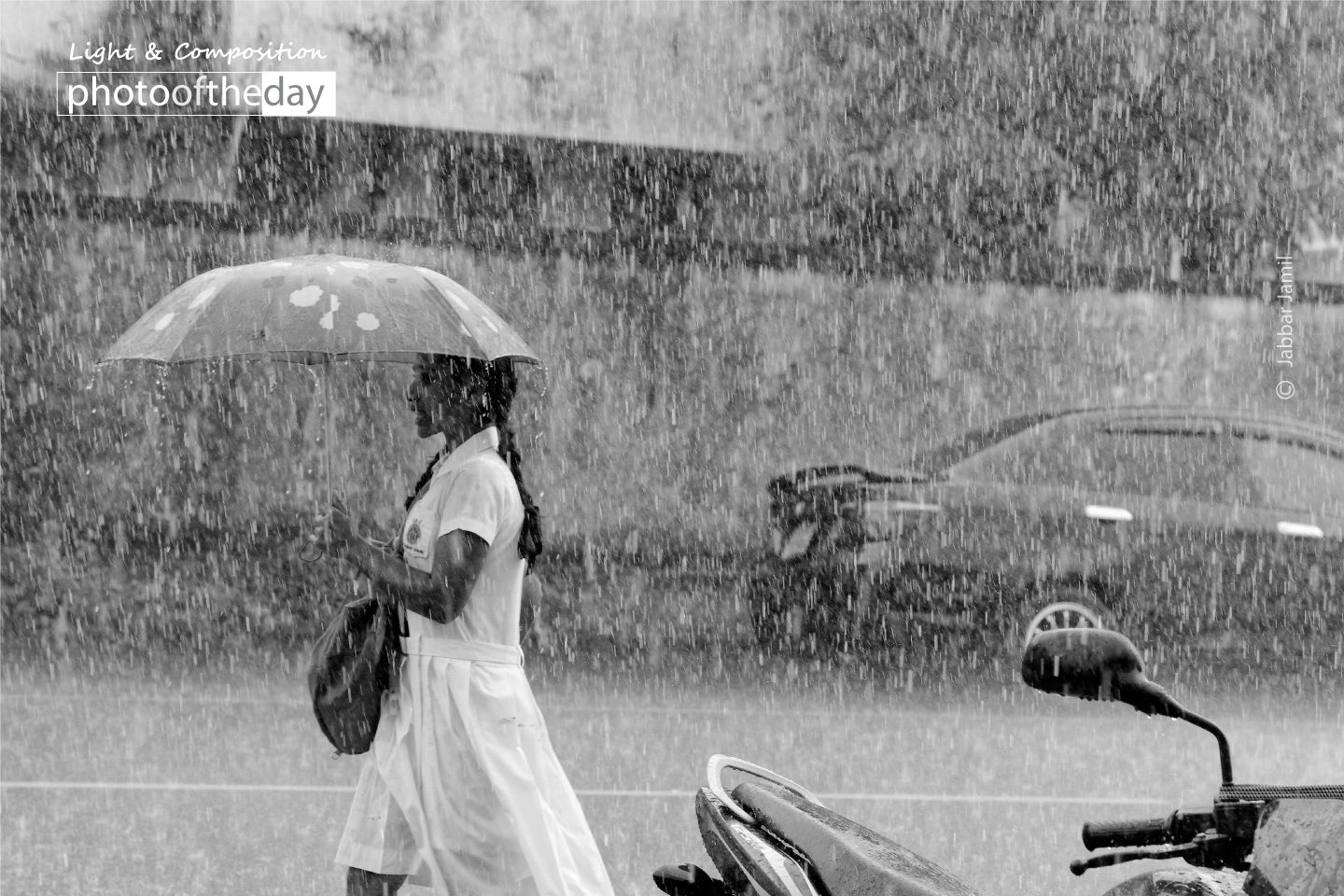
Heavy Rain by Jabbar Jamil
Captured during a sudden, intense monsoon downpour in Sri Lanka, this photograph documents a fleeting moment of atmospheric transformation. Seeking shelter in a local shop, the photographer observed as dark, heavy clouds rapidly enveloped the landscape, unleashing a torrential shower that momentarily redefined the environment. The image masterfully captures the raw energy of the storm, turning a brief weather event into a compelling visual narrative. Its award-worthy quality lies in the photographer's ability to remain observant under pressure, transforming a common, transient weather phenomenon into a striking, monochromatic study of light, shadow, and the dramatic intensity of nature.
Jabbar Jamil
Based in Sialkot, Pakistan, Jabbar Jamil is a dedicated street photographer who views the medium as a vital bridge between his personal comfort zone and the vibrant, unpredictable outside world. His work transcends mere documentation, serving as both a creative outlet and a therapeutic practice that allows him to forge meaningful human connections. By capturing the unfiltered reality of his surroundings—including scenes that are not always traditionally beautiful—Jamil provides an honest, compelling perspective on the human experience and the environments he inhabits.
Resonance Score Breakdown
Transparency Note: The resonance score (10.1/20) is calculated based on social engagement metrics collected before the award announcement.
Expert Photography Reviews · 5
The Weight of Grey
There is a specific density to the air just before a monsoon breaks, a heavy, metallic stillness that feels like a held breath.
Read the reflection →The Weight of Water
There is a moment before the sky breaks when the air turns heavy, pressing against the skin like a damp wool coat. We wait for the release. We stand in the threshold, watching the world lose its edges, turning into a gray blur of motion and sound.
Read the reflection →Reviews & Comments
Share your thoughts about this award-winning photograph. Your reviews contribute to the community engagement score.
Most monsoon shots are just wet blurs, but Jamil’s work survives because of the deliberate geometry of the shelter’s frame against the chaotic deluge. It’s a rare study of containment. I’ve seen thousands of storm photos, yet this one makes me shiver, feeling that sudden drop in temperature. The contrast between the static, dark foreground and the blurred, violent rain creates a tension that will still feel urgent in thirty years. It’s a precise, haunting observation.
Before the eye identifies the rain, a sudden chill settles in the chest. It’s the weight of that monochromatic deluge, pressing against the glass. I feel my own breath hitch, mimicking the stillness of those trapped under the eaves. When I return to this, the storm doesn’t feel like weather; it’s a persistent, internal pressure. It’s the quiet ache of being caught in something you can’t outrun, a memory that lingers long after the clouds break.
Monsoon rain often risks falling into the pictorialist traps of the nineteenth century, yet Jamil’s framing avoids that sentimentality. The way the deluge obscures the Sri Lankan landscape recalls the blurred, impressionistic motion in early Steichen prints, but with a sharper, modern edge. I’m genuinely struck by how the high-contrast highlights on the wet pavement anchor the chaos. It’s a bold, rhythmic study that finally moves beyond the tired tropes of tropical weather photography. I’m impressed.
The monsoon doesn’t just obscure the landscape; it redefines the threshold between the shop’s interior and the street. I’m struck by how the rain turns the fenestration into a blurred, translucent datum, dissolving the solid mass of the architecture into pure atmosphere. It’s a haunting reminder that buildings are vulnerable to the elements. I find myself shivering just looking at it—that sudden, damp chill of a tropical deluge is perfectly, painfully captured here.
Most critics obsess over the sharpness of the raindrops here, but I’m drawn to the smear of the horizon. It’s closer to Hiroshi Sugimoto’s long-exposure theatres than conventional landscape practice. By choosing not to resolve the individual droplets, Jamil forces us to feel the weight of the monsoon rather than just count the rain. It’s a relief to see a storm that doesn’t try to be a weather report. I’m genuinely moved by this blur.