Origami Tarts by Agnieszka Bodes
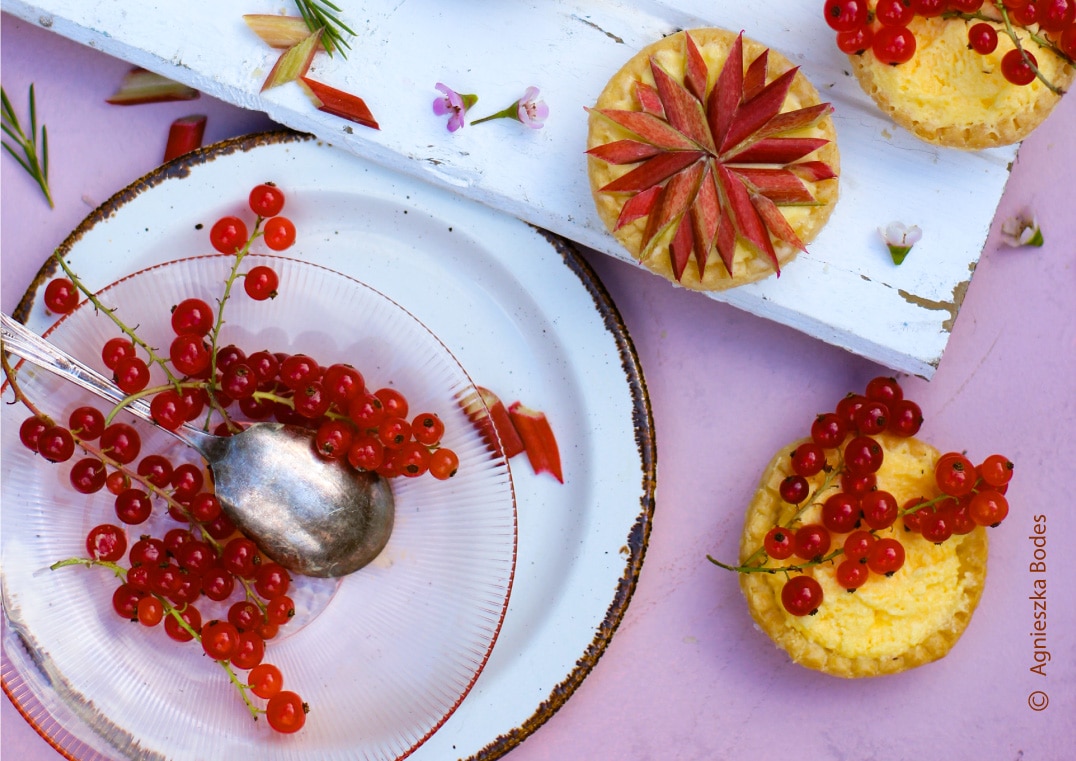
The photographer captured these homemade rhubarb tarts using a flat-lay perspective to showcase the intricate, time-consuming folds that earned them the name 'origami tarts.' By utilizing soft, natural light, the image emphasizes the delicate textures and vibrant colors of the pastry. This composition is award-worthy for its patience and precision, transforming a culinary creation into a visual narrative. The photographer’s deliberate choice of a flat-lay angle allows the viewer to appreciate the structural complexity of the tarts, turning a simple baking project into a compelling study of food styling and artistic patience.
Agnieszka Bodes
Born in Poland and currently based in Ottawa, Canada, Agnieszka Bodes transitioned from a fashion blogging background to a dedicated focus on food photography. Her work is deeply inspired by natural light and the organic beauty of her surroundings, often incorporating self-painted backdrops and vintage props to enhance her culinary narratives. Bodes views food as a complex intersection of color, texture, and memory, striving to capture the unseen details of daily life through her lens. Her creative process reflects a profound appreciation for the stories embedded within every meal.
Resonance Score Breakdown
Transparency Note: The resonance score (7.8/20) is calculated based on social engagement metrics collected before the award announcement.
Expert Photography Reviews · 6
The Geometry of Patience
There is a particular stillness that arrives with the first frost, when the air loses its moisture and becomes thin, sharp, and clarifying. It is a light that demands precision.
Read the reflection →The Geometry of Patience
We often mistake stillness for an absence of movement, forgetting that the most profound labor happens in the quietest hours. To fold a thing into shape is to offer it a new language, a way of holding space that did not exist before.
Read the reflection →Reviews & Comments
Share your thoughts about this award-winning photograph. Your reviews contribute to the community engagement score.
The structural tension in these folds is impressive, but it’s static. In sports, I’m looking for the apex of movement, the exact millisecond before gravity takes hold. Here, the pastry is already settled. It’s technically precise, sure, but it lacks the kinetic energy of a bake in progress. I’d have loved to see the dough mid-collapse or the flour mid-air. It’s beautiful, but it doesn’t make my pulse race like a finish line photo does.
Most food photography is disposable, destined for a quick scroll and immediate forgetting. Bodes’ work survives because it treats pastry as architecture. The geometric precision of those rhubarb folds, captured from directly above, forces the eye to map the structure rather than just crave the sugar. I’ve seen thousands of flat-lays, but this one’s rigid, mathematical discipline actually makes me hungry for the craft itself. It’s a rare, quiet study of patience that’ll still matter in thirty years.
The rhythm here is hypnotic. It’s a top-down sequence where the pastry folds act like frames in a film strip, locked in a perfect, geometric cadence. I’m genuinely hungry just looking at the structural tension in that rhubarb. The soft light doesn’t just illuminate; it directs the eye through the crust’s architecture. It’s a still that refuses to blink. I’d keep this frame exactly as is. Any movement would only ruin the delicious, precise silence.
One suspects the pastry was still warm when the shutter clicked. It’s a tidy bit of geometry, certainly, but I find myself wondering if the baker spent as much time waiting for the light as they did folding the dough. It’s precise, yes, but it lacks the grit of a long, cold vigil. I’ve spent hours shivering for a single frame; this feels a bit too comfortable. Still, the crust’s texture is undeniably well-rendered.
The frame operates on a grid of repeating rhomboids, where the tarts’ folded edges establish a rhythmic, geometric cadence. By aligning the pastry vertices along a subtle diagonal axis, Bodes creates a satisfying tension against the negative space. It’s a precise, calculated equilibrium. I’m genuinely captivated by how those sharp, angular shadows anchor the composition’s center of gravity. It’s not just food; it’s a perfectly solved spatial equation that balances complexity with an elegant, minimalist order.
The wooden surface beneath these tarts feels like a weathered workbench, grounding the delicate pastry in a tactile, honest reality. That soft, northern light mimics the quiet clarity of a Dutch still life, elevating flour and fruit into architecture. I’m genuinely hungry just looking at those precise, paper-thin folds. It’s not just food; it’s a portrait of the baker’s patience. By stripping away the human face, Bodes lets the environment reveal the maker’s soul entirely.