Vision by Shubham Katiya
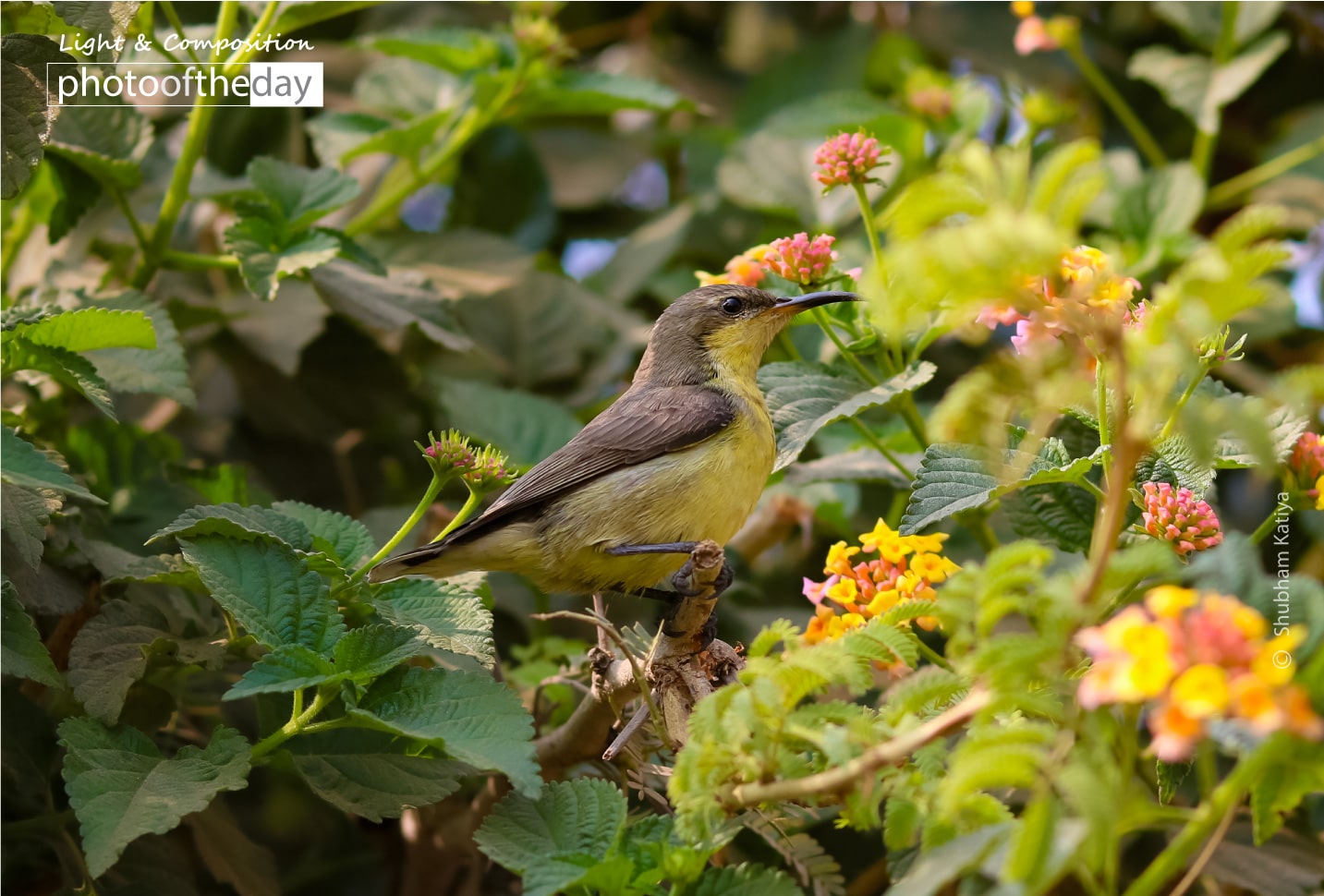
This striking wildlife portrait captures the intense, watchful gaze of a bird, highlighting the remarkable evolutionary precision of avian vision. Taken with a 50mm lens, the photograph emphasizes the creature's alertness—a vital trait for survival in a world where small birds must constantly evade predators. The photographer’s choice of a shallow depth of field isolates the subject against a soft background, drawing the viewer into the intricate textures of the bird's features. This image is award-worthy for its technical clarity and its ability to transform a fleeting moment of natural vigilance into a compelling, intimate study of wildlife.
Shubham Katiya
Based in Pune, India, Shubham Katiya is a dedicated photography enthusiast who began his creative journey in 2016. Initially working with mobile photography, he transitioned to DSLR equipment to further explore his passion for portrait and street photography. Katiya views photography as a profound metaphor for life, often drawing parallels between the ability to adjust camera settings and the finality of human experiences. As a committed learner, he continues to refine his craft, seeking to capture the nuanced realities of the world through his lens.
Resonance Score Breakdown
Transparency Note: The resonance score (11.3/20) is calculated based on social engagement metrics collected before the award announcement.
Expert Photography Reviews · 4
The Vigilant Soul
Epictetus often reminded his students that the faculty of sight is not merely a physical tool, but a means of discernment.
Read the reflection →The Weight of a Gaze
There is a profound stillness that exists only when we stop trying to name the world and simply allow it to look back at us. We often move through our days with a sense of ownership, believing we are the observers of our surroundings. Yet, there are moments when the roles shift.
Read the reflection →Reviews & Comments
Share your thoughts about this award-winning photograph. Your reviews contribute to the community engagement score.
The bird’s eye sits at the precise fulcrum of the frame, anchoring the composition against the soft, blurred void. It’s a rigid geometry that forces the viewer’s gaze into the iris. The shallow depth of field creates a necessary spatial tension, isolating the subject from the chaotic background. I’m genuinely unsettled by how the sharpness doesn’t falter. It’s a cold, calculated architecture. The frame holds because the focus is absolute. It’s a rare, disciplined success.
At f/4.0, the 50mm glass hasn’t quite reached its diffraction limit, allowing the sensor to resolve the bird’s nictitating membrane with startling clarity. The focal plane is razor-thin, isolating those iridescent feathers from the background’s creamy bokeh. It’s a precise optical capture of avian vigilance. Honestly, I’ve spent minutes just staring at the refraction within that pupil; it’s a tiny, perfect universe. It’s rare to see such a fleeting biological moment rendered with this much scientific integrity.
1/320sec at f/4.0, 50mm. It’s a standard focal length for a bird portrait, yet it’s risky. At f/4.0, the depth of field is razor-thin. Katiya hit the focus plane perfectly on the eye, which is the only place it matters. I’ve seen countless wildlife shots ruined by soft pupils, but this one holds. It’s technically sound. I’m actually impressed by the sharpness here. The gear didn’t fail, and neither did the photographer’s eye.
You got close with that 50mm, and I can feel the tension in that bird’s eye. It’s not just a sharp shot; it’s a standoff. I’ve spent enough time in the field to know that look—it’s pure, unadulterated survival. You didn’t just snap a picture; you held your breath and earned its trust for a split second. There’s something honest happening here. You waited, and the camera didn’t lie. That’s a rare, quiet victory.