Poverty Does Matter by Rishika Sahgal
While strolling through the vibrant streets of Satna, Madhya Pradesh, the photographer was struck by an unexpected and compelling scene involving a local woman and her family. Drawn to the raw authenticity of the moment, she captured this candid portrait amidst the bustle of daily life. The image serves as a poignant reflection on the human condition, elevated by the photographer's ability to find profound narrative depth in an ordinary encounter. This award-winning photograph stands out for its empathetic perspective and the genuine connection established between the subject and the lens, turning a fleeting street observation into a lasting visual story.
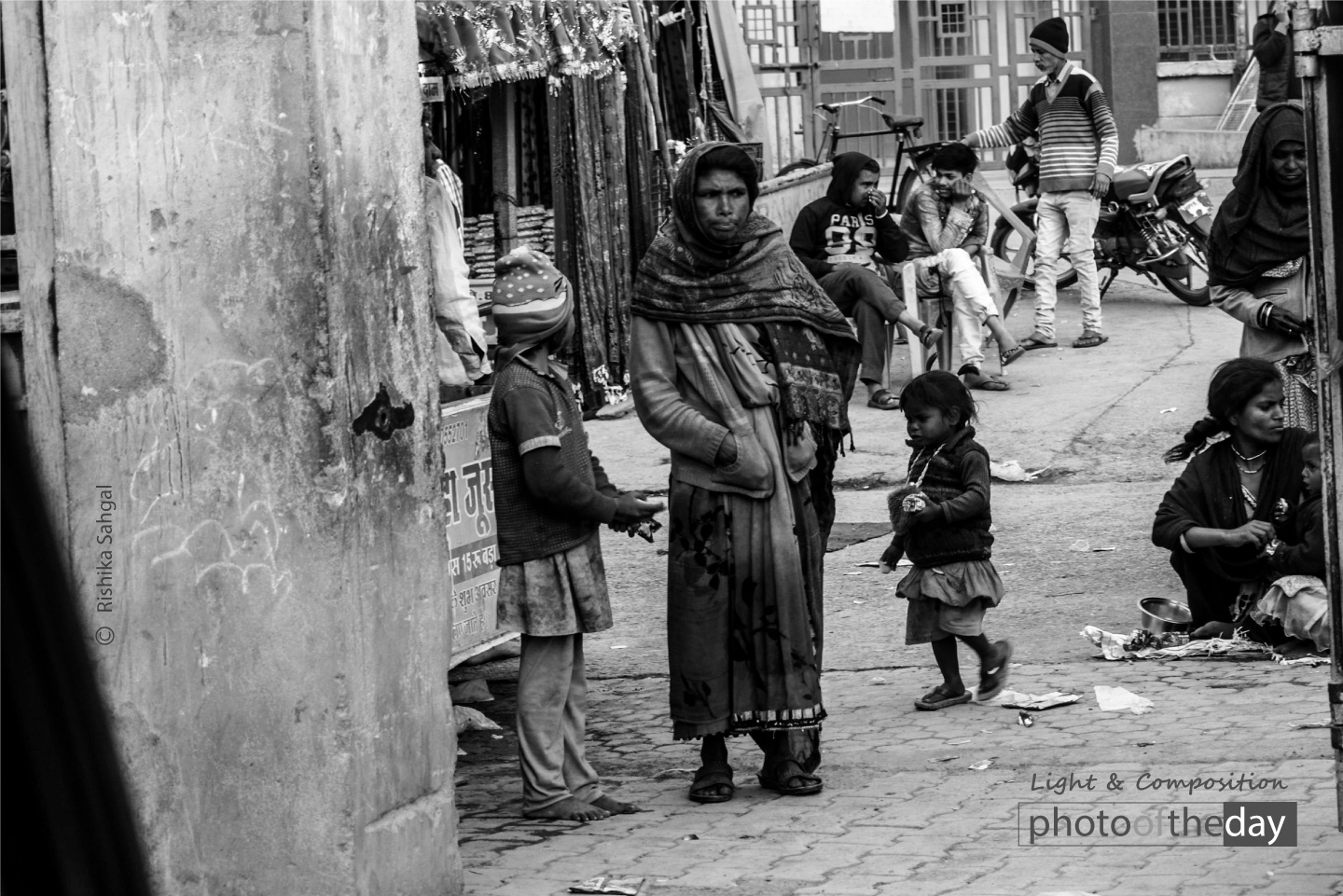
Exposure 1/60sec @ f/5.6 | ISO 280 | Focal Length 55mm
Rishika Sahgal
Born in 2002 in Kanpur, India, Rishika Sahgal is an emerging photographer and student with a deep commitment to the arts. Since acquiring her first camera at age fifteen, she has cultivated a passion for documenting nature and wildlife while exploring various photographic genres. Currently balancing her academic studies with a growing professional ambition in visual media, Sahgal actively participates in cultural and social events to refine her craft and expand her creative horizons.
Resonance Score Breakdown
Transparency Note: The resonance score (12.4/20) is calculated based on social engagement metrics collected before the award announcement.
Expert Photography Reviews · 3
The Resilience of Roots
In the arid scrublands, certain desert shrubs survive by extending their taproots deep into the earth, far beyond the reach of the surface heat, seeking the hidden moisture of a deep-seated watershed.
Read the reflection →The Weight of Unseen Hands
We often speak of history as if it were a monument of stone, something built by kings and recorded in heavy, leather-bound books.
Read the reflection →Reviews & Comments
Share your thoughts about this award-winning photograph. Your reviews contribute to the community engagement score.
The frame resolves into a rigid triangular hierarchy. The woman’s posture anchors the vertical axis, while the children’s placement creates a secondary diagonal that pulls the eye toward the negative space on the right. It’s a precise 3:2 spatial tension. I’m genuinely moved by how the geometry forces a focus on their proximity. The math isn’t just structural; it’s the very weight of their survival. It’s a perfectly solved equation of human gravity.
There’s a heavy distance here. While the composition is clean, I don’t see the invitation. Did she know she was being framed? It feels like a snatch, not a conversation. I’ve spent enough time in these streets to know that look—it’s guarded, not open. This face has a whole life in it, but I’m left wondering if the photographer ever actually met her. It’s a pretty frame, but it doesn’t feel like a gift.
Sahgal’s frame echoes the stark, unvarnished humanism of Dorothea Lange’s Migrant Mother, yet it’s stripped of the Great Depression’s formal staging. The Nikon’s 55mm compression flattens the Satna street, forcing an intimacy that feels almost intrusive. I’ve spent decades tracing this lineage of the street portrait, but the raw, unfiltered gaze of this woman caught me off guard. It’s not just documentation; it’s a quiet, piercing challenge to the viewer that feels startlingly, refreshingly modern.