The Mountains by Hamza Rauf
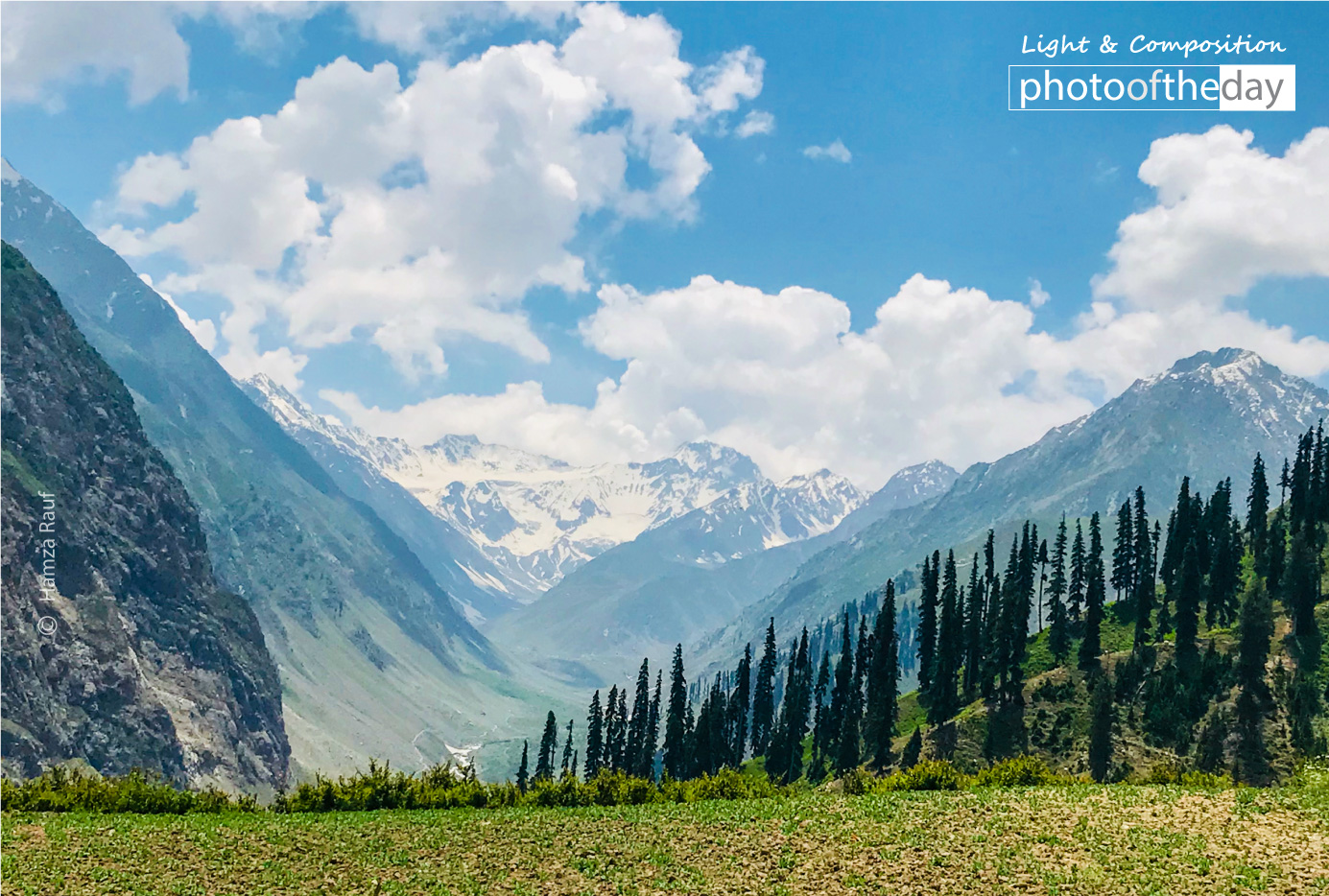
Captured during a challenging jeep journey to the remote Lalazar region of Naran, Pakistan, this image showcases the raw, imposing beauty of the northern mountain ranges. The photographer navigated treacherous terrain to reach this vantage point, where the interplay of light and elevation creates a striking natural vista. By utilizing a high shutter speed and a narrow aperture, the photographer effectively rendered the expansive landscape with remarkable clarity. This photograph is award-worthy for its ability to transform a difficult, adventurous trek into a serene and powerful visual narrative that highlights the majestic scale of the Pakistani wilderness.
Hamza Rauf
Born in Pakistan and currently based in Islamabad, Hamza Rauf is an aspiring photographer driven by an insatiable passion for global travel and the natural world. He finds his greatest inspiration in the grandeur of mountain landscapes, which serve as the primary subject for his evolving body of work. With a determined spirit and ambitious goals, Rauf is dedicated to honing his craft as he explores the most remote corners of the globe, aiming to establish himself as a prominent voice in international landscape photography.
Resonance Score Breakdown
Transparency Note: The resonance score (11.0/20) is calculated based on social engagement metrics collected before the award announcement.
Expert Photography Reviews · 8
The Weight of the Heights
Seneca once remarked that we should climb to the heights not to be seen, but to see. There is a profound humility in standing before that which does not care for our presence.
Read the reflection →The Weight of Stone
I keep a small, smooth river stone on my desk, worn perfectly round by a current I will never see. It is heavy for its size, a dense anchor of silence that reminds me how much of the world exists entirely without our permission.
Read the reflection →Reviews & Comments
Share your thoughts about this award-winning photograph. Your reviews contribute to the community engagement score.
Most landscape submissions rely on grandiosity, but this shot succeeds because it’s restrained. Of the thousands I’ve reviewed, few manage to capture such immense scale using a mobile sensor. The f/18 aperture choice is risky, yet it forces a crispness that makes the jagged ridges feel tactile. I’d hang this in my own home. It’s a quiet, enduring document of a place that doesn’t care if we’re watching, and that’s exactly why it’ll matter in thirty years.
You didn’t just climb to Lalazar; you brought the silence back with you. I can feel the thin, biting air in my own lungs looking at this. It’s not just a landscape. It’s the weight of being small in a place that doesn’t care if you’re there. And that’s the truth of it. You waited for the light to hit those peaks just right. You felt the scale, and you held it. That’s honest work.
The frame’s geometry relies on the jagged intersection of the ridgeline against the sky. It’s a rigid, triangular architecture that anchors the picture plane. The negative space above the peaks provides a necessary, cooling silence. I’m genuinely unsettled by how the narrow aperture forces such relentless, biting clarity across the entire depth of field. It doesn’t allow the eye to rest. The composition holds, but it’s a cold, clinical victory of form over atmosphere.
At f/18, the iPhone 7’s sensor hits the diffraction limit hard, yet Rauf’s capture of Lalazar remains surprisingly sharp. By pushing the focal plane to infinity, he’s forced the optics to resolve immense detail across the jagged peaks. I’m genuinely moved by how the light clings to those ridges; it’s a cold, crystalline clarity that feels almost tactile. It’s rare to see such raw, geological scale rendered with this much precision through a mobile lens.
Lalazar’s peaks don’t just rise; they breathe. I’ve felt that thin, sharp air, and Hamza’s capture brings it back—the way the light clings to the ridges, waiting for the shutter to finally yield. It’s not about the jeep’s climb, but the silence he found once the engine died. I find myself shivering, remembering how the light feels when it’s that high and cold. He didn’t just take a picture; he listened to the mountain’s long, quiet exhale.
The light hits the peaks like a sudden jump cut. It’s sharp, aggressive, and perfectly still. I’ve spent hours in editing suites chasing this exact clarity, where the frame refuses to blink. Rauf caught the mountain’s breath before the wind could ruin the take. That f/18 aperture gives it a terrifying, infinite depth. Honestly, it makes me want to pack my bags and leave the studio behind. This is the frame the editor keeps.
Lalazar’s peaks loom, yet I’m struck by the sterile precision of an iPhone 7 lens. Why does the frame flatten this rugged terrain into a postcard? It’s technically sharp, but it feels like a tourist’s trophy rather than a lived experience. Does the photographer’s arduous journey grant them ownership of this landscape, or are they just passing through? I find the lack of human presence here unsettling. Whose home are we looking at, and why does it feel empty?
The sheer scale here echoes the sublime terror found in nineteenth-century survey photography, yet it’s filtered through the clinical, hyper-sharp lens of a smartphone. It’s a strange, jarring synthesis. While the f/18 aperture forces a depth of field that feels almost too aggressive, I’m genuinely moved by how the light clings to those jagged peaks. It’s a modern, digital echo of Carleton Watkins, stripped of the wet plate’s romance but retaining that same, breathless, vertiginous awe.