Buckwheat Bread and Potato Curry by Juhi Saxena
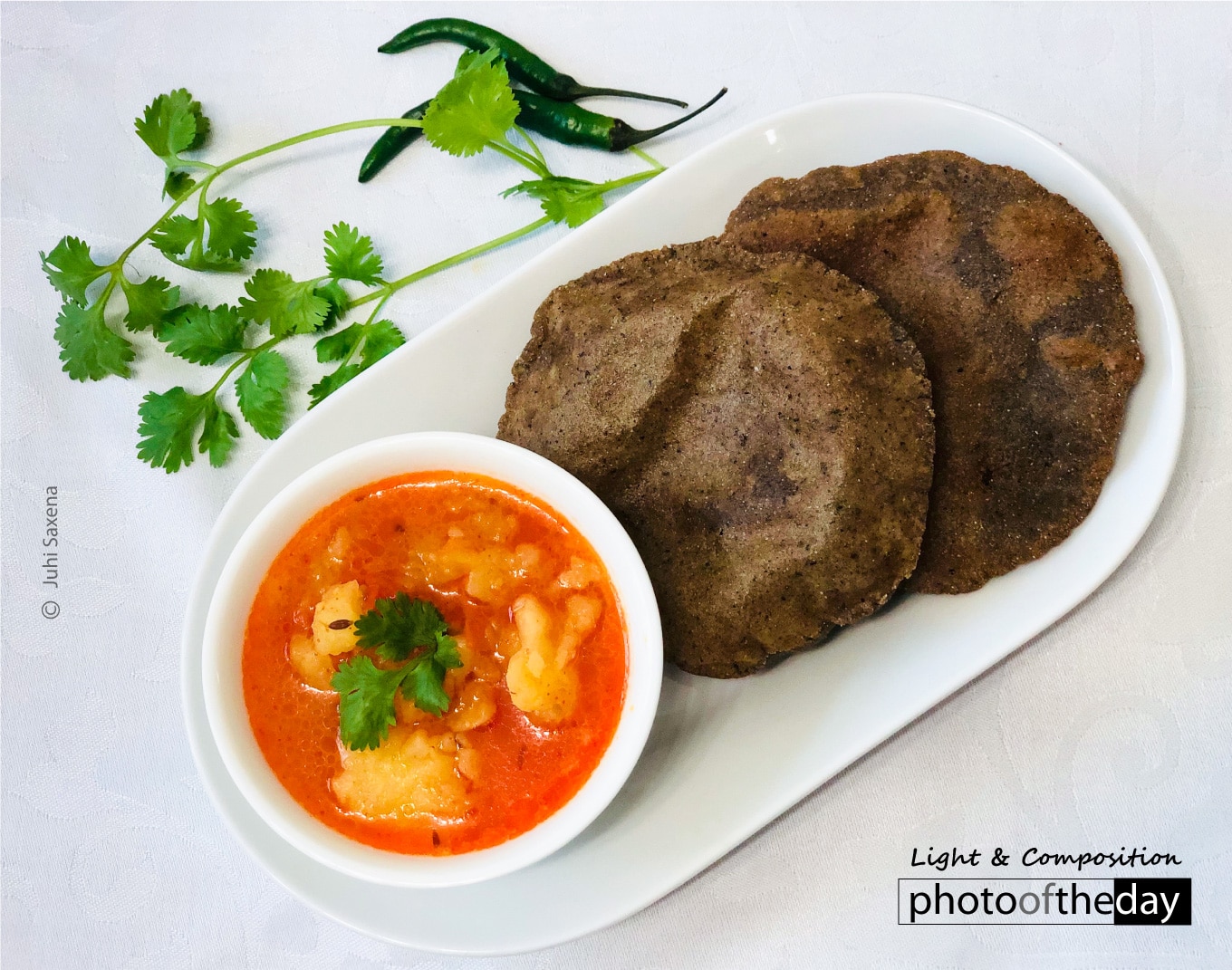
This evocative food photograph captures a traditional meal prepared during the Hindu festival of Navratri. Featuring homemade deep-fried buckwheat bread and a savory potato curry, the image highlights the cultural significance of fasting-friendly, gluten-free cuisine. The photographer utilizes natural light to emphasize the textures of the bread and the rich, comforting tones of the curry, creating an inviting atmosphere. By focusing on the authentic presentation of this commonly prepared festival dish, the image succeeds as a compelling piece of food photography that bridges the gap between culinary tradition and visual storytelling, earning recognition for its thoughtful composition.
Juhi Saxena
Originally from India and currently based in Singapore, Juhi Saxena is an emerging food photographer and dedicated blogger. After transitioning from a career in IT, she began documenting culinary creations in 2019, with a specific focus on nutritious meals for children. As a mother of two, she balances her creative pursuits with her passion for sharing cooking tips, aiming to expand her professional footprint within the food industry through her ongoing photography and blogging projects.
Resonance Score Breakdown
Transparency Note: The resonance score (11.0/20) is calculated based on social engagement metrics collected before the award announcement.
Expert Photography Reviews · 5
The Warmth of Home
I burned my toast this morning, a small, charred mistake that filled the kitchen with a sharp, bitter smell. It was frustrating, but as I scraped the blackened edges over the sink, I thought about how much of our lives are tied to the simple act of feeding ourselves.
Read the reflection →The Virtue of Sustenance
Seneca once reminded his friend Lucilius that it is not the man who has too little, but the man who craves more, who is poor. We often mistake the act of eating for a mere mechanical necessity, a mundane chore to be rushed through between the demands of the day.
Read the reflection →Reviews & Comments
Share your thoughts about this award-winning photograph. Your reviews contribute to the community engagement score.
It’s a quiet study of domestic ritual, echoing the tactile intimacy of early still-life tableaux. While the iPhone’s sensor struggles with the dynamic range of the curry’s golden hues, the composition’s top-down geometry recalls the stark, functional clarity of 1920s New Objectivity. I’m genuinely moved by how the buckwheat’s coarse, fried edges disrupt the frame’s symmetry. It’s a humble, honest conversation with tradition that doesn’t rely on artifice to make its point. I’ve rarely seen such warmth captured digitally.
The iPhone X’s 6mm focal length creates a surprisingly shallow depth of field here. At f/2.4, the diffraction limit hasn’t yet softened the buckwheat’s porous texture, allowing the sensor to resolve the crisp, blistered edges of the fried dough. I’m genuinely moved by how the light catches the curry’s oil droplets; it’s a microscopic topography of heat and spice. It’s rare to see such optical clarity from a mobile sensor. It’s simply beautiful.
You didn’t just photograph a meal; you captured the quiet rhythm of a kitchen during Navratri. I can almost smell the steam rising from that potato curry. It’s rare to see food photography that feels this lived-in, rather than staged for a magazine. You waited for the light to hit the buckwheat bread just right, and it makes me miss my own grandmother’s table. There’s something honest happening here. You’ve captured a memory, not just lunch.
The frame’s geometry relies on the circular repetition of the bowls against the rigid, linear grain of the table. It’s a precarious balance. The negative space at the top edge provides necessary relief, yet the heavy shadows threaten to collapse the picture plane. I’m genuinely unsettled by the off-center placement of the bread. It doesn’t quite resolve. The composition demands a tighter anchor, but it’s a disciplined attempt at structural order within a chaotic domestic scene.
Navratri fasting food shouldn’t look this staged. The lighting feels too calculated, almost clinical, stripping the meal of its domestic warmth. Why does the composition demand such rigid symmetry from a dish meant for spiritual devotion? I’ve eaten this bread, and it’s never this pristine. It’s a pretty picture, sure, but it feels like a hollow performance of culture. Does the lens capture the ritual, or just the aesthetic of a curated, gluten-free lifestyle?