Holganat by Shirren Lim
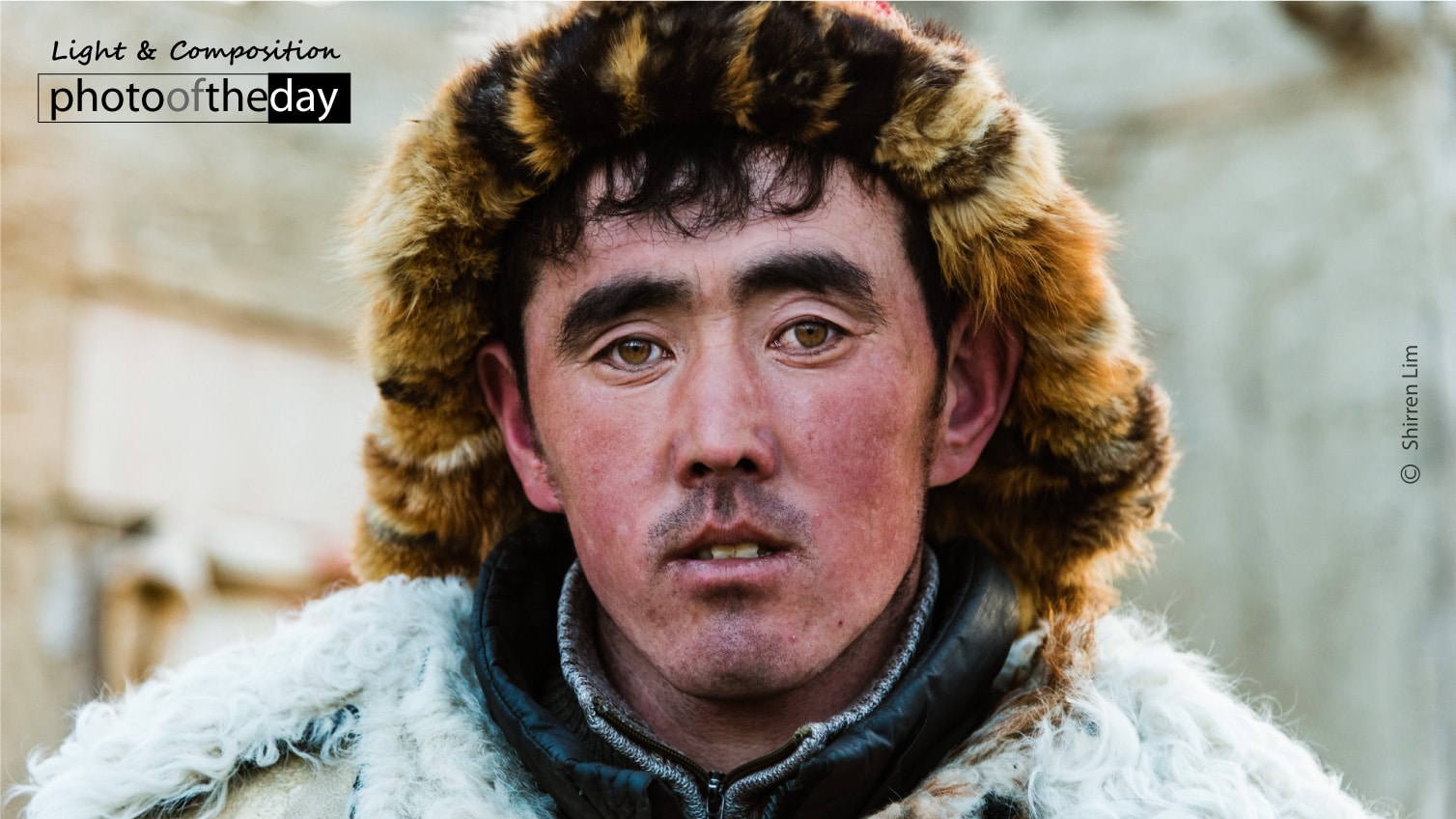
Captured in the remote expanse of Modon Hoshoo, Western Mongolia, this portrait of Holganat offers a poignant glimpse into the life of an eagle hunter’s family. The photographer was moved by the unexpected, warm welcome received from the family outside their yurt, prompting a series of intimate portraits of the men. By focusing on Holganat, the image captures a raw, sincere expression that transcends cultural boundaries. The photograph is award-worthy for its profound humanity and the photographer's ability to distill a complex, distant world into a single, deeply resonant moment of connection.
Shirren Lim
Born in Penang Island, Malaysia, in 1970, Shirren Lim is a Jakarta-based photographer who discovered her true passion for the craft in 2009. Specializing in portraiture, she is driven by a desire to capture the uncovered sincerity of human expression, often drawing inspiration from the iconic, evocative work of Steve McCurry. Her photography is characterized by an intense, earthy aesthetic and a minimalist approach that cuts directly to the heart of her subjects, aiming to document humanity in its most authentic and impactful forms.
Resonance Score Breakdown
Transparency Note: The resonance score (11.1/20) is calculated based on social engagement metrics collected before the award announcement.
Expert Photography Reviews · 6
The Root of Recognition
In the high alpine meadows, the mountain avens track the sun with a precision that defies their stillness, turning their faces across the sky to maximize every scrap of warmth before the frost returns.
Read the reflection →The Weight of a Name
I met a man named Elias in a small village in the Pyrenees who spent his entire life tending to the same three acres of terraced stone. When I asked him if he ever felt the pull of the cities, he just laughed and pointed to the callouses on his palms.
Read the reflection →Reviews & Comments
Share your thoughts about this award-winning photograph. Your reviews contribute to the community engagement score.
Before the eye identifies the fur or the weathered skin, something in the chest tightens. Holganat’s gaze doesn’t just meet yours; it anchors you. I’ve found my pulse slowing every time I return to those eyes, which hold a quiet, heavy wisdom. It’s a visceral activation of empathy. When I look at him, I feel a sudden, sharp chill—the phantom wind of the Mongolian steppe. It’s the kind of portrait that follows you into sleep.
The light in Modon Hoshoo doesn’t just fall; it waits. Shirren caught Holganat in that thin, brittle air where the sun barely touches the skin. I’ve felt that cold silence, the way it makes you hold your breath. She didn’t rush him. She let the landscape settle into his weathered face until the man and the steppe became one. It’s haunting. Looking at his eyes, I feel a sudden, sharp ache for a home I’ve never known.
The wind in Modon Hoshoo doesn’t stop. Yet, Holganat remains still. The frame isn’t crowded by the yurt or the vastness of the steppe. It’s held by his gaze. I’ve spent minutes looking at the space behind his shoulder. It’s heavy. It’s quiet. Nothing here is accidental. The empty corner is not empty. It’s the weight of the silence between us. I feel a sudden, sharp ache for that stillness. It’s rare. It’s enough.
f/2.8 at 85mm, ISO 200. A classic portrait configuration. The shallow depth of field isolates Holganat’s weathered features against the soft, non-distracting blur of the Mongolian steppe. It’s a calculated choice that forces the viewer’s eye exactly where it belongs. I’ve seen enough portraits ruined by excessive sharpness in the background. Lim’s restraint here is technically sound. It’s rare to see such precise control in the field. I actually felt the cold wind looking at this.
The vertical axis of Holganat’s face creates a perfect bisecting line, anchoring the frame against the chaotic texture of his fur collar. It’s a study in balanced mass; the heavy, dark volume of the coat perfectly offsets the negative space above his brow. I’m genuinely struck by how the diagonal tilt of his eyes resolves the tension of the composition. It’s a precise, elegant equation of human gravity that I find incredibly satisfying to map.
Holganat’s gaze pierces through the frame, but I’m left wondering about the power dynamic behind the lens. Why are we consuming this man’s ruggedness as a commodity for our aesthetic pleasure? It’s a striking portrait, yet it feels like a transaction. Does the warmth of a yurt welcome justify the extraction of his image for an international award? I feel uneasy. We’re looking at him, but is he ever truly looking back at us?