A Bark of a Pine Tree by Siew Bee Lim
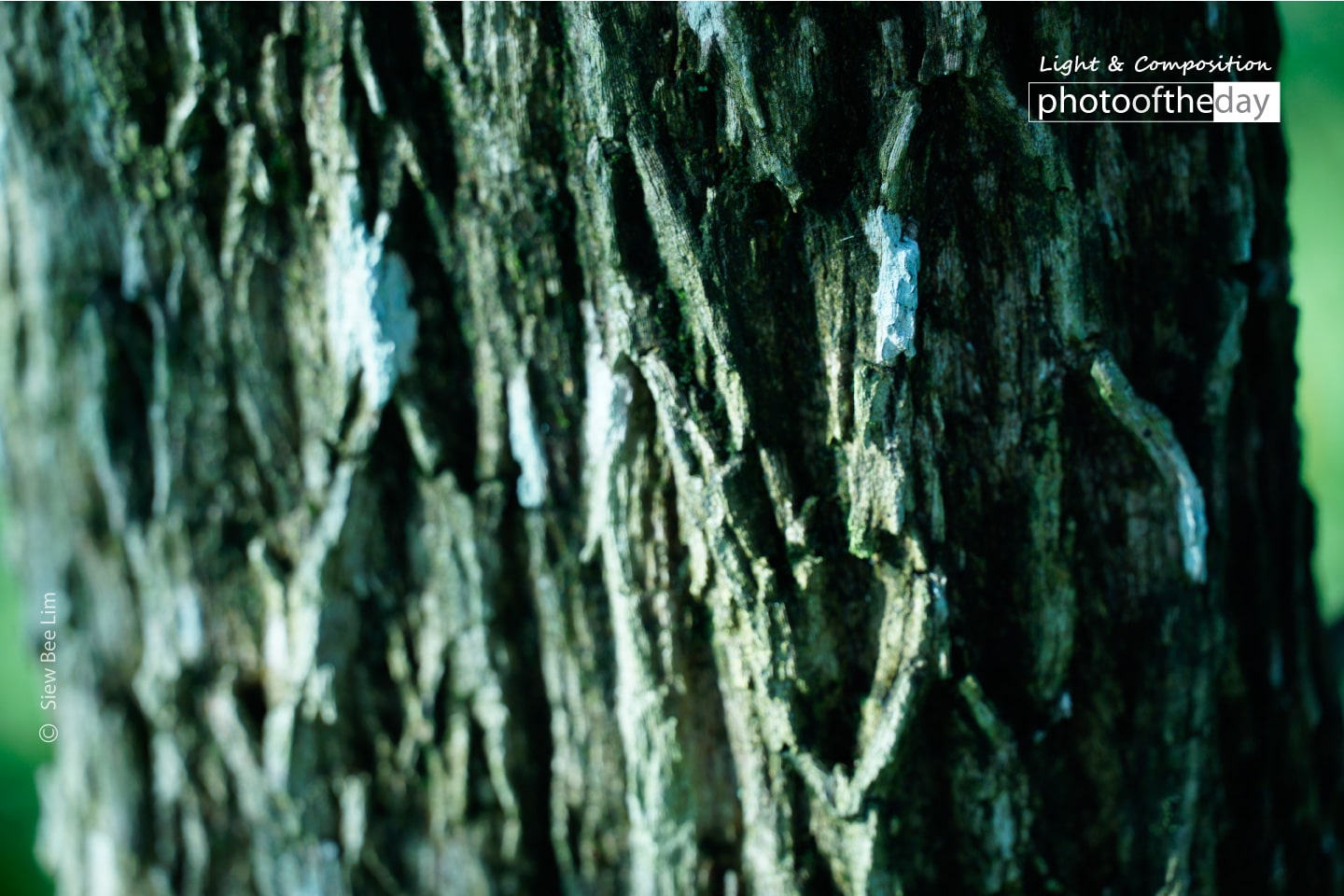
Captured on a crisp September morning in 2018, this photograph explores the intricate textures of a pine tree bark within the serene Chinese and Japanese Gardens. The photographer utilized side-lighting to accentuate the unique white spots and rugged patterns of the bark, transforming a simple natural detail into a compelling study of form and light. By focusing on the interplay between shadow and surface, the image reveals the hidden beauty of the forest floor. This work is award-worthy for its keen observational skill, turning an ordinary botanical subject into an evocative, high-contrast composition that invites viewers to appreciate the subtle complexities of nature.
Siew Bee Lim
Born in Singapore in 1965, Siew Bee Lim is a dedicated photographer who has returned to her long-held passion with a renewed commitment to formal education. After an early introduction to photography during her career as a programmer, she is now refining her artistic vision through the Light & Composition platform. Drawing inspiration from her lifelong love of literature and an appreciation for traditional Chinese painting, she seeks to overcome her self-perceived lack of drawing ability by mastering the technical and creative nuances of the lens, proving that it is never too late to pursue artistic excellence.
Resonance Score Breakdown
Transparency Note: The resonance score (11.8/20) is calculated based on social engagement metrics collected before the award announcement.
Expert Photography Reviews · 6
The Skin of Time
A tree does not hurry. It stands through the frost and the thaw, recording the years in layers of skin. We look at the surface and see only roughness, a map of survival etched in grey and brown.
Read the reflection →The Archive of the Skin
We often mistake the surface for a boundary, a wall that keeps the world out and the self in. We touch the outer layer of things—the rough stone, the weathered wood, the calloused palm—and assume we have reached the limit of what can be known.
Read the reflection →Reviews & Comments
Share your thoughts about this award-winning photograph. Your reviews contribute to the community engagement score.
The rugged fissures in this bark read like a brutalist facade, a study in tectonic mass. By isolating the surface, Lim forces us to confront the datum of the tree’s skin. The side-lighting creates a rhythmic fenestration of shadow, turning organic decay into a structural sequence. It’s a compelling abstraction of depth. I’ve spent hours staring at concrete textures, but this organic geometry genuinely makes me want to reach out and touch the grain.
1/160sec at f/5.6, ISO 200. A conservative choice. At f/5.6, the depth of field is thin, yet it’s sufficient to render the bark’s ridges without losing the texture to blur. It’s a calculated risk that pays off. I’ve spent hours staring at similar patterns, and frankly, the sharpness here is irritatingly precise. You’ve managed to isolate the geometry without over-processing. It’s technically sound. You didn’t waste light, and you didn’t miss the focus. Correct.
The tactile intensity here echoes Edward Weston’s obsession with the organic, yet it’s stripped of his formalist rigidity. By isolating these rugged fissures, Lim avoids the trap of mere botanical documentation. It’s a quiet, rhythmic study of entropy. I’ve spent decades cataloging such textures, but the way the side-lighting catches those white lichenous spots genuinely startled me. It’s a fresh, microscopic topography that feels entirely contemporary, proving there’s still poetry hidden in the bark.
Most close-ups of bark are just textures, but Siew Bee Lim’s work avoids that trap. The side-lighting doesn’t just highlight the ridges; it carves them into a topographical map of time. I’ve seen thousands of botanical studies, yet this one lingers because of the deliberate, rhythmic contrast between the white lichen and the dark fissures. It’s honest. I find myself wanting to reach out and touch it, which is the rarest reaction of all.
The bark doesn’t shout. It holds the morning light in its fissures. I’ve spent minutes tracing the white spots, finding a rhythm in the rugged geometry. It’s quiet here. My breath slows. Nothing is accidental. The empty corner isn’t empty; it’s a pause. I feel a sudden, sharp ache for the forest floor. Lim knows that restraint is the hardest discipline. She’s emptied the frame of everything but the truth of the tree.
We look at this bark and we don’t see a tree; we see a map of a long, silent life. Siew Bee Lim has listened to the wood, letting the side-light trace the scars and white spots like wrinkles on an elder’s face. It’s a portrait of endurance. I find myself wanting to touch those rugged ridges, to feel the history held within. It’s a photograph that asks to be returned to, again and again.