In the Badshahi Mosque by Jabbar Jamil
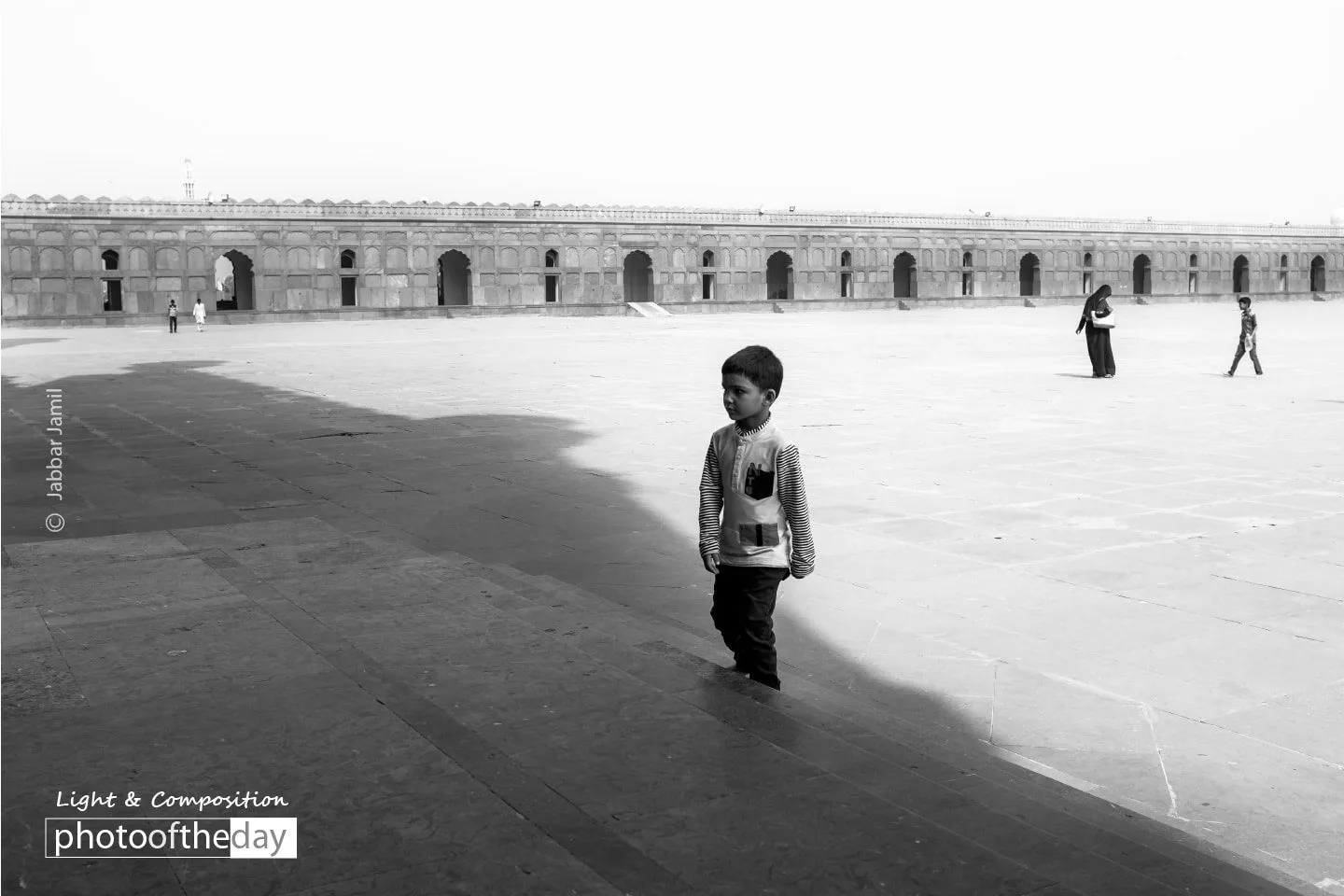
Captured at the iconic Badshahi Mosque in Lahore, this photograph masterfully utilizes the interplay of light and shadow to define the historic architecture. The photographer patiently waited amidst the bustling tourist environment, seeking the perfect moment when local children entered the frame to provide a human element to the grand setting. By focusing on the contrast between the ancient structure and the fleeting presence of his subjects, the photographer creates a compelling narrative of life within a landmark. The image stands out for its deliberate composition and the evocative, timeless quality of its black-and-white execution.
Jabbar Jamil
Based in Sialkot, Pakistan, Jabbar Jamil is a dedicated street photographer who views his craft as a vital bridge to the outside world. His work transcends simple documentation, serving as both a creative outlet and a therapeutic practice that pushes him beyond his comfort zone. By capturing the raw, unfiltered reality of his surroundings, Jamil explores the complexities of the human experience, finding beauty in the authentic and often unvarnished moments of daily life.
Resonance Score Breakdown
Transparency Note: The resonance score (12.3/20) is calculated based on social engagement metrics collected before the award announcement.
Expert Photography Reviews · 6
Echoes in the Stone
I keep a small, smooth river stone on my desk, worn down by years of being turned over in my palm. It is heavy with the weight of places I have never been, yet it feels like a familiar anchor.
Read the reflection →Echoes in the Stone
I remember sitting on the steps of a library in Florence, watching a group of schoolboys chase a stray cat across the piazza. They were loud, messy, and entirely indifferent to the centuries of marble and history towering above them.
Read the reflection →Reviews & Comments
Share your thoughts about this award-winning photograph. Your reviews contribute to the community engagement score.
The Badshahi Mosque’s geometry dictates the frame. Massive stone arches anchor the composition, creating a rigid, rhythmic grid. The children’s placement at the lower quadrant provides a necessary fulcrum, preventing the architecture from crushing the picture plane. It’s a disciplined arrangement. I’ve rarely seen such cold, structural precision hold its own against such chaotic light. The negative space doesn’t just breathe; it commands. It’s a rare instance where the human element actually respects the architecture’s weight.
Waiting for those children to enter the frame at the Badshahi Mosque feels like watching a predator stalk its prey. It’s a patient, quiet observation I deeply respect. I’ve spent weeks in blinds waiting for a bird to land, and I recognize that stillness here. It wasn’t extracted; it was earned through silence. I find myself breathing easier knowing the photographer didn’t force the moment, but simply let the architecture and life coexist.
The stone here doesn’t just hold history; it breathes. Jabbar waited for the sun to carve those deep, velvet shadows against the red sandstone, listening until the architecture finally exhaled. When those children stepped into the frame, they weren’t just subjects—they were a heartbeat in the silence. I’ve stood in such places, feeling the weight of centuries. It’s humbling. He didn’t rush the light; he let the mosque reveal its own quiet, sacred geometry.
Before the eye identifies the sandstone arches, something in the chest tightens. It’s the silence of the Badshahi Mosque, captured in that held-breath moment before the children’s movement breaks the stillness. I feel a sudden, sharp ache for the Lahore sun on my own skin. When I return to this, the architecture feels less like stone and more like a vessel for the fleeting, restless energy of those small, blurred lives passing through.
Stone arches stretch into shadow. The children are small, mere ink blots against the vast, sun-bleached floor. It’s quiet here. I’ve spent minutes just breathing in the expanse of that floor. It doesn’t demand attention. It simply waits. Nothing here is accidental. The empty corner is not empty. It holds the weight of centuries. I feel a sudden, sharp ache for the stillness they’ve found. It’s a rare, beautiful restraint.
The light hits the sandstone, and the frame breathes. It’s a wide shot, but the children are the heartbeat. They’re moving through the Badshahi, and Jamil caught them right before the cut. I love the way the shadows stretch, pulling the architecture into a rhythm that feels like a silent film. It’s a perfect edit. He didn’t just wait for the light; he waited for the story to stop moving. It’s a frame the editor keeps.