Not a Fight by Jabbar Jamil
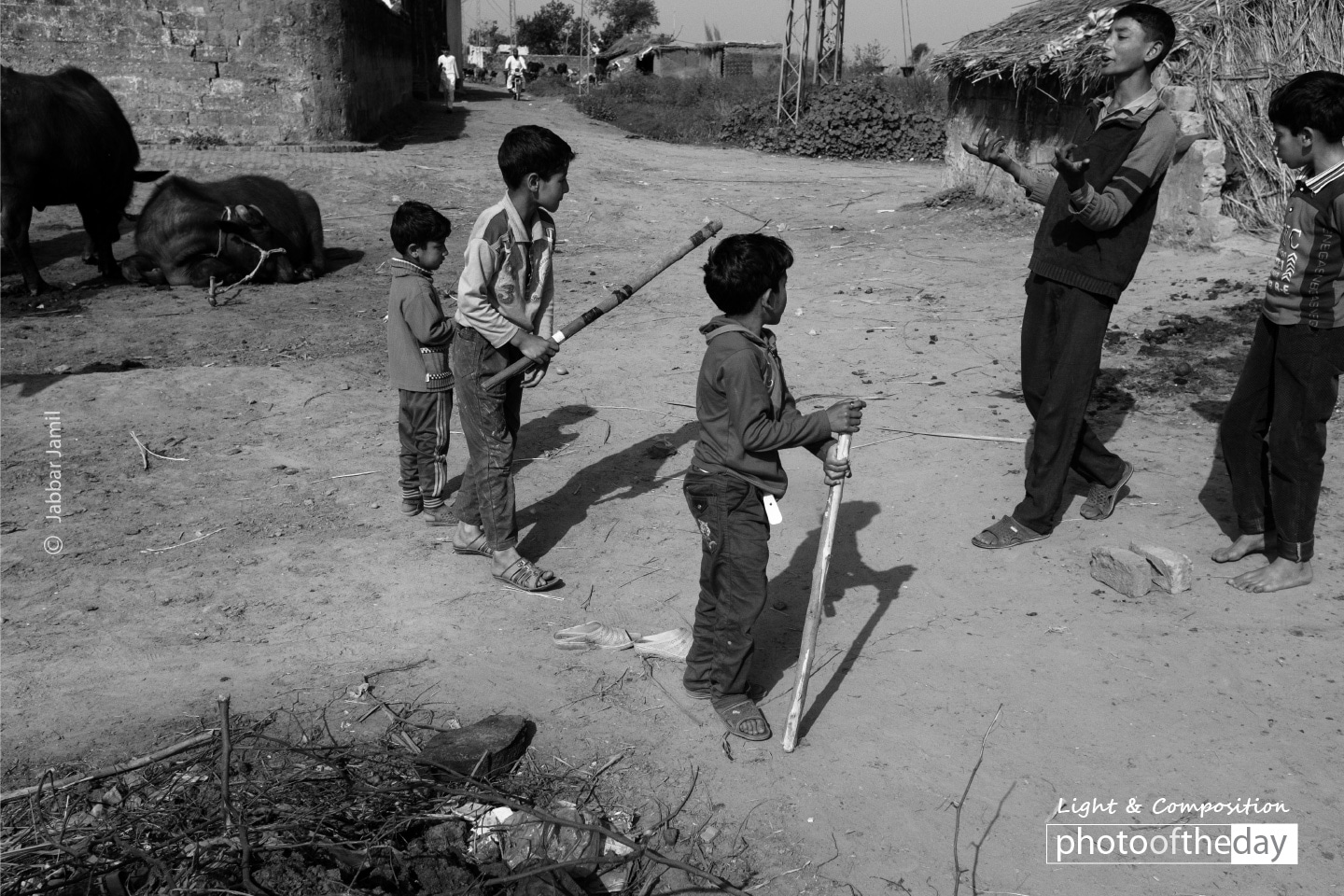
Captured in the streets of Sialkot, this evocative image presents a fleeting moment of childhood play that appears, at first glance, to be a scene of conflict. By choosing a monochromatic palette, the photographer strips away the distraction of color, focusing the viewer’s attention entirely on the raw energy and dynamic interaction of the subjects. This photograph is award-worthy for its ability to transform an ordinary, misinterpreted moment into a compelling narrative, demonstrating the photographer's keen eye for human connection and the power of street photography to reveal hidden stories within the everyday.
Jabbar Jamil
Based in Sialkot, Pakistan, Jabbar Jamil is a dedicated street photographer who views his craft as a vital bridge between himself and the outside world. Through his lens, he seeks to step beyond his comfort zone, using photography both as a creative outlet and a therapeutic means to process the complexities of his surroundings. His work is defined by an unflinching commitment to documenting reality, capturing the authentic, often unvarnished moments of life that he encounters on the street.
Resonance Score Breakdown
Transparency Note: The resonance score (12.2/20) is calculated based on social engagement metrics collected before the award announcement.
Expert Photography Reviews · 4
The Geometry of Play
When a young sapling grows in the shade of a dense canopy, it often leans at an improbable angle, stretching its limbs toward a sliver of light. This is not a struggle against the forest, but a desperate, beautiful negotiation for existence.
Read the reflection →The Play of Shadows
Seneca once observed that we are often frightened by the appearance of things rather than the things themselves. We see a gesture and immediately assign it a history of malice, or we witness a sudden movement and assume it is the precursor to a collapse.
Read the reflection →Reviews & Comments
Share your thoughts about this award-winning photograph. Your reviews contribute to the community engagement score.
Watching these children grapple in the dust, I’m struck by how much they don’t notice the lens. It’s a rare, unforced intimacy. In my field, we’re often guilty of crowding the subject until the animal’s behavior shifts into defense. Here, the photographer has clearly stayed invisible, letting the energy remain raw and authentic. It’s refreshing to see such restraint. I’d rather have this honest, messy scrap than a thousand perfectly staged, sterile portraits. It’s earned.
The shutter snaps, and the kinetic energy of Sialkot hits you like a jump cut. It’s a blur of limbs that feels like a brawl, but the eyes tell the truth. I’ve watched this frame for ten minutes, and I’m still grinning at the sheer joy trapped in the dust. The motion blur is perfect; it’s the exact frame an editor keeps to anchor the scene. It doesn’t need color. It just needs this rhythm.
The motion blur here isn’t a failure of shutter speed; it’s a deliberate fracturing of the Sialkot street. By refusing to freeze the boys, Jamil captures the kinetic chaos of play rather than a sterile document. I’m genuinely thrilled by how the smear of limbs dissolves the boundary between aggression and affection. It’s closer to the raw energy of Francis Bacon than conventional street photography. Why resolve the faces when the blur tells the truth?
Before the eye identifies the boys, something in the chest tightens. It’s the sudden, sharp activation of a fight-or-flight response, triggered by the blur of limbs. I’ve felt that same jolt in my own childhood. When you return to this, the aggression dissolves into the kinetic joy of play. It’s a beautiful trick of the mind. I find myself holding my breath, waiting for the dust to settle, even though I know they’re just friends.