White-bellied Sea Eagle by Saniar Rahman Rahul
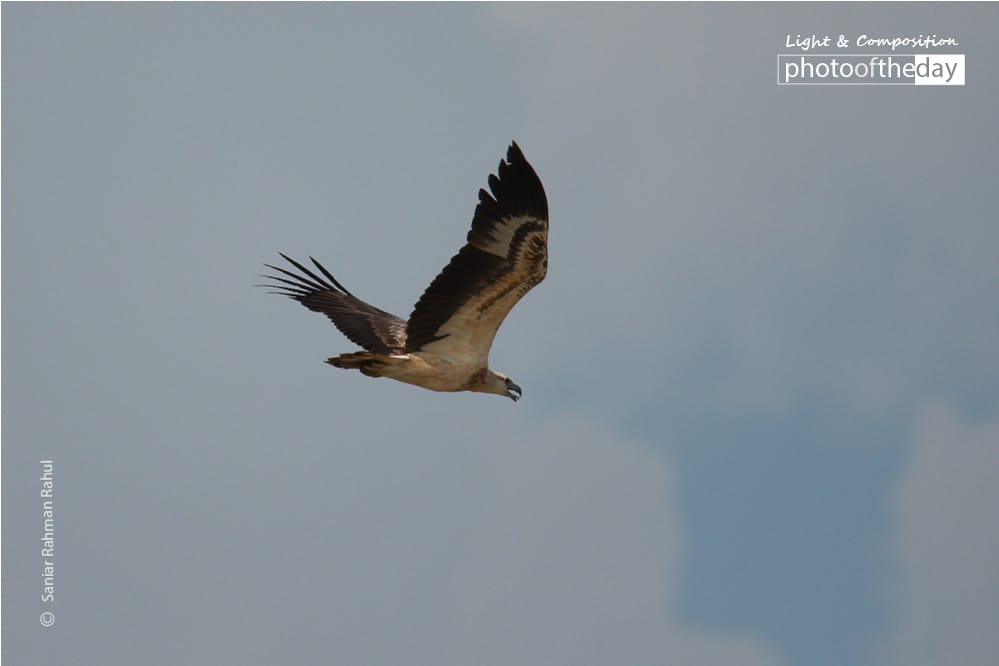
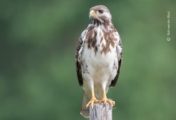
Captured in the lush, coastal wilderness of the Sundarbans, this photograph showcases the majestic White-bellied Sea Eagle in its natural habitat. The image highlights the bird's powerful presence as a diurnal predator, perfectly adapted to the waterways of the Bay of Bengal. By utilizing a long focal length, the photographer successfully isolated the eagle against the dense, verdant backdrop, emphasizing its sharp features and regal posture. This award-winning shot is a testament to the patience and technical precision required for wildlife photography, capturing a fleeting moment of stillness in the life of one of nature’s most skilled hunters.
Exposure 1/1600sec @ f/6.3 | ISO 250 | Focal Length 600mm
Saniar Rahman Rahul
Based in Dhaka, Bangladesh, Saniar Rahman Rahul is a distinguished photographer and Art Director at Grey Worldwide. His creative journey began in childhood, inspired by his father’s photography, and was later refined through a successful career in graphic design and advertising. Since rediscovering his passion for the lens in 1997, Rahul has become a celebrated figure in the industry, earning recognition as an early winner of the Photo of the Month Award. His work reflects a deep-seated artistic sensibility honed by years of professional experience in the global advertising sector.
Resonance Score Breakdown
Transparency Note: The resonance score (11.2/20) is calculated based on social engagement metrics collected before the award announcement.
Expert Photography Reviews · 7
The Weight of the Sky
I remember sitting on a wooden jetty in the Sundarbans, watching a boatman named Rafiq mend his nets. He didn't look up when the birds circled overhead; he just kept his rhythm, a steady, practiced movement that seemed to match the tide.
Read the reflection →The Architecture of the Sky
To be suspended is to understand the gravity of the earth without being tethered to it. We spend our lives measuring the weight of our own shadows, forgetting that there is a vast, unmapped geography above the canopy where the air itself becomes a kind of architecture.
Read the reflection →Reviews & Comments
Share your thoughts about this award-winning photograph. Your reviews contribute to the community engagement score.
At 600mm, the diffraction limit is a constant battle, yet here, the focal plane holds the eagle’s iris with startling, microscopic clarity. You can see the light refracting off the keratin of the beak—it’s a crystalline precision that makes my breath hitch. The bokeh, a function of that f/6.3 aperture, renders the Sundarbans’ dense foliage into a soft, chromatic wash. It’s rare to see a lens resolve such biological intensity; it’s truly a beautiful, optical triumph.
The shutter snaps, and the Sundarbans freeze. It’s a high-speed tracking shot that suddenly locks onto the eagle’s gaze. I’m breathless watching that focus hold; it’s sharp enough to cut glass. The 600mm compression flattens the verdant chaos into a stage, turning the bird into the lead actor. It’s a perfect, silent beat in a frantic hunt. I’d have killed for this frame on my last set. The editor wouldn’t dare cut away from this.
The Sundarbans air is heavy, thick with the scent of salt and ancient mud. Rahul waited here, suspended in the humidity, until the eagle finally claimed its space. I’ve felt that same stillness, where the shutter release feels like an intrusion on the silence. The bird’s gaze is piercing, yet it’s the verdant, blurred depth behind it that truly humbles me. It’s not just a portrait; it’s a quiet communion with the wild.
The eagle stares, but what does it see? Rahul isolates this predator against a blurred, verdant smear, stripping away the Sundarbans’ complex reality. It’s technically sharp, yet it feels hollow. Why do we insist on framing wildlife as regal icons rather than inhabitants of a fragile, encroaching ecosystem? I’ve seen enough of these isolated trophies. They don’t tell me about the bird; they tell me about our desire to possess nature through a lens. Does this distance actually serve conservation?
The Sundarbans are a labyrinth of encroaching gloom, yet here, the eagle is trapped in a flat, relentless clarity. It’s a bird defined by its plumage, not its hunger. I’ve spent hours watching the tide, and I find this lack of depth unsettling. Where is the darkness that defines the predator? Without the weight of shadow, the eagle doesn’t hunt; it merely exists. It’s a beautiful specimen, sure, but it’s a photograph afraid of its own silence.
The eagle’s placement within the frame creates a precarious, off-center equilibrium. It’s a rigid geometry that forces the eye toward the bird’s piercing gaze. The dense, verdant background provides necessary spatial tension, preventing the subject from drifting into mere documentation. I’ve grown weary of wildlife shots that lack this structural discipline, but here, the composition holds. It’s a cold, precise arrangement of mass that finally demands respect. The frame doesn’t fail; it commands.
Of the thousands of wildlife frames I’ve reviewed, most are just sharp portraits. What separates this from the pack is the eagle’s gaze; it’s not looking at the lens, but through the Sundarbans. I felt a genuine shiver seeing that intensity. The shallow depth of field isolates the bird perfectly, forcing us to confront its predatory focus. It’ll endure because it captures a wild, unyielding intelligence that makes me glad this creature still owns those mangroves.