Le Crêt Braffaz Route des Confins by Ola Cedell
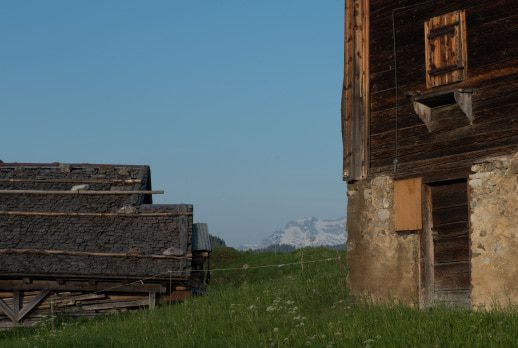
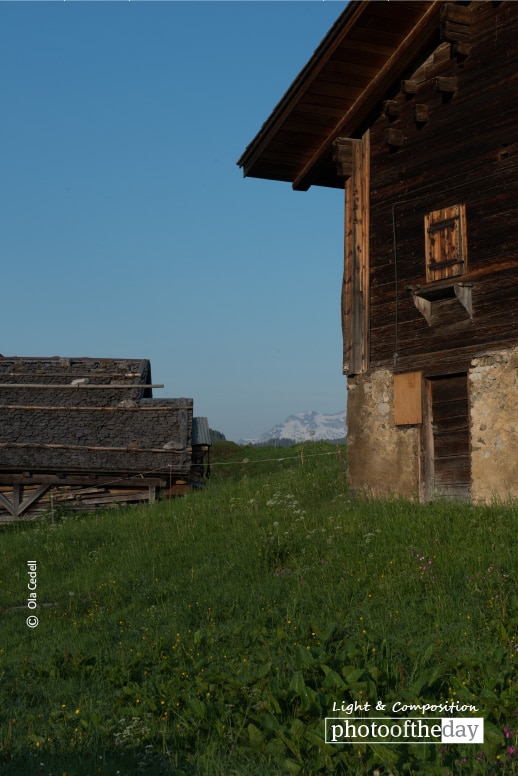
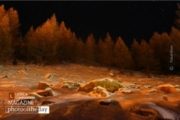
Captured along the scenic Route des Confins in the French Alps, this photograph showcases the serene beauty of Le Crêt Braffaz. The photographer utilized a 70mm focal length to compress the landscape, emphasizing the dramatic scale of the mountain terrain against the crisp alpine atmosphere. By carefully balancing the exposure, the image reveals the intricate textures of the slopes and the vibrant character of this sought-after neighborhood. This work is award-worthy for its ability to transform a familiar travel destination into a compelling visual narrative, highlighting the quiet, majestic allure of the Haute-Savoie region through precise technical execution.
Exposure 1/320sec @ f/11 | ISO 200 | Focal Length 70mm
Ola Cedell
Born in southern Sweden in 1969, Ola Cedell has cultivated a diverse international perspective through his time living in Australia and Germany before returning to his home country. Balancing a professional engineering career with a long-standing passion for photography, he specializes in landscape and food imagery, often contributing to the catering industry. His creative vision is deeply influenced by the natural beauty of southern Sweden and the dramatic landscapes of the French Alps and Provence, which serve as primary inspirations for his evocative photographic work.
Resonance Score Breakdown
Transparency Note: The resonance score (11.5/20) is calculated based on social engagement metrics collected before the award announcement.
Expert Photography Reviews · 8
The Sharp Breath of Winter
The air at high altitude has a specific, metallic bite. It tastes of nothing and everything—a cold, thin sharpness that stings the back of the throat and makes the lungs expand until they ache.
Read the reflection →The Weight of the Silence
I remember a morning in the high country when the air was so thin it felt like breathing glass. I was walking with a guide named Elias, a man who spoke only when the wind died down.
Read the reflection →Reviews & Comments
Share your thoughts about this award-winning photograph. Your reviews contribute to the community engagement score.
You’ve captured the scale of the Haute-Savoie, but I’m looking for the pulse of the place. It’s technically sharp, sure, but where’s the life? I’ve spent enough time in those mountains to know they aren’t just stone and snow; they’re lived in. Because you chose this compression, the peaks feel distant, almost clinical. I want to feel the cold air on your face. You’ve got the technical skill, but don’t forget to include the soul.
The frame operates on a rigorous triangular tension. Cedell’s 70mm compression forces the mountain’s jagged ridge into a sharp diagonal vector, bisecting the negative space of the sky at a precise 40-degree angle. It’s a masterclass in spatial equilibrium. I’m genuinely struck by how the shadows anchor the lower quadrant, balancing the mass of the peaks. It’s not just a landscape; it’s a perfectly solved equation of light, weight, and geometric proportion. I love the math here.
The mountain slope doesn’t demand attention. It waits. The compression of the 70mm lens flattens the distance, turning stone into a quiet wall. I find myself holding my breath. It’s the weight of the snow against the rock. Nothing here is accidental. The empty corner is not empty. It’s a pause. A rare, cold stillness that makes me want to leave the gallery and just walk into the white. It’s enough.
We look at these slopes and we don’t just see rock; we see a landscape that has held its breath for centuries. It’s a portrait of the earth itself, listening to the silence of the Haute-Savoie. When I gaze at these compressed textures, I feel a sudden, sharp ache for the quietude of the mountains. It’s a photograph that asks to be returned to, because it’s finally learned how to be still.
At f/11, the D800’s sensor sits right at the edge of the diffraction limit, yet the 70mm focal plane holds the alpine textures with startling clarity. I’m genuinely moved by how the light renders the crags; it’s a crisp, clinical precision that my own eyes simply can’t replicate. The compression here doesn’t just flatten the scene—it forces the mountain’s geological history into a singular, sharp focus. It’s a rare, beautiful marriage of glass and granite.
Most alpine photography is just postcard filler, but this frame avoids that trap. By choosing 70mm, Cedell forces the mountain’s jagged geometry to collide with the valley’s stillness. It’s the tension in that compression that makes me stop. I’ve seen thousands of shots of La Clusaz, but this one captures the actual weight of the rock. It’s a quiet, enduring study of scale that will still feel honest when the tourists have long since gone home.
Compression is a dangerous tool; it flattens the alpine slope into a mere backdrop, stripping away the vital threshold between the built form and the terrain. I’m struck by how the fenestration loses its rhythm here, becoming just another texture against the mountain’s mass. It’s a clean capture, sure, but it misses the cold, biting air I’ve felt in La Clusaz. Architecture isn’t a flat postcard; it’s the movement through this steep, unforgiving landscape.
The 70mm compression forces the mountain mass against the foreground slope, creating a rigid, claustrophobic geometry. It’s a precarious balance. The negative space above the ridge doesn’t offer relief; it’s an oppressive void that anchors the frame. I’ve rarely seen such aggressive spatial tension in alpine work. It’s cold, calculated, and entirely devoid of sentiment. The structure holds, though it’s almost too tight for comfort. It’s a brutal, necessary architecture of the Haute-Savoie.