Antique Islamic Calligraphy by Afnan Naser Chowdhury
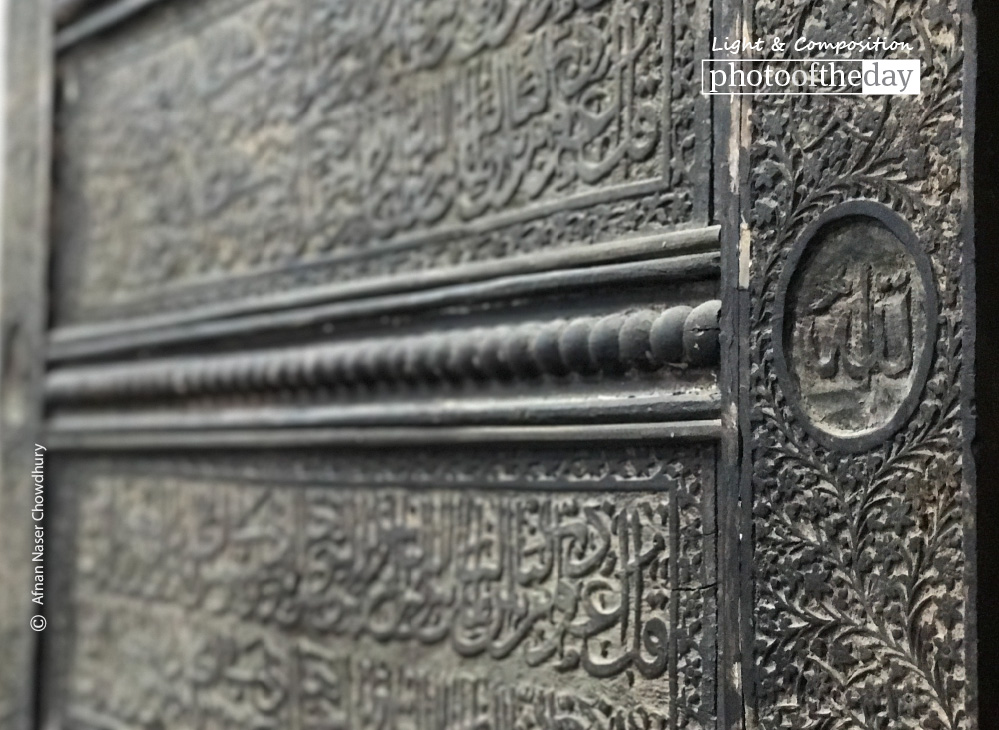
Captured within the quiet confines of a Jordanian ceramic workshop, this photograph highlights the intricate beauty of antique Islamic calligraphy. The photographer utilized a 70mm focal length at f/2.8 to isolate the delicate, rhythmic strokes of the script against the textured ceramic surface, creating a shallow depth of field that emphasizes the artistry of the writing. By focusing on the historical connection between the Quran and the visual tradition of calligraphy, the image serves as a bridge between ancient spiritual devotion and modern artistic observation. Its award-worthy quality lies in the harmonious balance between the subject's cultural depth and the technical precision of the composition.
Afnan Naser Chowdhury
Based in Virginia, USA, Afnan Naser Chowdhury discovered his passion for photography while pursuing his Bachelor’s degree at North South University. With a lifelong fascination for nature and painting, he brings a keen artistic eye to his work, often blending technical curiosity with a deep appreciation for cultural subjects. His photography reflects a desire to explore the intersection of tradition and modern life, and he remains an active contributor to the global photography community.
Resonance Score Breakdown
Transparency Note: The resonance score (11.7/20) is calculated based on social engagement metrics collected before the award announcement.
Expert Photography Reviews · 5
The Ink of Eternity
Can a human hand ever truly capture the breath of the divine, or are we merely tracing the shadows of a language that existed before we were born?
Read the reflection →The Ink of Breath
The smell of dry earth after a long drought always brings me back to the feeling of grit under my fingernails. It is a sharp, mineral scent that settles at the back of the throat, tasting faintly of iron and ancient dust.
Read the reflection →Reviews & Comments
Share your thoughts about this award-winning photograph. Your reviews contribute to the community engagement score.
Most entries in this category rely on heavy-handed lighting to force reverence. I’ve seen thousands of them, and they’re usually forgotten by morning. What separates this is the restraint; the shallow depth of field doesn’t just isolate the script, it forces you to lean in, as if reading a secret. It’s quiet, and honestly, it made me hold my breath. In thirty years, this focus on the tactile weight of history will still feel essential.
One wonders how many hours were spent in that Jordanian workshop before the dust settled just so. It’s a quiet, disciplined study. At f/2.8, the focus is razor-thin, demanding a steady hand and a patient eye. I’ve spent enough time in workshops to know the air is rarely this still. It’s a rare pleasure to see someone actually commit to the texture of the craft. You didn’t just find this; you earned it.
At f/2.8, the 70mm focal plane is razor-thin, isolating the ink’s topography against the ceramic’s porous grain. It’s a delicate dance with the diffraction limit; the lens resolves the pigment’s physical relief with startling clarity. I’m genuinely moved by how the bokeh softens the background, turning the workshop into a hazy, spiritual void. It’s rare to see such precise optical control capture the tactile, rhythmic soul of calligraphy. It’s simply beautiful, and I’ve rarely seen light behave so elegantly.
The ochre of sun-baked clay, reminiscent of a Morandi still life, anchors this frame, yet it’s the ink’s deep, bruised indigo—the colour of a desert sky moments before the stars ignite—that truly arrests one’s breath. I’ve found myself utterly transfixed by how these rhythmic, obsidian strokes bleed into the ceramic’s warmth, creating a chromatic tension that feels ancient, sacred, and, quite frankly, it’s the most exquisite dialogue between shadow and pigment I’ve encountered all year.
1/25sec at f/2.8, 70mm. A precarious choice. At f/2.8, the plane of focus is razor-thin, risking the loss of the calligraphy’s intricate geometry. It’s a gamble that pays off here. The shutter speed is dangerously slow for handheld work, yet the sharpness holds. I’ve spent years staring at these sensors, and I’m genuinely impressed by the lack of motion blur. You’ve respected the script’s rhythm. The technical discipline here finally matches the subject’s gravity. Good work.