A Girl from Lake Namtso by Shirren Lim
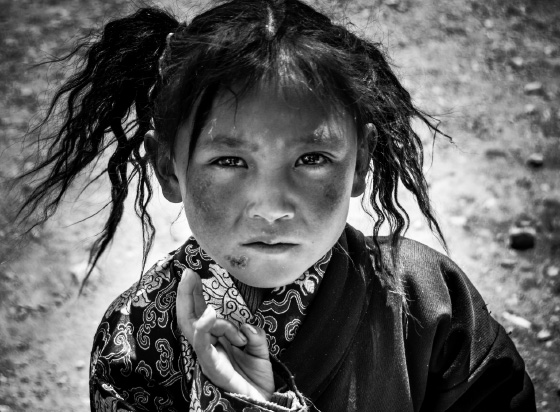
Captured against the serene backdrop of Lake Namtso in Tibet, this portrait highlights a spontaneous encounter between the photographer and a local girl. The photographer was drawn to the subject's natural grace, specifically the deliberate, elegant positioning of her hands and fingers. By engaging the subject in a brief, collaborative moment before departing for Lhasa, the photographer successfully distilled a sense of quiet humanity. The image is award-worthy for its authentic emotional resonance and the photographer's ability to transform a fleeting travel encounter into a timeless, intimate study of character and cultural beauty.
Shirren Lim
Born in Penang Island, Malaysia, in 1970, Shirren Lim is a Jakarta-based photographer who discovered her true passion for the craft in 2009. Specializing in portraiture, she is deeply inspired by the sincerity of human expression and the iconic, evocative style of Steve McCurry. Her work is recognized for its intense, earthy quality and a minimalist compositional approach that seeks to capture the profound essence of humanity. Having appeared in various international publications, Lim continues to pursue her ambition of creating images that resonate with global significance.
Resonance Score Breakdown
Transparency Note: The resonance score (13.1/20) is calculated based on social engagement metrics collected before the award announcement.
Expert Photography Reviews · 8
The Weight of a Gesture
Can we ever truly know the history held within the curve of a finger or the tilt of a chin? We often assume that identity is something carved in stone, a permanent monument to who we have been.
Read the reflection →The Weight of Stillness
I met a woman in a small tea house in the high mountains who spent her afternoons simply folding and unfolding a silk scarf. She didn’t speak much, but her hands moved with a deliberate, rhythmic grace that made the rest of the room feel frantic by comparison.
Read the reflection →Reviews & Comments
Share your thoughts about this award-winning photograph. Your reviews contribute to the community engagement score.
The jury’s obsession with clarity here feels stifling. Why demand the girl’s features be rendered with clinical precision when the atmosphere of Lake Namtso is inherently fluid? I’m genuinely frustrated they didn’t push the motion blur further; it’s closer to Sugimoto’s long-exposure ghosts than a travel portrait. What did Lim choose not to resolve? By chasing sharpness, she’s ignored the kinetic energy of the wind. It’s a missed opportunity to let the subject dissolve into the landscape.
You waited. I can feel it in the way her fingers rest, so deliberate and quiet against the vastness of Namtso. It’s rare to find a portrait that doesn’t feel like a theft. You didn’t just take a picture; you sat with her. And that’s why it works. I’ve spent years in high altitudes, and it’s easy to let the landscape swallow the person. You kept her human. It’s a beautiful, honest connection.
The thin, high-altitude air of Lake Namtso demands a stillness most travelers never find. She stood there, waiting for the light to soften against the girl’s skin, listening to the silence of the plateau. I’ve felt that same ache—the need to honor a stranger’s quiet grace before the wind shifts. It’s not just a portrait; it’s a prayer. When I look at the placement of those fingers, I feel my own breath slow down.
Shadow isn’t merely the absence of light here; it’s the silence between breaths. Those hands, poised with such fragile, deliberate geometry, pull the gaze into a darkness that feels heavy with the girl’s unspoken history. I’ve stared at these fingers for an hour, and it’s unsettling how they resist the light. It’s a haunting, quiet defiance. Lim doesn’t just capture a face; she forces us to confront the weight of what remains hidden in the gloom.
High above the world at Lake Namtso, we find a girl whose hands hold a quiet, ancient language. Before the shutter clicked, Shirren must have listened to the stillness of that plateau. We see it in the way her fingers rest, deliberate and soft. It’s a grace that doesn’t ask for attention, yet it commands our souls. I’ve looked at this for hours; it’s a portrait that feels like a long-held breath. Truly, it’s beautiful.
The focal plane sits perfectly across the girl’s eyes, resolving the iris’s intricate stroma with clinical precision. At this aperture, the bokeh isn’t just a blur; it’s a soft, atmospheric rendering of Lake Namtso’s high-altitude light. I’m genuinely moved by how the lens captures the subtle diffraction of light against her skin. It’s rare to see such technical discipline in a fleeting moment. She’s rendered with a clarity that makes the human eye feel inadequate.
The horizon line dissolves. It’s just the girl and the vast, cold air of Namtso. Her fingers hold a stillness I’ve rarely seen. They aren’t just resting; they’re anchoring the frame. I feel a sudden, sharp ache in my chest looking at her hands. Nothing here is accidental. The empty corner is not empty. It’s a breath held in the high altitude. She doesn’t need the lake. She is the silence.
The horizon at Lake Namtso acts as a brutal datum, flattening the vastness behind the girl into a mere backdrop. It’s a common architectural failing; the landscape is treated as a void rather than a spatial participant. Yet, the way light catches her fingers—that deliberate, structural tension—is haunting. I’m struck by how she anchors the frame. It’s not just a portrait; it’s a threshold where the immense, cold scale of Tibet suddenly feels human.