Wind by Ryszard Wierzbicki
Captured during a journey along the Irrawaddy River in Myanmar, this evocative portrait features a young passenger encountered while traveling by boat. The photographer skillfully utilized the natural, soft light of the river environment to highlight the subject's expressive features, creating an intimate connection between the viewer and the local culture. The composition is masterfully balanced, emphasizing the girl's presence against the backdrop of her transit. This image is award-worthy for its authentic storytelling and the photographer’s ability to find profound, quiet beauty in the everyday lives of the people encountered during his extensive travels.
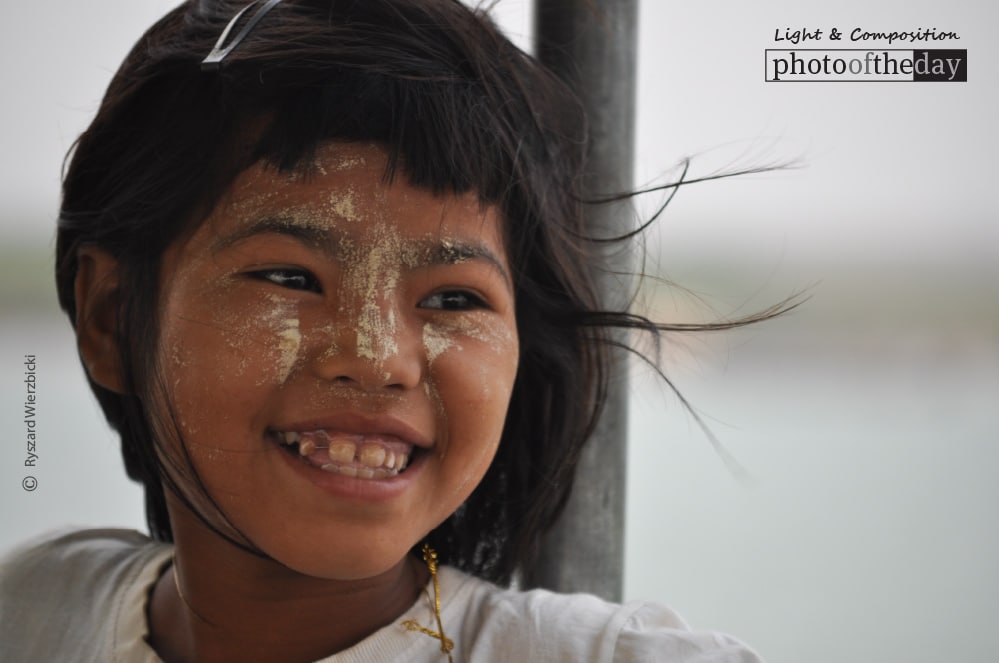
Exposure 1/500sec @ f/5.6 | ISO 400 | Focal Length 135mm
Ryszard Wierzbicki
Born in 1963, Ryszard Wierzbicki is a Polish-born photographer and traveler currently based in Swindon, United Kingdom. After a diverse career in social sciences and marketing, he transitioned into a life dedicated to global exploration, scuba diving instruction, and humanitarian volunteering with organizations like Stu and the Kids. His photography is deeply informed by his extensive travels through South-East Asia, where he captures the human spirit with empathy and precision. As the founder of travel and photography forums, he continues to share his passion for documenting the world's diverse cultures.
Resonance Score Breakdown
Transparency Note: The resonance score (12.7/20) is calculated based on social engagement metrics collected before the award announcement.
Expert Photography Reviews · 6
The Quiet Current
There is a rhythm to the world that only reveals itself when we stop trying to steer the boat. We spend so much of our lives bracing against the wind, fearing the change it brings, forgetting that the wind is simply the earth breathing.
Read the reflection →The Weight of Transit
We are always in transit. Between one shore and another, between the person we were when we boarded and the person who will step onto the mud of the bank. The water moves beneath us, indifferent to our destination.
Read the reflection →Reviews & Comments
Share your thoughts about this award-winning photograph. Your reviews contribute to the community engagement score.
The jury’s obsession with clarity here feels stifling. Wierzbicki’s portrait of this girl on the Irrawaddy is technically competent, sure, but it’s the motion blur in her hair that actually makes my pulse quicken. Why resolve every strand when the wind is the real subject? It’s closer to the kinetic energy of a blurred Sugimoto study than a standard travel portrait. I wish he’d leaned into that instability; it’s far more honest than sharpness.
The subject’s face occupies the right third, creating a powerful vertical axis that anchors the frame. Notice the 1:2 ratio between the girl’s profile and the negative space of the river. It’s a perfect geometric tension. The diagonal of her gaze cuts across the horizontal flow of the water, solving the spatial equation with elegant simplicity. I’m genuinely moved by how the soft light balances these masses; it’s a rare, precise harmony of form and stillness.
Before the eye identifies the girl, a sudden stillness settles in the chest. The wind pulling at her hair isn’t just weather; it’s a tactile friction against the viewer’s own skin. I’ve returned to this portrait for years, and that gaze still triggers a phantom ache of transit. It’s the quiet weight of her solitude that lingers, following me into sleep. It doesn’t just capture a moment; it rearranges the internal geography of whoever stops to look.
You waited for the wind to catch her hair, and it’s that small, messy detail that pulls me in. I’ve spent enough time on river boats to know that look—it’s not a pose, it’s a quiet moment of being alive. Because you didn’t force the frame, she feels real. I felt a sudden, sharp ache of nostalgia looking at her eyes. You didn’t just take a picture; you sat with her. That’s rare.
Most portraits from the Irrawaddy fail because they lean on exoticism. What separates this from the thousands of travel shots I’ve reviewed is the girl’s gaze; it’s not performing for the lens, but looking through it. The wind-tossed hair against the soft, muted river light creates a quiet tension that feels timeless. I’ll admit, it made me stop and breathe. In thirty years, we won’t remember the boat, but we’ll still feel her presence.
The river air must have been heavy that day. She isn’t just sitting there; she’s waiting for the wind to tell her where to look. I’ve spent enough hours on the water to know that stillness. It’s not a pose, but a surrender to the light reflecting off the Irrawaddy. When I look at her eyes, I feel a sudden, sharp ache for the quiet places I’ve left behind. It’s a beautiful, fleeting grace.