Tanah Airku Indonesia by Nandaru Pamungkas
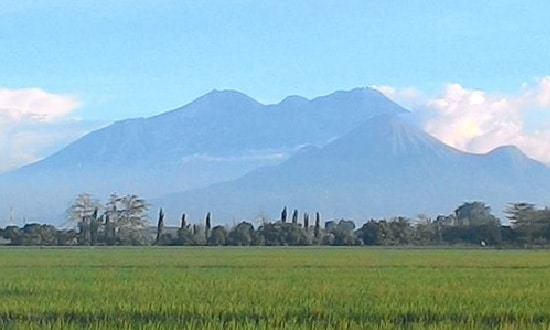
Tanah Airku Indonesia captures the serene majesty of the Indonesian landscape, showcasing a harmonious blend of lush rice paddy fields set against a dramatic mountainous backdrop. The photographer seized this moment during a casual walk through the Sidoarjo neighborhood, framing Mount Penanggungan in the foreground with the imposing peaks of Arjuno and Welirang rising behind it. This image is award-worthy for its evocative composition and the photographer’s ability to find profound natural beauty in his immediate surroundings, turning a local stroll into a compelling visual tribute to the diverse topography of East Java.
Nandaru Pamungkas
Born in the Hero City of Surabaya, Nandaru Pamungkas is a dedicated photographer based in Sidoarjo, Indonesia. His work is deeply rooted in the exploration of Java, where he specializes in capturing the ethereal beauty of the sky, celestial bodies, and the unique landscapes of his homeland. Driven by a spirit of gratitude and a keen eye for both natural wonders and humorous human moments, Pamungkas utilizes a versatile range of equipment—from pocket cameras to mobile devices—to document the blessings of the world around him.
Resonance Score Breakdown
Transparency Note: The resonance score (12.9/20) is calculated based on social engagement metrics collected before the award announcement.
Expert Photography Reviews · 5
The Soil That Sustains
We often speak of the city as a collection of glass and steel, a vertical assertion of human dominance over the earth. Yet, beneath the asphalt and the grid, there remains a fundamental geography of survival.
Read the reflection →The Weight of Home
I remember walking the perimeter of a farm in Somerset with an old man named Arthur. He stopped at the edge of a field, leaned on his gate, and just breathed.
Read the reflection →Reviews & Comments
Share your thoughts about this award-winning photograph. Your reviews contribute to the community engagement score.
The frame holds its breath. It’s a wide shot, the kind that demands a slow pan, but here, the stillness is everything. Mount Penanggungan anchors the foreground while Arjuno and Welirang loom like giants in the cut. I’ve walked these fields, and seeing them framed this way makes my chest tighten with a sudden, sharp nostalgia. The composition doesn’t rush; it lets the landscape breathe. It’s the frame the editor keeps because it’s already perfect.
Sidoarjo’s landscape is defined by the tension between the horizontal datum of the paddies and the verticality of the volcanic peaks. It’s a rhythmic sequence of land and sky. I’m struck by how the light softens the mass of Arjuno, turning geological scale into something intimate. Yet, I wonder about the missing human threshold here. Where are the farmers? Without them, the architecture of the fields feels like a stage set, beautiful but strangely hollow.
We look at these rice paddies and we aren’t just seeing land; we’re seeing a conversation between the farmer and the soil. Nandaru Pamungkas didn’t just walk through Sidoarjo; he listened to the rhythm of the earth beneath his feet. When I see Mount Penanggungan rising against the peaks of Arjuno, I feel a quiet, ancestral hum. It’s a portrait of a place that knows its own history. This is a photograph that asks to be returned to.
Sidoarjo’s rice paddies don’t merely sit beneath those peaks; they surrender to them. The light here is too polite, too eager to reveal every blade of grass. It’s a landscape afraid of the dark, and frankly, it leaves me cold. Where is the tectonic violence of Arjuno? Without the weight of deep, encroaching shadow, the mountains lose their soul. It’s a pretty postcard, but it doesn’t know how to haunt me. I’ve seen better ghosts.
It’s a shame we’re so obsessed with the crispness of those Sidoarjo rice paddies. Why resolve every blade of grass when the atmosphere begs for dissolution? I’d have loved to see Pamungkas surrender that mountain ridge to a long-exposure blur, pushing it closer to Hiroshi Sugimoto’s ethereal theatres than this conventional postcard. It’s technically competent, sure, but it’s safe. I’m left craving a deliberate failure of focus to truly capture the soul of the landscape.