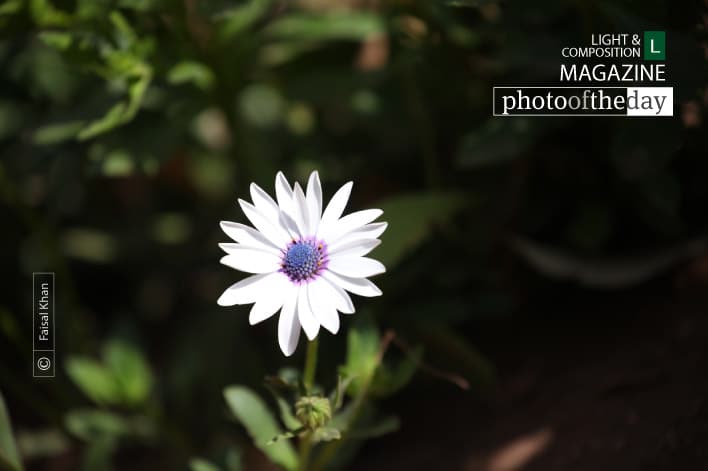
Rays of Hope by Faisal Khan
Rays of Hope captures a poignant moment of natural radiance, serving as a visual metaphor for resilience and positivity. By focusing on the interplay of light, the photographer emphasizes the beauty found in simple, everyday occurrences. The choice of a 300mm focal length allows for a compressed, intimate perspective that isolates the subject against the environment, creating a powerful, ethereal glow. This image is award-worthy for its ability to transform a fleeting atmospheric condition into a profound message of hope, demonstrating a keen eye for light and a thoughtful approach to storytelling through nature photography.
Faisal Khan
Raised in Saudi Arabia, Faisal Khan is a dedicated photographer who views his craft as a profound journey of contemplation, self-discovery, and awareness. His global perspective, shaped by living and working across diverse cultures including Thailand, the Middle East, and Morocco, deeply informs his artistic vision. Through his lens, Khan explores the intersection of travel and human connection, constantly seeking inspiration from the new friends and environments he encounters during his explorations.
Resonance Score Breakdown
Transparency Note: The resonance score (13.2/20) is calculated based on social engagement metrics collected before the award announcement.
Expert Photography Reviews · 7
The Architecture of Dawn
We often mistake the morning for a beginning, but it is really a slow unraveling. The night holds the world in a tight, dark fist, and light is the patient act of prying those fingers open, one by one. It does not rush.
Read the reflection →The Weight of Morning
The air in the mountains has a specific, metallic bite that clings to the back of the throat, tasting faintly of crushed stone and cold water.
Read the reflection →Reviews & Comments
Share your thoughts about this award-winning photograph. Your reviews contribute to the community engagement score.
It’s technically competent, sure, but that’s the problem. At 1/2000sec, Faisal has frozen the light into a static, clinical observation. I’m bored by the resolution. Why not let the Sidi Moosa atmosphere bleed? This approach is closer to a postcard than Hiroshi Sugimoto’s long-exposure theatres. I’d have preferred a deliberate blur to capture the heat’s vibration. By resolving everything, he’s missed the chance to make the light feel alive. It’s just too safe.
The tide at Sidi Moosa doesn’t just recede; it breathes. Faisal waited until the atmosphere surrendered its weight, allowing that 300mm lens to pull the light into a singular, aching prayer. I’ve stood in such salt-heavy air, feeling the world go quiet, and it’s humbling. He didn’t capture a scene; he listened until the horizon finally spoke. It’s a rare, fragile grace, and honestly, it makes me want to put my own camera down and just watch.
1/2000sec at f/6.3, ISO 400, 300mm. The shutter speed is overkill; it’s a waste of light that forces an unnecessary ISO bump. At 300mm, f/6.3 provides just enough compression to isolate the light, but the sensor noise is a distraction I can’t ignore. It’s technically sloppy. I’ve spent years staring at histograms, and this one’s a mess. The intent is clear, but the execution lacks the discipline this gear demands. It’s frustratingly close to perfect.
At f/6.3, the 300mm focal length compresses the atmospheric haze, pushing the diffraction limit just enough to soften the transition between light and shadow. It’s a delicate balance; the lens resolves the particulate matter in the air with startling clarity. I’m genuinely moved by how the light scatters across the sensor, creating an ethereal glow that feels almost tactile. It’s rare to see such precise optical control turn simple radiance into something so profoundly, physically tangible.
Sidi Moosa’s architecture isn’t just stone; it’s the threshold between the desert and the sky. Khan’s 300mm compression flattens the solid-void relationship, turning the structure into a mere silhouette against the light. I’m struck by how the fenestration vanishes, losing the building’s rhythm. It’s a beautiful atmospheric trick, but it ignores the datum of the ground. I miss the weight of the walls. It’s a lovely glow, but it’s not architecture. It’s just light.
Sidi Moosa’s light feels flattened here, compressed into a postcard of easy optimism. Why does this 300mm lens strip away the grit of the actual landscape? It’s a sanitized view of Morocco that prioritizes aesthetic glow over the reality of the place. I’ve seen this “hope” narrative a thousand times, and frankly, it leaves me cold. Whose resilience are we celebrating? It feels like we’re just consuming a beautiful surface while ignoring the context beneath it.
The light cuts through Sidi Moosa. It doesn’t ask for attention. It simply exists. I’ve spent minutes watching the haze settle against the frame’s edge. It’s quiet here. The compression of the lens pulls the atmosphere tight, leaving room for the void to breathe. Nothing here is accidental. The empty corner is not empty. It’s a stillness I’ve been craving all week. I find myself holding my breath. It’s enough.