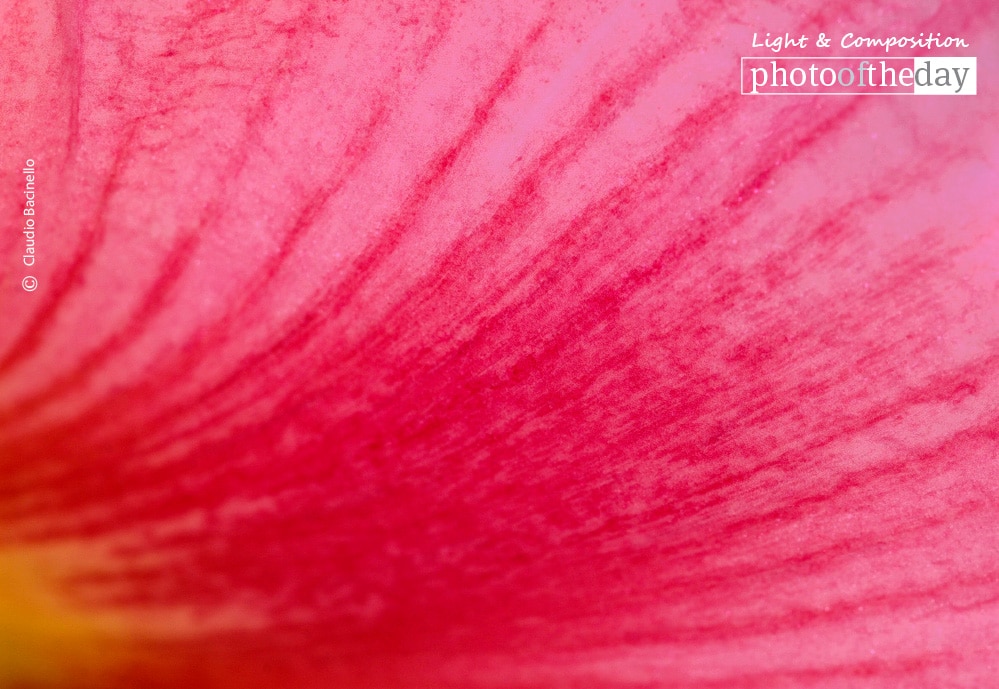
Spark of Life by Claudio Bacinello
Captured as part of a fine art series focusing on the Pink Diamond Amaryllis, this extreme macro photograph reveals the hidden architecture of nature. By experimenting with various angles and focal lengths, the photographer identified a mesmerizing pattern of striations that appear to emanate from a singular point, creating a dynamic sense of energy expanding across the frame. This visual metaphor for vitality inspired the title, Spark of Life. The image is award-worthy for its meticulous technical execution and its ability to transform a botanical subject into an abstract, rhythmic study of light and form.
James Brown
Born in St. Thomas, Ontario, in 1949, James L. Brown is a dedicated photographer who rediscovered his creative passion after receiving a digital camera from his family. Having studied the fundamentals of photography at Sheridan College decades ago, he now focuses on capturing the magical essence of everyday life. His work is defined by a deep appreciation for the beauty found in simple, overlooked subjects, reflecting a lifelong commitment to documenting the world through a lens of wonder and quiet observation.
Resonance Score Breakdown
Transparency Note: The resonance score (12.8/20) is calculated based on social engagement metrics collected before the award announcement.
Expert Photography Reviews · 7
The Architecture of Belonging
We often mistake the city for its concrete skin, forgetting that every urban environment is merely a container for the biological and social impulses of those who inhabit it.
Read the reflection →The Architecture of Breath
We look at the surface of things and assume we know the depth. We see the skin of a fruit, the bark of a birch, the frost on a windowpane, and we think the story ends there. But there is a geometry to existence that hides in plain sight.
Read the reflection →Reviews & Comments
Share your thoughts about this award-winning photograph. Your reviews contribute to the community engagement score.
Before the eye identifies the petal, a sudden stillness pulls at the chest. The striations in Bacinello’s macro work don’t just sit there; they pulse, forcing my own breath to sync with that rhythmic, radiating light. It’s an unsettling vitality. When I return to this a year later, the memory of that pink glow lingers like a phantom heat. I’ve never felt so small against a flower, yet so intensely, inexplicably awake. It’s haunting.
Macro work usually leaves me cold; it’s often just a frantic hunt for patterns. Yet, Bacinello’s amaryllis striations suggest he didn’t just stumble upon this. He’s clearly spent hours coaxing that singular point of light into submission. I’ve spent enough damp mornings waiting for a landscape to wake up to recognize the discipline here. It’s a quiet, rhythmic persistence that I find genuinely impressive. He didn’t find this; he earned it, one agonizing adjustment at a time.
It’s rare to find such stillness in a macro study. Claudio didn’t just photograph a flower; he waited until the light revealed the pulse within those petals. I’ve spent hours watching the sun crawl across a valley, and I recognize that same patience here. The striations pull me in, vibrating with a quiet, ancient energy. It’s almost overwhelming to look at. He stood there, listening to the bloom, until it finally decided to show its secret.
The jury’s obsession with technical clarity here feels stifling. While they praise the meticulous sharpness of these striations, I’m left craving a deliberate collapse of form. It’s a bit too clinical, isn’t it? I’d have preferred Bacinello to surrender that resolution, perhaps pushing the macro lens into a soft, painterly abstraction. Why resolve every vein when you could evoke the pulse? It’s technically proficient, sure, but it lacks the visceral, messy friction of true discovery.
The striations pull the eye toward a singular point. It’s a quiet tension. I’ve spent minutes watching the light travel across these petals. It doesn’t shout. It breathes. The frame holds a rhythm I rarely find in macro work. Nothing here is accidental. The empty corner is not empty. It’s a pause. I feel my own pulse slow down just looking at it. Such restraint. It’s a rare, beautiful silence.
It’s tempting to dismiss this as mere botany, but look at the striations. They function like the ribs of a vaulted ceiling, defining a datum that pulls the eye toward a singular, glowing threshold. The light doesn’t just illuminate; it articulates mass and void, creating a structural rhythm I’d kill to replicate in a foyer. It’s a rare, visceral thrill to see a flower capture the tension of a building’s internal logic so perfectly.
Most macro photography feels clinical, but Bacinello’s work avoids that trap. Of the hundreds of botanical studies I’ve reviewed, this one survives because of its rhythmic tension. The way those striations pull the eye toward a singular, electric origin point creates a genuine sense of pulse. It’s rare to find a flower that feels like it’s breathing. I’ll admit, it made me hold my breath for a second. That’s why it’ll still matter in thirty years.