Old is Gold by Zahraa Al Hassani
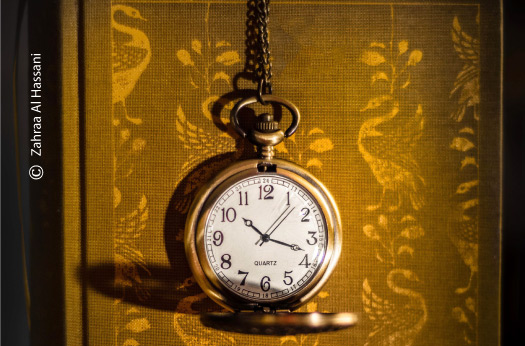
In this evocative still life, the photographer captures the timeless allure of vintage objects, celebrating the inherent beauty that accumulates with age. By utilizing a shallow depth of field with a 50mm lens, the composition draws the viewer’s eye to the intricate textures of the subject, emphasizing the 'gold' found in classical artifacts. The image serves as a poignant reminder that true value often transcends time, rendered here with a soft, deliberate focus. This piece is award-worthy for its ability to transform simple, aged items into a narrative of elegance and enduring worth.
Zara Otaifah
Based in Baghdad, Iraq, Zahraa Hashim Salih Al Hasani balances a successful career as a senior graphic designer at Zain Telecommunications with a deep-seated passion for photography. A graduate of the University of Technology Baghdad, she leverages her extensive design background to refine her photographic perspective, often creating custom visuals for her professional projects. Zahraa continues to evolve her craft, seeking to learn from the traditions of purist photography while documenting the world around her with a unique, elegant eye.
Resonance Score Breakdown
Transparency Note: The resonance score (12.3/20) is calculated based on social engagement metrics collected before the award announcement.
Expert Photography Reviews · 7
The Weight of Memory
We often speak of time as a thief, a relentless force that strips away the luster of our possessions until they are nothing more than ghosts of their former selves. But there is a different way to look at the slow decay of things.
Read the reflection →The Weight of Yesterday
Why do we insist that the new is inherently better than the worn? We spend our lives polishing surfaces, trying to erase the fingerprints of time, as if a life without marks is a life more valuable. Yet, there is a quiet dignity in the frayed edge and the tarnished surface.
Read the reflection →Reviews & Comments
Share your thoughts about this award-winning photograph. Your reviews contribute to the community engagement score.
At f/1.8, the 50mm focal plane is razor-thin, forcing a beautiful struggle between resolution and the diffraction limit. The bokeh, a function of that wide aperture, renders the background into a soft, golden blur that makes the foreground textures pop. I’m genuinely moved by how the lens resolves the oxidation on these artifacts; it’s a tactile, microscopic history. It’s rare to see such precise optical control turn simple decay into something so luminous and enduring.
The light hits those textures like a slow pan across a forgotten set. It’s a quiet, heavy frame. With that f/1.8 aperture, Al Hassani isolates the gold, letting the background fall away into a soft, cinematic blur. I’ve spent hours watching light settle on dust like this; it’s hypnotic. The shot holds its breath, refusing to cut. It’s a perfect, still moment where the narrative isn’t told, but felt. It’s the frame the editor keeps.
We look at these weathered artifacts and we aren’t just seeing objects; we’re hearing the echoes of a Baghdad home. Zahraa listened to the history held in these textures before she ever touched the shutter. It’s a quiet, intimate conversation with the past. I find myself aching for the stories these items could tell if they only had voices. It’s a photograph that asks to be returned to, reminding us that age is simply a beautiful accumulation.
The composition relies on a tight triangular convergence, anchoring the heavy metallic mass in the lower-left quadrant. By utilizing a shallow depth of field, Al Hassani effectively isolates the focal point, creating a 1:3 ratio between the sharp foreground and the soft, receding background. It’s a precise spatial equation. I’m genuinely struck by how the diagonal vectors guide the eye toward the center of gravity; it’s a beautifully solved problem of balance and negative space.
The ochre hues here possess the bruised, melancholic weight of a Morandi still life, where the gold isn’t merely metallic but the weary, tarnished yellow of late afternoon sun hitting dust-laden relics. It’s a chromatic ache that I find utterly devastating. One feels the slow, rhythmic decay of time itself, rendered in tones of burnt honey and shadow, creating a visual harmony that feels less like a captured object and more like a long, whispered prayer.
The shallow depth of field creates a claustrophobic isolation. It’s a narrow corridor of focus that forces the eye into the artifact’s texture, ignoring the surrounding void. The spatial tension is precarious; the weight of the gold object threatens to collapse the frame’s balance. It’s technically precise, yet I’m exhausted by the predictable softness. The composition holds, but it doesn’t challenge. It’s a rigid, quiet study that demands attention but offers no structural surprise.
Most still lifes I review are merely cataloging clutter. What separates this from the pack is the restraint in that f/1.8 aperture. By blurring the background into a soft, golden haze, Al Hassani forces us to confront the texture of the metal itself. It’s a quiet, tactile victory. I find myself wanting to reach out and touch the oxidation. It’s not just a pretty object; it’s a relic that will still matter in thirty years.