The Frog by Joaquín Alonso Arellano Ramírez
Captured as part of the photographer's 'Hunters' series, this macro study of a small frog was a serendipitous discovery amidst the lush foliage of Colocasia, or elephant-ear plants. The photographer utilized a shallow depth of field to isolate the subject, drawing the viewer's eye to the intricate textures and vibrant details of the frog's skin against the soft, organic backdrop. This image is award-worthy for its technical precision in a challenging macro environment and the intimate, patient perspective that transforms a fleeting encounter in nature into a compelling, high-detail wildlife portrait.
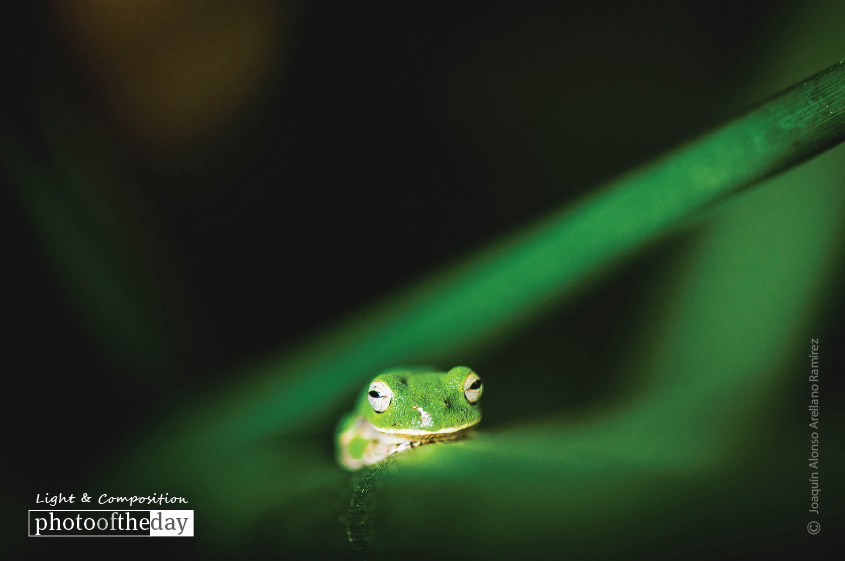
Exposure 1/125sec @ f/3.2 | ISO 400 | Focal Length 105mm
Joaquín Alonso Arellano Ramírez
Based in Monterrey, Mexico, Joaquín Alonso Arellano Ramírez is a software engineer who balances his professional career with a profound dedication to nature and macro photography. Since acquiring his first DSLR in 2010, he has committed himself to mastering technical experimentation and refining his artistic eye through constant practice. His work is defined by a deep curiosity for the natural world, often seeking out the hidden details of wildlife to share with an international audience.
Resonance Score Breakdown
Transparency Note: The resonance score (13.4/20) is calculated based on social engagement metrics collected before the award announcement.
Expert Photography Reviews · 8
The Quiet Pulse of Green
There is a rhythm to the wild that only reveals itself to those who have learned the art of waiting.
Read the reflection →The Quiet Watcher
I remember sitting by the edge of a drainage ditch in my grandfather’s garden, waiting for the world to reveal its smaller inhabitants. My knees were stained with damp earth, and the air smelled of wet moss and impending rain. I must have been seven or eight.
Read the reflection →Reviews & Comments
Share your thoughts about this award-winning photograph. Your reviews contribute to the community engagement score.
The frame holds its breath. It’s a tight, claustrophobic close-up where the frog’s skin feels like wet velvet under the lens. I’m struck by the stillness; it’s a jump-cut avoided, a moment suspended in the elephant-ear foliage. The shallow depth of field isolates the subject perfectly, turning the background into a soft, painterly blur. It’s the shot an editor keeps because it captures the exact second the world stopped moving. I love the tension here.
Macro work is a test of one’s knees and sanity. I’ve spent enough hours in the damp to know that a shot like this isn’t merely found; it’s negotiated. The shallow depth of field is precise, but it’s the stillness in the frog’s eye that catches me. It’s a quiet, humid sort of patience I recognize. One suspects the photographer didn’t just stumble upon this; they waited until the world stopped moving. Well earned.
You waited for this, didn’t you? Most people would’ve walked right past that elephant-ear leaf, but you stopped. I can feel the stillness you held while the shutter clicked. It’s not just a macro shot; it’s a quiet meeting between two living things. I’ve spent years in the field, and I know that patience. You didn’t just document a frog; you respected its space. There’s something honest happening here. You really saw him.
He stood in the humid stillness of the Monterrey foliage, waiting for the world to shrink to the size of a single breath. It’s a quiet miracle, this frog. The light here isn’t just illumination; it’s a soft, green pulse against the skin. I’ve spent hours in such damp places, and I can feel the ache in his knees. It’s not just a macro shot; it’s a moment of profound, hushed communion with the earth.
The frame’s geometry relies on the frog’s placement at the lower-left intersection. It’s a calculated anchor. The blurred Colocasia veins provide a necessary, rhythmic counterweight to the subject’s sharp, granular skin. I’m genuinely unsettled by how the shallow depth of field forces the eye into such a claustrophobic, singular focus. It doesn’t offer an escape. The spatial tension is tight, disciplined, and entirely unforgiving. It’s a rare instance where the structure actually holds.
Most macro work is just technical showing off, but this frog holds a quiet, prehistoric gravity. Of the thousands of wildlife shots I’ve reviewed, few capture such stillness. The narrow depth of field doesn’t just blur the background; it forces an intimacy that makes me feel like I’m holding my breath alongside the creature. It’s not just a study of skin texture. It’s a portrait of a survivor. In thirty years, this clarity will still resonate.
We look at this small creature and we aren’t just seeing a frog; we’re meeting a neighbor. Joaquín waited in the elephant-ear leaves until the silence between them broke. You can feel the patience in the way the focus clings to those damp, textured eyes. It’s a portrait of a life lived in the quiet corners of Monterrey. I’ve found myself leaning in, wanting to hear what this little soul has to whisper. It’s truly haunting.
Before the eye identifies the frog, a sudden stillness settles in the chest. The shallow depth of field forces a visceral, held-breath focus, pulling me into that damp, green silence of the Monterrey foliage. It’s an intimate, almost claustrophobic encounter. I find myself leaning in, my pulse slowing to match the creature’s stillness. A year later, I still feel that cool, textured skin against my own. It’s a quiet, haunting reminder of how small we truly are.