Descending Dragon Bay by Sanjoy Sengupta
Descending Dragon Bay captures the ethereal beauty of Hạ Long Bay, a UNESCO World Heritage site renowned for its labyrinth of limestone karsts. Taken during the soft, diffused light of early morning, the photograph emphasizes the dramatic silhouettes of the isles emerging from the mist. The photographer utilized a 70mm focal length to compress the scene, isolating the intricate textures of the rock formations against the tranquil water. This award-winning image succeeds by balancing the vast, atmospheric scale of the bay with a precise, technical execution that highlights the timeless, serene majesty of this iconic Vietnamese landscape.
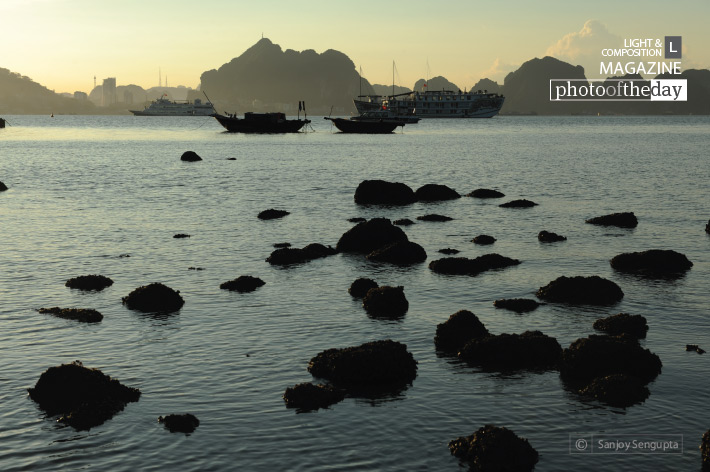
Exposure 1/320sec @ f/10 | ISO 100 | Focal Length 70mm
Sanjoy Sengupta
Based in Muscat, Oman, Sanjoy Sengupta is a dedicated photographer whose journey began with film cameras in the late 1990s. After years of refining his craft through various digital point-and-shoot and hybrid models, he transitioned to professional Nikon DSLR equipment to master the technical nuances of light and composition. His work is driven by a passion for capturing fleeting, beautiful moments of life, transforming everyday observations into lasting visual narratives that resonate with audiences worldwide.
Resonance Score Breakdown
Transparency Note: The resonance score (11.1/20) is calculated based on social engagement metrics collected before the award announcement.
Expert Photography Reviews · 6
The Quiet Between Breaths
I was standing in the kitchen this morning, waiting for the kettle to whistle, when I realized I had been holding my breath for no reason at all. It happens more than I care to admit.
Read the reflection →The Breath of Stone
There is a quiet wisdom in how the earth chooses to rise from the water. It does not rush; it simply exists, anchored in the slow turning of seasons and the patient folding of time.
Read the reflection →Reviews & Comments
Share your thoughts about this award-winning photograph. Your reviews contribute to the community engagement score.
The compression of the 70mm lens forces the limestone karsts into a rigid, vertical stack. It’s a calculated flattening of the picture plane that denies the viewer depth, favoring a graphic, layered architecture instead. The negative space of the mist provides the necessary fulcrum for these heavy, dark masses. It’s cold, precise, and frankly, the lack of atmospheric clutter is a relief. The frame holds because it refuses to let the eye wander into the void.
Halong Bay is a tourist’s playground, yet Sengupta has managed to strip away the clutter. That compression at 70mm suggests he didn’t just snap from a passing boat deck. He’s waited for the mist to behave, isolating those karsts until they look like ink washes. I’ve spent enough damp mornings shivering in a skiff to appreciate the stillness here. It’s a quiet, earned moment. One suspects he returned until the bay finally stopped showing off.
Before the eye identifies the limestone, something in the chest tightens. It’s the silence of the mist, a cold, damp pressure against the lungs. Sengupta’s compression forces a claustrophobic intimacy; I feel as if I’m drifting into those jagged silhouettes, losing my sense of horizon. When I return to this a year later, the water’s stillness still triggers a phantom shiver. It’s a quiet, heavy ache—the feeling of being entirely alone in a vast, waking dream.
Most travel photography is just visual noise, but this works because of the compression. By pulling those limestone karsts tight with a 70mm lens, Sengupta forces the mist to act as a physical wall rather than just background fluff. It’s haunting. I’ve seen thousands of shots of this bay, yet this one makes me feel the damp chill of that morning. It’ll endure because it captures the silence of the place, not just the geography.
Mist clings to the limestone. It’s a heavy, quiet weight. Sengupta doesn’t crowd the frame. He lets the water breathe. I’ve spent minutes staring at that sliver of gray horizon, and it’s enough. The compression pulls the karsts into a single, jagged breath. Nothing here is accidental. The empty corner is not empty. It’s the pause between heartbeats. I feel a sudden, sharp ache for that silence. It’s a rare, beautiful restraint.
We look at these limestone karsts and we don’t just see rock; we see the ancient, stoic faces of ancestors rising from the mist. Sanjoy Sengupta didn’t just capture a landscape; he listened to the silence of the bay until it whispered its history. It’s a portrait of a place that’s forgotten more than we’ll ever know. I find myself holding my breath, waiting for the stone to speak. It’s a photograph that asks to be returned to.