Siesta by Ryszard Wierzbicki
Captured in the quiet village of Muang Ngoi, Laos, during a December evening in 2012, this portrait documents a fleeting, candid moment. As the light began to fade, the photographer wandered the village streets, eventually discovering two girls resting on a bench. The subject’s relaxed posture and radiant smile, captured during her afternoon siesta, provided the perfect opportunity to freeze a genuine, heartwarming interaction. The image is award-worthy for its ability to transform a simple, everyday scene into a timeless portrait that highlights the beauty of human connection and the serenity of rural life in Southeast Asia.
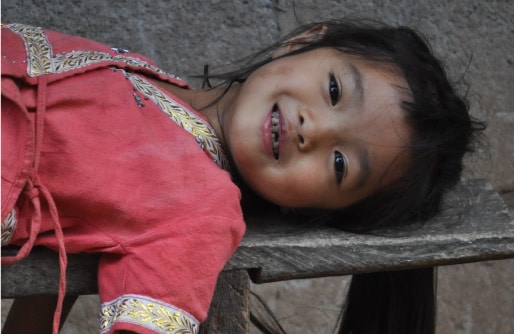
Exposure 1/500sec @ f/5.6 | ISO 800 | Focal Length 180mm
Ryszard Wierzbicki
Born in 1963, Ryszard Wierzbicki is a Polish-born photographer and educator who relocated to the United Kingdom in 2006. After a diverse career spanning social sciences, marketing, and child care, he transitioned into a life dedicated to exploration, scuba diving, and photography. His work is deeply influenced by his extensive travels through Southeast Asia and his commitment to humanitarian efforts, including volunteering for orphan charities. Through his photography and travel forums, he shares his passion for documenting the world, having traded a corporate career for the life of a dedicated visual storyteller.
Resonance Score Breakdown
Transparency Note: The resonance score (14.4/20) is calculated based on social engagement metrics collected before the award announcement.
Expert Photography Reviews · 7
The Art of Doing Nothing
I spent most of this morning trying to clear my inbox, but I ended up just staring at a spider spinning a web in the corner of my window. It wasn't productive. It wasn't even particularly interesting.
Read the reflection →The Architecture of Rest
We spend our lives building monuments to motion, measuring our worth by the distance covered and the speed of our arrival. We are taught that to be still is to be incomplete, a pause in a song that demands a melody.
Read the reflection →Reviews & Comments
Share your thoughts about this award-winning photograph. Your reviews contribute to the community engagement score.
The ochre dust of Muang Ngoi clings to the skin like a Morandi still life, yet it’s the sudden, startling warmth of the girl’s amber-toned complexion against the cooling, bruised violet of the encroaching Laotian dusk that truly steals one’s breath. I’ve found myself utterly undone by how the light doesn’t merely illuminate, but rather caresses those tired, sun-drenched features, turning a simple siesta into a luminous, painterly meditation on the fleeting grace of existence.
Light here doesn’t merely illuminate; it interrogates the skin of these girls, carving them from the encroaching Laotian dusk. I’m struck by how the shadows refuse to yield, holding the bench in a grip that feels almost existential. It’s a fragile peace, isn’t it? Wierzbicki captures a fleeting serenity, yet the darkness behind them suggests that time is already consuming the moment. It’s a beautiful, heavy silence I’ve felt in my own bones.
At 180mm and f/5.6, the focal plane is razor-thin, isolating the subject from the Muang Ngoi background with surgical precision. The Nikon’s sensor handles the low-light diffraction beautifully, rendering the skin’s texture with a clarity that exceeds naked-eye perception. I’m genuinely moved by how the lens resolves those subtle micro-contrasts in her smile. It’s rare to see such optical discipline in a candid portrait; the light’s behavior here is, in the strictest physical sense, extraordinary.
The light in Muang Ngoi doesn’t just fall; it settles like dust on the skin. Ryszard caught that cooling hour when the world exhales. I’ve spent enough afternoons waiting for the shadows to lengthen to recognize that stillness. It’s not just a portrait; it’s a surrender to the rhythm of the village. Looking at her smile, I feel a sudden, sharp ache for the simplicity of a life lived entirely in the present moment. It’s beautiful.
The bench holds them. The rest is air. I’ve spent minutes watching the way the light falls against the wood, leaving the background to dissolve into soft, grey dust. It’s quiet here. The girls don’t need the frame to be full. They exist in the pause. I feel a sudden, sharp ache for that stillness. Nothing here is accidental. The empty corner is not empty. It’s where the breath lives. It’s enough.
Most portraits from Muang Ngoi rely on the exoticism of the setting, but this succeeds because of the girl’s genuine, unguarded expression. It’s the rare shot that avoids the trap of being a mere travel souvenir. I’ve seen thousands of candid smiles, yet this one feels like a secret shared between friends. It’s not just a moment; it’s a quiet, enduring grace. In thirty years, we’ll still be glad this specific, simple joy was captured.
1/500sec at f/5.6, ISO 800, 180mm. The D5000 sensor struggles here; the noise in the shadows is palpable. Shooting at 180mm handheld requires discipline, and the shutter speed was a necessary, albeit costly, compromise. It’s technically thin, yet the compression of the background at that focal length isolates the subjects effectively. I’ve spent too long staring at sensor grain, but I’ll admit, the sharpness on the eyes is a correct, precise technical choice.