Fingers that Create by Achintya Guchhait
Captured in the heart of Bangalore’s historic pottery district, this image documents the enduring legacy of artisans who preserve ancient traditions amidst a rapidly modernizing city. The photographer focuses on the rhythmic, tactile process of crafting earthen pots and miniature idols, highlighting the intimate connection between the creator and the clay. By utilizing a wide 18mm focal length, the image immerses the viewer in the narrow, bustling lane where these households operate. This photograph is award-worthy for its poignant cultural preservation, capturing the quiet dignity of human craftsmanship in an increasingly automated world.
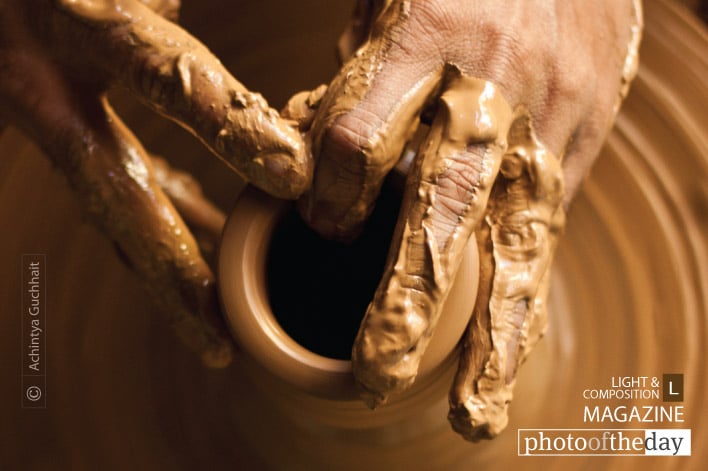
Exposure 1/200sec @ f/11 | ISO 100 | Focal Length 18mm
Gerardo Simonetti
Gerardo Simonetti was born in the Bronx New York on April 16, 1957. Studied at the International Center of Photography New York City. Traveled extensively between 1980 and 2000 South America, Central America, Asia and Europe.. Worked as a Freelance and Staff Photographer for Gannett Newspapers until May of 2000. Currently lives in Fortaleza Brazil. Owns and operates a Travel Agency "Fortaleza Beaches" working as a guide and translator throughout the state of Ceara Brazil.
Camera Gear: NIKON F3 and F4
NIKON 35mm f/1.4, NIKON 85mm f/1.4, NIKON 80-200mm f/ 2.8, MONOPOD, TRIPOD
Current Location: Fortaleza, Brazil
Website: http://www.fortalezabeaches.com/
Facebook: https://www.facebook.com/GerardoASimonetti
Facebook Page: https://www.facebook.com/fortalezabeaches/
Google+: https://plus.google.com/103095895470818718464
[srp widget_title="" noposts_text="No award entries available." widget_title_header="h6" thumbnail_height="65" post_limit="80" post_random="yes" post_content_mode="thumbonly" post_date="no" post_author_url="no" post_category_link="no" category_include="7" tags_include="gerardo-simonetti" layout_mode="multi_column" layout_num_cols="5"] Browse all Gerardo Simonetti's contributions in Light & Composition
Resonance Score Breakdown
Transparency Note: The resonance score (13.7/20) is calculated based on social engagement metrics collected before the award announcement.
Expert Photography Reviews · 8
The Weight of Clay
I spent an hour this morning trying to fix a broken ceramic mug. It was a cheap thing, bought at a supermarket years ago, but my hands felt clumsy and useless as I tried to align the jagged edges.
Read the reflection →The Pulse of Earth
The smell of wet earth is the smell of beginnings. It is a cool, heavy scent that clings to the back of the throat, thick with the promise of something taking shape.
Read the reflection →Reviews & Comments
Share your thoughts about this award-winning photograph. Your reviews contribute to the community engagement score.
Good job, hope to see more of your pictures
The ochre of the damp clay, reminiscent of a sun-baked Morandi still life, anchors the frame in a tactile, earthy warmth that I find utterly intoxicating. It’s a chromatic dialogue between the raw, dusty terracotta and the cool, shadowed recesses of the Bangalore lane, where the light doesn’t just illuminate but caresses the artisan’s hands. One feels the grit beneath the fingernails, a visceral, golden-hued intimacy that makes the modern world’s frantic pace simply vanish.
Wide angles in cramped quarters often reek of convenience, yet here the proximity feels hard-won. One senses the photographer didn’t just stumble upon these hands; they’ve sat in that dust long enough for the artisans to forget the lens was even there. It’s a rare, quiet intimacy. I’ve spent enough afternoons in similar heat to know that clay and sweat don’t wait for tourists. This wasn’t a quick snap. It’s a proper, patient day’s work.
The 18mm focal length distorts the periphery, yet the central fulcrum holds. The hands provide a necessary anchor against the chaotic geometry of the pottery lane. It’s a precarious balance. The negative space doesn’t quite resolve, leaving the frame feeling cluttered rather than curated. I’ve seen enough sentimentality in these workshops, but the structural discipline here is almost enough to forgive the narrative indulgence. It’s a rigid architecture that barely survives its own ambition.
Clay dust hangs in the Bangalore air. It’s thick. The hands move, yet the frame holds a stillness I haven’t felt in years. I’m drawn to the shadows pooling near the wheel. They aren’t just darkness. They are the weight of tradition. Nothing here is accidental. The empty corner is not empty. It’s a breath held in the heat. I’ve forgotten the city outside. There is only the rhythm of the earth. It’s enough.
The clay doesn’t just sit there; it breathes under those calloused fingers. I’ve stood in such workshops, feeling the damp, heavy air of Bangalore’s narrow lanes. Achintya waited for the light to catch the grit and the moisture, turning a simple craft into a sacred ritual. It’s quiet, isn’t it? I find myself wanting to reach out and touch the cooling earth. He didn’t rush the moment; he let the clay speak its own ancient, silent language.
Most entries in this category rely on sentimentality to mask technical laziness. What separates this from the pack is the 18mm distortion; it forces the viewer into the potter’s cramped workspace, making the clay feel uncomfortably real. I’ve seen thousands of artisan portraits, but the grit under those fingernails actually made me wince. It’s a rare, visceral connection to a vanishing trade. In thirty years, this won’t just be a record; it’ll be a haunting, tactile memory.
Clay isn’t merely mud; it’s the threshold where intention meets resistance. Guchhait’s frame traps the artisan’s hands in a suffocating, beautiful gloom. I’ve stared at these fingers for an hour, feeling the weight of the earth they pull from the void. It’s not just craft; it’s a struggle against the encroaching, sterile light of Bangalore. The shadows here don’t hide the work—they define the soul of the potter. It’s haunting, really. It doesn’t invite; it demands.
At f/11, the 18mm focal plane captures a depth of field that renders the grit of the clay with startling, microscopic fidelity. I’m genuinely moved by how the lens resolves the fine, dry fissures on those fingertips; it’s a tactile intimacy the naked eye would surely miss. The diffraction limit hasn’t softened the texture at all. It’s a rare, honest collision between the artisan’s ancient rhythm and the cold, precise physics of modern glass.
Nicely captured – especially if there’s no additional lighting (flash or soft box light)… I surely need more and more practice in capturing such moment… Well done…