The Look by Nirupam Roy
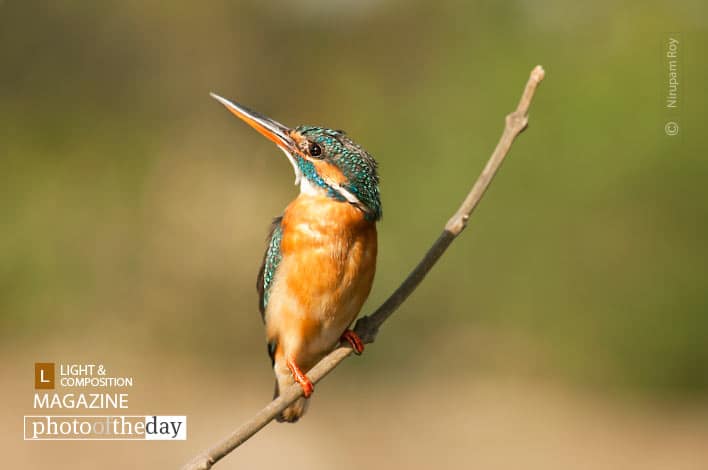
Captured during a dedicated wildlife expedition, this photograph highlights the elusive beauty of a Kingfisher in its natural habitat. After extensive exploration to identify the perfect vantage point, the photographer patiently observed the bird’s movements from a concealed position, waiting for the precise moment to release the shutter. The resulting image is a testament to the photographer's dedication and technical precision, freezing the subject in sharp detail against a soft, natural backdrop. This work is award-worthy for its masterful composition and the intimate connection it establishes between the viewer and the vibrant, fleeting life of the wild.
Nirupam Roy
Based in Tufanganj, Coochbehar, West Bengal, Nirupam Roy is a dedicated school teacher whose passion for photography was ignited during a family trip to the coast of Odisha. Driven by a desire to document the natural beauty of his surroundings and his family life, he transitioned from a casual observer to a committed artist. His work reflects a profound shift in his perspective on nature and humanity, serving as a meditative pursuit that brings him a sense of peace and creative fulfillment.
Resonance Score Breakdown
Transparency Note: The resonance score (14.6/20) is calculated based on social engagement metrics collected before the award announcement.
Expert Photography Reviews · 5
The Weight of a Glance
In the quiet corners of a library, or perhaps in the stillness of a garden at dawn, one often encounters the sensation of being watched.
Read the reflection →The Weight of a Gaze
I spent twenty minutes this morning trying to find my keys, only to realize they were in my hand the entire time. It is funny how we look so hard for things that are right in front of us, our eyes skimming over the obvious because we are too busy anticipating the next step.
Read the reflection →Reviews & Comments
Share your thoughts about this award-winning photograph. Your reviews contribute to the community engagement score.
One suspects the Kingfisher didn’t simply pose for the D5000. It’s a sharp, clean capture, but it’s the stillness in the frame that catches me. I’ve spent enough mornings in damp hides to know the ache of waiting for a bird that refuses to appear. Roy clearly put in the hours here. It’s not just a lucky snap; it’s a quiet, earned victory. I’d have liked to be there, shivering right alongside him.
The Kingfisher’s gaze isn’t merely biological; it’s a confrontation with the void. By pushing the background into a soft, indistinct blur, Roy forces the bird into a lonely, luminous isolation. I’ve stared at this plumage for an hour, and it’s unsettling how the shadows don’t just frame the subject—they consume its context. It doesn’t invite us into nature. It demands we acknowledge the silence of a creature that doesn’t care if we’re watching.
Most wildlife shots are just trophies, but this Kingfisher stays with me. Of the thousands I’ve reviewed, it’s the bird’s piercing, singular focus that anchors the frame. The shallow depth of field isolates that gaze so effectively it feels like an intrusion. I’ll be honest, I’ve seen sharper plumage, but the way the subject commands the negative space makes it endure. It’s a rare, quiet moment of connection that’ll still matter in thirty years.
The air in Coochbehar holds a heavy, humid stillness that demands total surrender. He waited in the damp shadows, listening to the reeds until the Kingfisher finally turned. It’s that sharp, electric gaze that catches me—I feel a sudden, quiet ache for the wild, fleeting grace he caught. He didn’t force the moment; he simply let the light reveal the bird’s soul. It’s a rare, honest conversation between a man and the living earth.
At 300mm, the Nikkor’s focal plane is razor-thin, yet Roy’s f/8 aperture keeps the kingfisher’s plumage in crisp, diffraction-limited relief. I’m genuinely moved by how the bokeh, as a function of that long focal length, renders the background into a soft, chromatic blur that doesn’t distract from the bird’s eye. It’s a rare moment where the glass hasn’t just captured a subject; it’s resolved the very texture of light itself. It’s quite beautiful.