Lost in His Little World by Rizwan Hasan
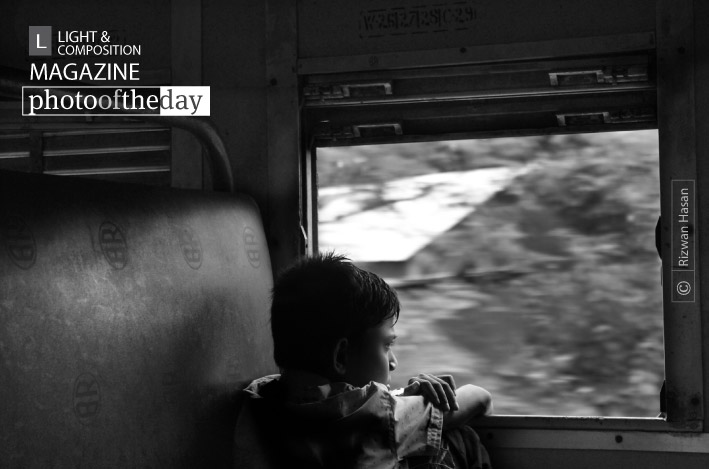
Captured through the window of a moving train, this poignant image features a young boy lost in deep contemplation. The photographer masterfully utilizes the transient nature of the journey to frame a moment of quiet introspection, leaving the viewer to wonder whether the child is observing the lush landscapes of Bangladesh or retreating into the sanctuary of his own imagination. The image is award-worthy for its raw, candid intimacy, transforming a fleeting encounter into a timeless narrative of childhood innocence and the universal human capacity for wonder.
Rizwan Hasan
Based in Dhaka, Bangladesh, Rizwan Hasan is a dedicated photographer who began his professional journey in 2010. He specializes in lifestyle and street photography, frequently exploring the unique challenges and aesthetic possibilities of shooting in low-light environments. Through his lens, Hasan captures the authentic spirit of his surroundings, consistently demonstrating a keen eye for candid human moments.
Resonance Score Breakdown
Transparency Note: The resonance score (13.0/20) is calculated based on social engagement metrics collected before the award announcement.
Expert Photography Reviews · 3
The Architecture of Elsewhere
There is a peculiar geography to the human mind, a map that rarely aligns with the coordinates of our physical bodies.
Read the reflection →The Weight of Silence
We spend our lives moving through spaces, watching the world blur against the glass. There is a specific kind of solitude found in transit, a suspension between where we have been and where we are going. In these moments, the mind retreats.
Read the reflection →Reviews & Comments
Share your thoughts about this award-winning photograph. Your reviews contribute to the community engagement score.
Of the thousands of train-window shots I’ve reviewed, most are just blurry distractions. What separates this is the boy’s stillness against the motion blur outside. It’s a quiet defiance of the chaos of Dhaka. I’ll admit, the way his gaze anchors the frame makes me ache for my own lost childhood. It’s not just a candid moment; it’s a permanent record of a soul retreating inward. In thirty years, this stillness will still feel heavy.
Shooting through a train window is usually a lazy man’s shortcut, a way to harvest scenes without stepping into the mud. Yet, Hasan’s frame holds a stillness that suggests he didn’t just snap and hope. He’s caught a boy’s genuine interiority, not merely a passing blur. I’ve spent enough hours on rattling carriages to know how easily this moment could’ve been ruined by a smudge of glass. It’s a quiet, earned piece of work. I’m impressed.
The boy’s face isn’t merely illuminated; it’s carved from the encroaching gloom of the carriage. Hasan understands that true sight requires a retreat from the world. I’ve stared at this frame for an hour, feeling the cold ache of the glass against my own forehead. It’s a haunting meditation on solitude. When light clings to the skin like this, it doesn’t reveal the child—it exposes the vast, dark architecture of his interior life. It’s devastating.