One Day in Aguas Calientes by Yasuteru Kasano
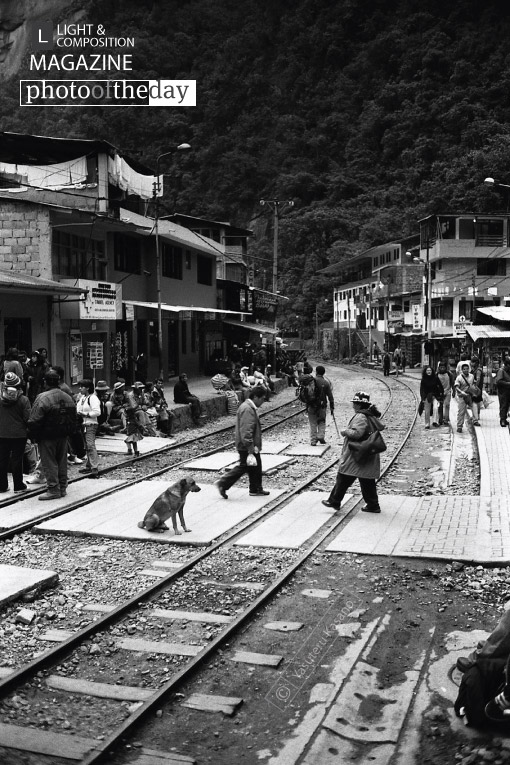
Captured in the bustling village of Aguas Calientes, Peru, this photograph documents the gateway to the historic site of Machu Picchu. The photographer masterfully frames the essence of this transit point, where the natural beauty of the Andes meets the transient energy of travelers seeking the ancient citadel. By focusing on the atmosphere of this unique location, the image transcends a simple travel snapshot, offering a contemplative look at a place defined by its proximity to history. Its award-worthy quality lies in the evocative composition and the photographer's ability to distill the village's distinct character into a single, resonant frame.
Yasuteru Kasano
Based in Wakayama, Japan, Yasuteru Kasano views photography as a profound method of connecting fragmented moments into a cohesive journey through memory. His work explores the intersection of reality and reflection, aiming to capture the essence of a scene at a specific point in time. Through his lens, Kasano transforms everyday scenery into evocative narratives, demonstrating a deep commitment to the art of visual storytelling.
Resonance Score Breakdown
Transparency Note: The resonance score (13.6/20) is calculated based on social engagement metrics collected before the award announcement.
Expert Photography Reviews · 5
The Threshold of Elsewhere
We often speak of destinations as if they were fixed points on a map, solid and unmoving. But a destination is rarely just a place; it is a state of anticipation.
Read the reflection →The Threshold of Breath
We are all, in some sense, people in transit. We carry our lives in bags that grow heavier with the years, moving through stations where the air tastes of departure and the dust of ancient stone.
Read the reflection →Reviews & Comments
Share your thoughts about this award-winning photograph. Your reviews contribute to the community engagement score.
Of the thousands of travel frames I’ve reviewed, most are just postcards. What separates this from the noise is the way the mist clings to the architecture, grounding the transient crowd in something ancient. It’s not just a transit point; it’s a quiet collision of eras. I’ll admit, the blur of the passing figures actually made me hold my breath. It’s a rare, honest look at a place that usually demands we only look up.
The ochre dust of Aguas Calientes clings to the frame like a Morandi still life, bleeding into the bruised, slate-grey shadows that pool beneath the eaves. It’s a chromatic ache, that specific, humid gold of Andean twilight, and I’ve found myself breathless before its quiet, suffocating warmth. One doesn’t merely see these tones; one inhales them, feeling the heavy, damp air of the mountains settle against the skin, humming with a melancholic, ancient resonance.
The frame’s geometry anchors the chaos of the transit point. Vertical lines of the architecture intersect with the rhythmic movement of the crowd, creating a necessary spatial tension. It’s a rigid, disciplined arrangement that prevents the scene from dissolving into mere noise. I’ve rarely seen such precise control over the picture plane in this genre. The weight is distributed perfectly across the fulcrum of the frame. It’s a rare, cold satisfaction to see such structural integrity.
The air in Aguas Calientes feels heavy with the humidity of the Andes. Kasano didn’t rush; he waited for the light to soften against the stone, catching the quiet transition between the travelers and the mountain’s ancient weight. I’ve stood in such places, feeling the damp chill seep into my bones. It’s a rare, patient stillness he’s found here. I find myself wanting to breathe in that mist, just to feel the mountain’s presence once more.
Aguas Calientes is a frantic, humid bottleneck, yet Kasano has found a stillness here that most tourists miss while rushing for the morning train. It’s a quiet, disciplined frame. I’ve spent enough damp mornings waiting for the Andean mist to settle to know he didn’t just stumble upon this. He stayed, he watched, and he let the chaos subside. It’s a rare, earned moment of composure in a place that usually demands nothing but haste.