Monet on Water by Nancy Sámano
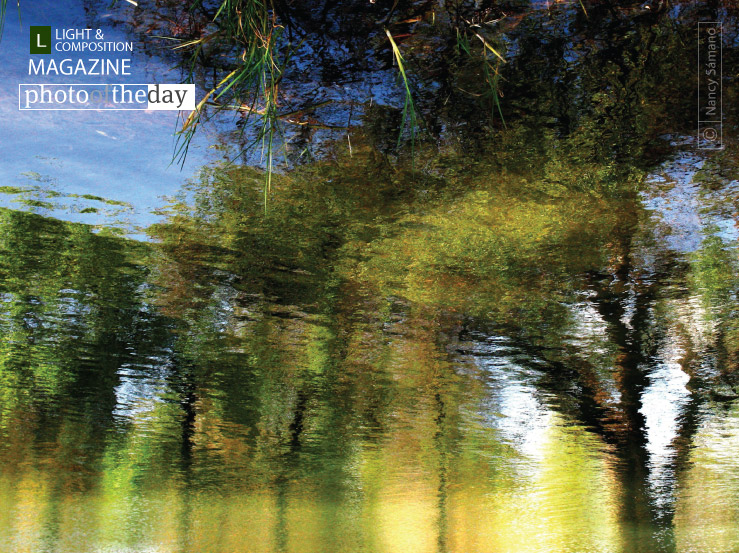
At Camecuaro Lake, the water mirrors the fluid, overlapping brushstrokes of a Monet masterpiece. Nancy Sámano captures this ethereal scene by observing how light and color cascade across the surface, creating a grand, textured jumble that feels painterly and alive. Her technical decision to focus on the interplay of reflection and movement transforms a natural landscape into an abstract study of color. This image is award-worthy for its ability to bridge the gap between photography and impressionist art, revealing the hidden, rhythmic patterns of nature through a keen and artistic eye.
Nancy Sámano
Born in Guadalajara, Mexico, in 1981, Nancy Sámano is a dedicated cultural producer and visual storyteller. After honing her craft through studies in cinema direction in Barcelona and screenplay creation in New York, she developed a profound, observational approach to photography. Now based in her hometown of Guadalajara, she frequently exhibits her work in galleries across the region. Her diverse background in film and writing informs her unique photographic perspective, allowing her to capture the world with the narrative depth and artistic sensitivity of a seasoned filmmaker.
Resonance Score Breakdown
Transparency Note: The resonance score (14.6/20) is calculated based on social engagement metrics collected before the award announcement.
Expert Photography Reviews · 6
The Surface of Memory
We look at the water and expect to see ourselves. We expect a mirror, a clear boundary between the world we walk upon and the world that waits beneath. But the surface is rarely still.
Read the reflection →The Ripple of Memory
The smell of rain on hot stone always brings me back to the damp wool of my childhood sweaters. It is a heavy, clinging scent, like earth trying to hold onto the sky.
Read the reflection →Reviews & Comments
Share your thoughts about this award-winning photograph. Your reviews contribute to the community engagement score.
felicidades!! =)
The emerald depths of Camecuaro don’t merely reflect; they dissolve into a viscous, liquid alchemy that recalls the fevered, light-drenched canvases of Monet. It’s a chromatic symphony where the chartreuse of submerged moss bleeds into the bruised indigo of shadow, creating a tension that makes my pulse quicken. One finds here a tactile, shimmering density that defies the lens, transforming the water’s surface into a restless, breathing tapestry of pure, unadulterated pigment.
The water at Camécuaro doesn’t just reflect; it breathes. Nancy waited for the surface to soften, letting the light dissolve into those liquid, impressionistic strokes. I’ve spent enough mornings by the shore to know she held her breath, too, listening for the exact moment the ripples harmonized. It’s a quiet, rhythmic surrender. Looking at these colors, I feel a sudden, sharp ache for the stillness of that Mexican dawn. She didn’t capture the lake; she let it speak.
Sámano’s water doesn’t merely reflect; it fractures the light into a violent, rhythmic geometry. I’m unsettled by how the darkness here refuses to settle, clinging to the ripples like a bruise. It’s not an Impressionist dream, but a confrontation with the void beneath the surface. When I stare into those deep, obsidian pockets, I feel a sudden, cold vertigo. She’s captured the weight of the lake’s silence, and frankly, it’s far more honest than the light.
It’s easy to mistake a lucky ripple for art, but Sámano clearly spent hours watching these reflections shift. Most would have packed up once the sun hit the wrong angle, yet she’s captured the exact moment the light turned the lake into a canvas. I’ve spent enough miserable mornings waiting for water to behave to know she didn’t just stumble upon this. It’s a rare, quiet triumph of patience over the shutter button. Well earned.
Most abstract water studies are just messy noise, but this one holds. I’ve seen thousands of attempts to mimic Impressionism, yet Sámano’s work succeeds because she doesn’t force the paint; she lets the lake’s chaotic ripples dictate the rhythm. It’s the deliberate tension between the sharp, dark reeds and the blurred, liquid light that makes me want to stare at it for an hour. Thirty years from now, this won’t feel dated. It’s genuinely hypnotic.
The frame doesn’t collapse under the weight of its own fluidity. It’s a rare instance where the lack of a horizon line actually functions. The spatial tension between the saturated greens and the fractured light creates a rigid, rhythmic grid. It’s almost too chaotic, yet the composition holds. I’ve spent hours staring at these ripples, and frankly, it’s exhausting. The picture plane remains locked, refusing to dissolve into mere sentiment. It’s a disciplined abstraction.
this is brilliant..
This is beautiful! How can I submit a photo?
beautiful photo
I loved :D