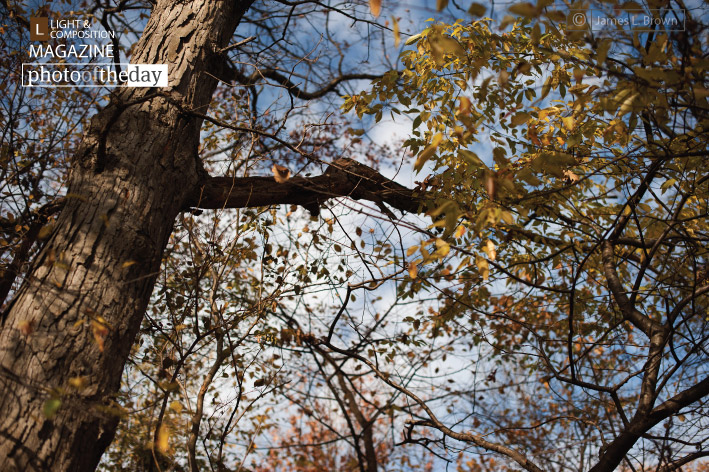
The Sky is Falling by James L. Brown
Captured in the tranquil nature parks of Peterborough, Canada, this image reflects the quiet transition of the seasons. As winter approached, the photographer sought to document the vibrant, turning leaves against the backdrop of a still, cold lake. By utilizing a wide aperture and precise exposure compensation, the photographer isolated the delicate textures of the foliage, creating a striking contrast between the crisp air and the warmth of the autumn palette. This photograph is award-worthy for its masterful use of light and depth, transforming a simple moment of seasonal change into a poignant, evocative study of nature’s fleeting beauty.
James L. Brown
Based in Petrolia, Ontario, James L. Brown is a self-taught photographer dedicated to uncovering the inherent beauty within simple, everyday subjects. He maintains a philosophy that prioritizes artistic vision over technical equipment, consistently seeking to refine his craft through observation. Beyond his creative pursuits, Brown is committed to humanitarian efforts, utilizing his passion for photography to support charitable initiatives and connect with global communities through his work with KIVA.
Resonance Score Breakdown
Transparency Note: The resonance score (12.1/20) is calculated based on social engagement metrics collected before the award announcement.
Expert Photography Reviews · 6
The Weight of Gold
Autumn is a slow surrender, a quiet loosening of the grip that trees hold on their own history. We watch the leaves turn, not because they are dying, but because they are finally ready to let go of the sun they have spent months gathering.
Read the reflection →The Weight of Gravity
Everything that rises must eventually find its way back to the earth. We spend our youth looking upward, tracing the flight of birds or the slow drift of clouds, convinced that the sky is a destination. We forget that the ground is patient.
Read the reflection →Reviews & Comments
Share your thoughts about this award-winning photograph. Your reviews contribute to the community engagement score.
Autumn’s decay isn’t a transition; it’s a confrontation. Brown’s leaves don’t just hang; they suspend themselves over that black, indifferent Peterborough water like a final, desperate thought. I’ve stared at these amber veins until my eyes ache, searching for the light that refuses to penetrate the depths. It’s unsettling. When the shadows swallow the lake’s edge, the beauty stops being inviting and starts demanding an accounting of our own fleeting, fragile presence. It’s haunting work.
The air in Peterborough must have been biting that morning. James waited for the light to soften, catching those final, frantic leaves before the frost claimed them. It’s a quiet surrender. I find myself shivering just looking at the stillness of that lake. He didn’t force the frame; he let the season speak its ending. There’s a profound, lonely grace here. I’ve felt that same ache, standing still while the world turns cold around me.
The ochre leaves, burning with the intensity of a Turner sunset, collide against the lake’s surface, which holds the bruised, melancholic violet of a Morandi still life. It’s a chromatic dissonance that makes my heart ache, for the way the warmth of the decaying foliage fights the encroaching, glacial chill of the Canadian air is nothing short of a tragedy. One finds here a visceral, shivering beauty that doesn’t just exist; it truly demands our surrender.
A wide aperture at f/2.5 suggests a photographer who didn’t want to linger in the Peterborough chill. It’s a pretty enough study of autumn, but one wonders if the tripod ever left the boot. I’ve spent enough mornings shivering by Canadian lakes to know that true depth requires more than a shallow focus. It’s technically competent, certainly, but it lacks the grit of a long, cold wait. It’s a snapshot, not a conquest.
The frame’s geometry is compromised. While the shallow depth of field isolates the foliage, the spatial tension collapses into the center. It’s a cluttered arrangement that lacks a clear fulcrum. The eye wanders, searching for an anchor that isn’t there. I’ve grown weary of such aimless bokeh. It doesn’t hold. The composition demands a more rigorous distribution of mass to justify its own existence. Without structure, the autumn palette is merely noise.
Most nature photography is just wallpaper, but this holds up. I’ve seen thousands of autumn shots, yet Brown’s choice to shoot wide open at f/2.5 creates a frantic, blurred chaos that feels genuinely cold. It’s the tension between the sharp, dying leaf and the dissolving background that makes me shiver. It doesn’t just document a season; it captures the exact moment light abandons the landscape. In thirty years, this will still feel like a goodbye.