Dont Look at Me This Way by Shahnaz Parvin
Captured during the vibrant harvest season in rural Bangladesh, this photograph centers on a cow gazing directly at the lens with an expression of profound curiosity. The composition masterfully balances the animal's presence against the backdrop of a cart overflowing with freshly harvested rice paddy, grounding the image in the labor and rhythm of the season. The photographer’s choice of a wide aperture creates a soft, isolating depth of field, drawing the viewer into the animal's soulful eyes. This image is award-worthy for its ability to transform a routine agricultural scene into a poignant, intimate encounter that captures the quiet dignity of rural life.
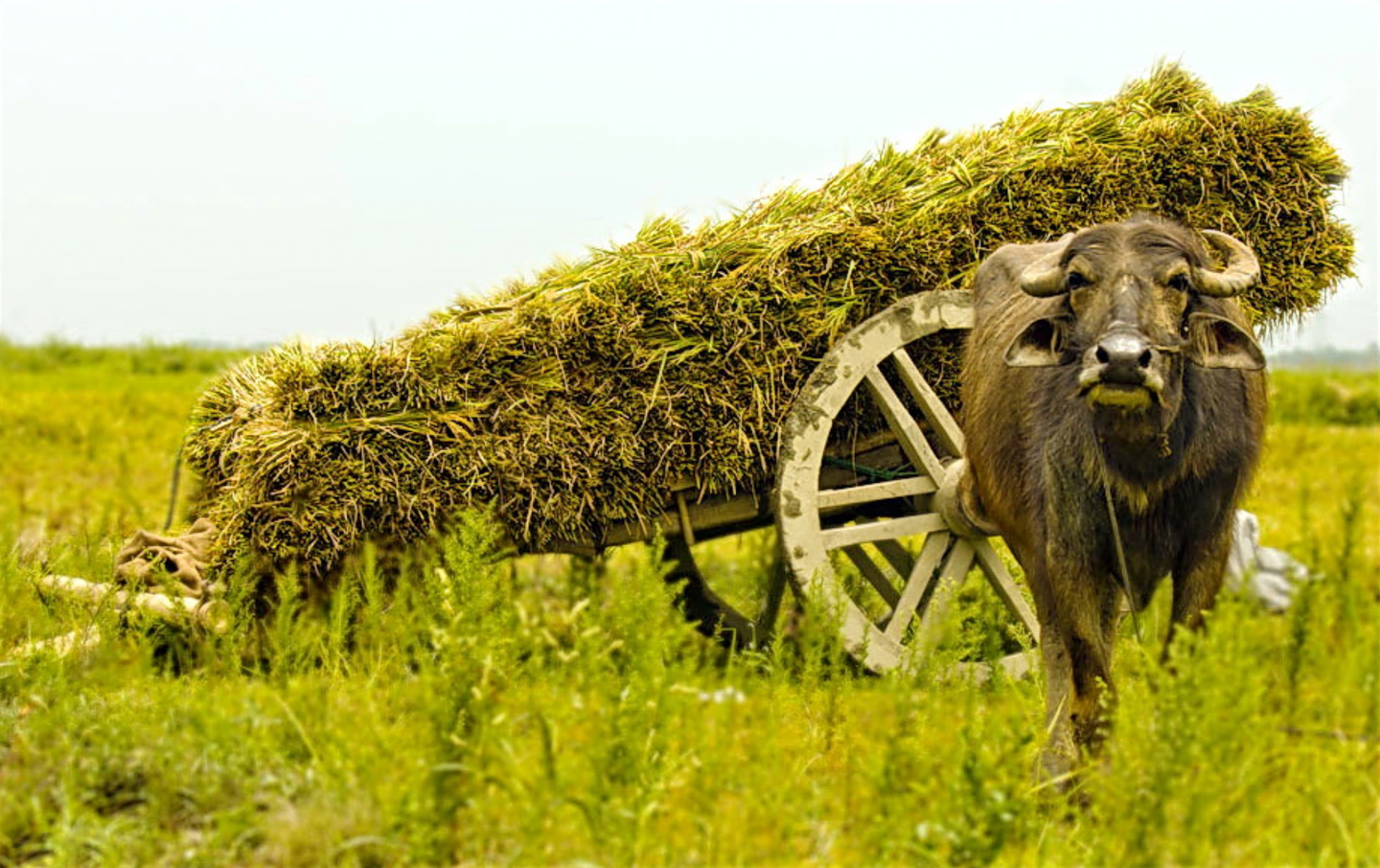
Exposure 1/400sec @ f/1.8 | ISO 200 | Focal Length 85mm
Shahnaz Parvin
Shahnaz Parvin was a highly acclaimed photojournalist and a passionate advocate for the visual storytelling of Bangladesh. Recognized as one of the world’s top photographers during her career, she specialized in documentary photography, capturing the raw essence of culture, conflict, and daily life across South Asia. As a prolific contributor to Light & Composition, her work earned numerous accolades, cementing her legacy as a dedicated artist who used her lens to bridge the gap between her homeland and the global community.
Resonance Score Breakdown
Transparency Note: The resonance score (12.6/20) is calculated based on social engagement metrics collected before the award announcement.
Expert Photography Reviews · 6
The Weight of a Witness
In the quiet corners of a farm, there is a language that requires no syntax. We often assume that the capacity to observe is a uniquely human burden, a heavy mantle we wear as we navigate our days.
Read the reflection →The Breath of the Field
The smell of damp earth after a long day of sun is a heavy, sweet perfume that clings to the back of the throat. It is the scent of stalks being crushed, a dry, papery friction against the palms.
Read the reflection →Reviews & Comments
Share your thoughts about this award-winning photograph. Your reviews contribute to the community engagement score.
The ochre of the sun-bleached paddy, reminiscent of a muted Turner landscape, hums against the cow’s hide, a deep, velvety umber that feels like Morandi’s dust-settled stillness. It’s a chromatic conversation I’ve found myself lingering over, mesmerized by how the light catches the animal’s iris, turning it into a liquid, amber-flecked pool. One cannot help but feel a sudden, sharp ache in the chest, watching such quiet, golden dignity emerge from the harvest’s heat.
The cow’s gaze isn’t merely curious; it’s an indictment. By isolating the beast against the golden blur of the harvest, Parvin forces us to confront the animal’s heavy, singular consciousness. I’ve stared into those eyes for an hour, and I’m unsettled by the darkness pooling in the iris. It’s a void that refuses to be romanticized. We aren’t just looking at a farm animal; we’re being judged by the very life we consume.
The light here isn’t just illumination; it’s a quiet conversation between the harvest and the beast. She stood in the field, waiting for that specific, soft gaze to settle. It’s rare to find such stillness in the heat of the Dhaka harvest. Looking into those eyes, I feel a sudden, sharp ache for the simplicity of the earth. She didn’t rush the moment. She listened until the cow finally decided to look back.
The 85mm compression forces a brutal proximity. It’s a claustrophobic geometry. The cow’s head occupies the frame’s fulcrum, effectively severing the background’s agricultural narrative. While the shallow depth of field isolates the subject, it doesn’t excuse the lack of spatial tension. The composition’s weight leans too heavily on the animal’s gaze. I’m exhausted by the sentimentality here. It’s a rigid, predictable structure that refuses to challenge the viewer’s eye. It doesn’t hold.
Most agricultural photography feels like a postcard, but this cow’s gaze is unnerving. It’s the f/1.8 aperture that does the heavy lifting here; by blurring the rice cart into a golden haze, Parvin forces us to confront the animal as an individual rather than a prop. I’ve seen thousands of rural scenes, yet this one sticks. It’s the defiance in those eyes. Thirty years from now, that look will still be asking us why we’re watching.
It’s easy to snap a cow in a field, but getting that creature to hold its gaze while the harvest cart rattles past requires more than a quick shutter finger. One suspects Shahnaz spent a long, dusty morning earning that connection. The shallow depth of field is a bit indulgent, yet I find myself genuinely softened by the animal’s expression. It’s a quiet, patient bit of work. She clearly didn’t mind the flies to get it.