Despair by Christopher Utano
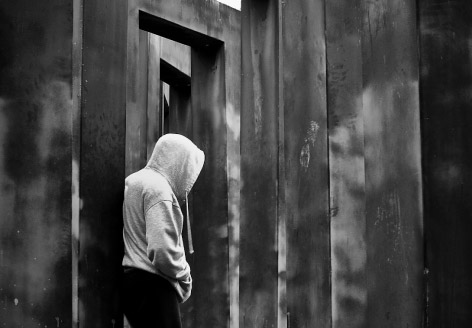
Captured on the grounds of the Nassau Art Museum on Long Island, this evocative self-portrait utilizes the inherent depth of the surrounding sculptures to frame the photographer as the central subject. By carefully positioning his camera on a tripod and utilizing a timer, Christopher Utano achieved a precise composition that plays with perspective and form. The resulting image, titled 'Despair,' is a testament to the photographer's ability to transform a static environment into a deeply personal narrative, earning recognition for its compelling artistic vision and technical execution.
Christopher Utano
Based in Hauppauge, New York, Christopher Utano is a versatile photographer with a diverse portfolio spanning black and white, landscape, still life, macro, and HDR photography. His work has garnered significant professional recognition, including publication credits with National Geographic Stock, istockphoto, and Boating Times Long Island. Utano is known for his technical proficiency and his dedication to capturing the nuanced beauty of his subjects through a wide array of professional-grade equipment.
Resonance Score Breakdown
Transparency Note: The resonance score (12.8/20) is calculated based on social engagement metrics collected before the award announcement.
Expert Photography Reviews · 4
The Weight of Stone
In the quiet corners of a garden, statues often outlive the hands that carved them. They are frozen gestures, limbs caught in a permanent reach toward a sun that has long since set. We walk past them, these heavy, silent witnesses, and we mistake their stillness for peace.
Read the reflection →The Weight of Hollow Spaces
The air in an empty room has a specific density, a coldness that settles against the skin like damp wool. I remember the feeling of standing in a hallway where the silence was so thick it tasted of iron and old dust.
Read the reflection →Reviews & Comments
Share your thoughts about this award-winning photograph. Your reviews contribute to the community engagement score.
I feel the style of the photograph is beautifully done. Although the face is not taken in the photo but tells the story nicely.
:).
Most entries in this category rely on heavy post-processing to manufacture mood, but Utano’s work succeeds through raw, structural restraint. The way the sculpture’s cold, geometric lines press against his frame creates a genuine claustrophobia I haven’t felt in years. It’s the 28mm lens that does the heavy lifting here, forcing a tension between the subject and the stone. It’s not just a self-portrait; it’s a quiet, enduring study of isolation that’s earned its place.
Setting a timer and sprinting into frame is a frantic business, yet Utano’s composure here suggests a man who didn’t mind the repetition. I’ve spent enough afternoons shivering in the mud to recognize the discipline required to balance one’s own silhouette against those stone forms. It’s a quiet, deliberate piece of work. I find myself genuinely envious of the stillness he managed to conjure. He clearly didn’t settle for the first take. Good for him.
Shadow isn’t merely the absence of light; it’s the architecture of our internal exile. In Utano’s frame, the Nassau sculptures don’t just surround him; they colonize his silhouette. I’ve stared at this for an hour, and it’s chilling how the darkness swallows his features, leaving only the cold geometry of stone. It’s a brutal, honest confrontation with the void. When I look at it, I don’t see a man; I see the weight of silence itself.
The desaturated slate of the Nassau grounds bleeds into a melancholic, bruised violet, echoing the quiet, dusty stillness of a Morandi still life. It’s a chromatic ache that I find utterly devastating; the way the shadows cling to the sculpture’s cold stone, mimicking the photographer’s own isolation, creates a tonal dissonance that vibrates against the eye. One doesn’t merely look at this palette; one feels it settling into the marrow like a winter fog.