Expedition Overview
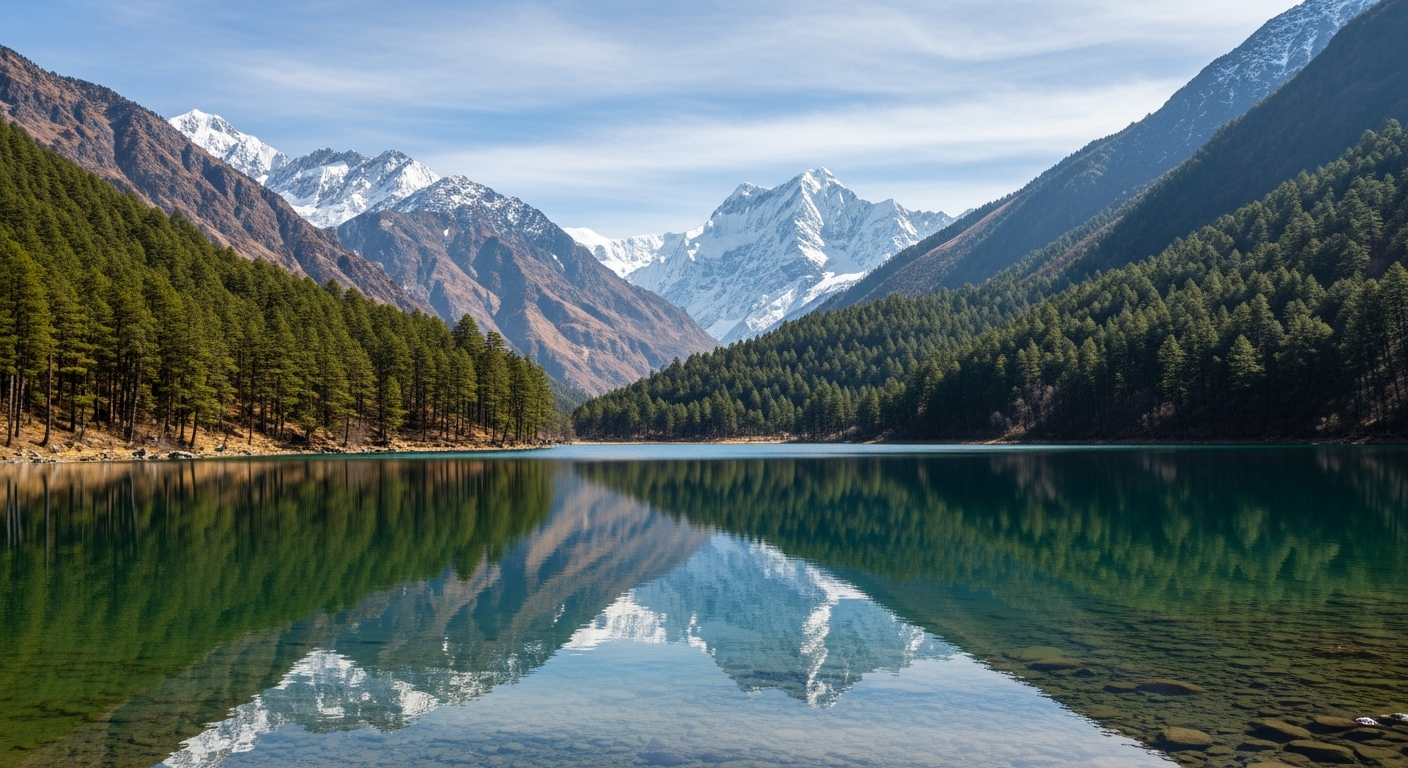
Rara Lake is Nepal's largest lake and arguably its most beautiful — a deep blue expanse at 2990m in the remote mid-western Himalaya, surrounded by conifer forest and ringed by snow peaks. It lies within Rara National Park, one of the smallest and most strictly protected in Asia, which has maintained an extraordinary level of environmental integrity because of its remoteness. There are no roads to Rara — access is by small aircraft to Jumla followed by two days of trekking through pristine forest.
The photography here is about solitude, scale, and an extreme quality of light that comes from altitude, clean air, and a water surface that changes colour from deep indigo to turquoise to silver as the day progresses and the sky above it changes. Professor Nasrul Eam considers Rara one of the finest landscape photography destinations in Asia and one of the least known to the international photography world.
Expedition Itinerary
Day 1: Fly to Jumla & Trek Begins
Early morning flight from Nepalgunj to Jumla (30 min, mountain weather-dependent). Afternoon walk through oak and pine forest. The trail is quiet — Rara sees fewer than 2,000 visitors annually.
The Goal of the Day: Forest entry photography; remote Himalayan approach.
Day 2: Trek to Rara Lake — First View
The lake appears without warning as the trail crests the ridge: an impossible blue in a bowl of forest. The first view of Rara is one of the great reveal moments in Asian travel. Camp on the southern shore.
The Goal of the Day: The reveal — photographing a first sight of an extraordinary landscape.
Day 3: Rara Circumambulation (2 days)
Two days walking the lake perimeter — 16km of trail through forest, past summer pasture huts, and along the northern shore where the mountains reflect in the water. Every hour of the day produces different light on the same lake.
The Goal of the Day: Lake reflection photography at multiple times of day; how colour changes.
Day 4: Chuchemara Peak (4087m)
A half-day climb to the highest point in the park gives a full 360-degree panorama: the lake far below, and beyond it the entire mid-western Himalayan range including Api (7132m) and Saipal (7031m).
The Goal of the Day: Aerial perspective on the lake; the relationship of water and mountain range.
Day 5: Return to Jumla & Fly Out
Return trek to Jumla through the forest. Final portfolio review of seven days' images. Fly back to Nepalgunj and onward connection.
The Goal of the Day: Portfolio distillation; identifying the images that Rara produced.
Book Your Expedition
Note: Final price may vary based on specific expedition details and customizations.
Expedition Leaders
Professor Nasrul Eam is a seasoned explorer and visual storyteller who has spent over two decades traversing Asia’s diverse landscapes and cultures. As Dean of the Department of Art and Photography at Light & Composition University, he leads immersive photography expeditions to regions like the Himalayas, Sundarbans, and Bali. These journeys blend cultural exploration with hands-on learning, culminating in a complete photography diploma. With a portfolio of over 50 publications—including The Quintessence of Photography and Illuminating Nature—his work captures the profound beauty of everyday life. His background in advertising, linguistics, and visual arts enriches his mentorship, guiding participants to uncover compelling narratives through their lenses. Professor Eam’s expeditions are transformative experiences, inspiring photographers to engage deeply with the world around them.
Travel Information
Nepalgunj is 1 hour from Kathmandu by air. Jumla is 30 min from Nepalgunj by Twin Otter (mountain weather-dependent — allow extra days for flight delays). The trekking route (2 days each way) is well marked but remote. Best season: October–November and April–May.
What to Bring
• Ultralight pack — porter service included, but keep camera kit accessible
• Wide-angle polarising filter (mandatory for lake colour photography)
• Long telephoto for wildlife in the national park
• Warm layers — nights at Rara can drop to -5°C in October
• Waterproof tent fly (afternoon mist and rain common)