Expedition Overview
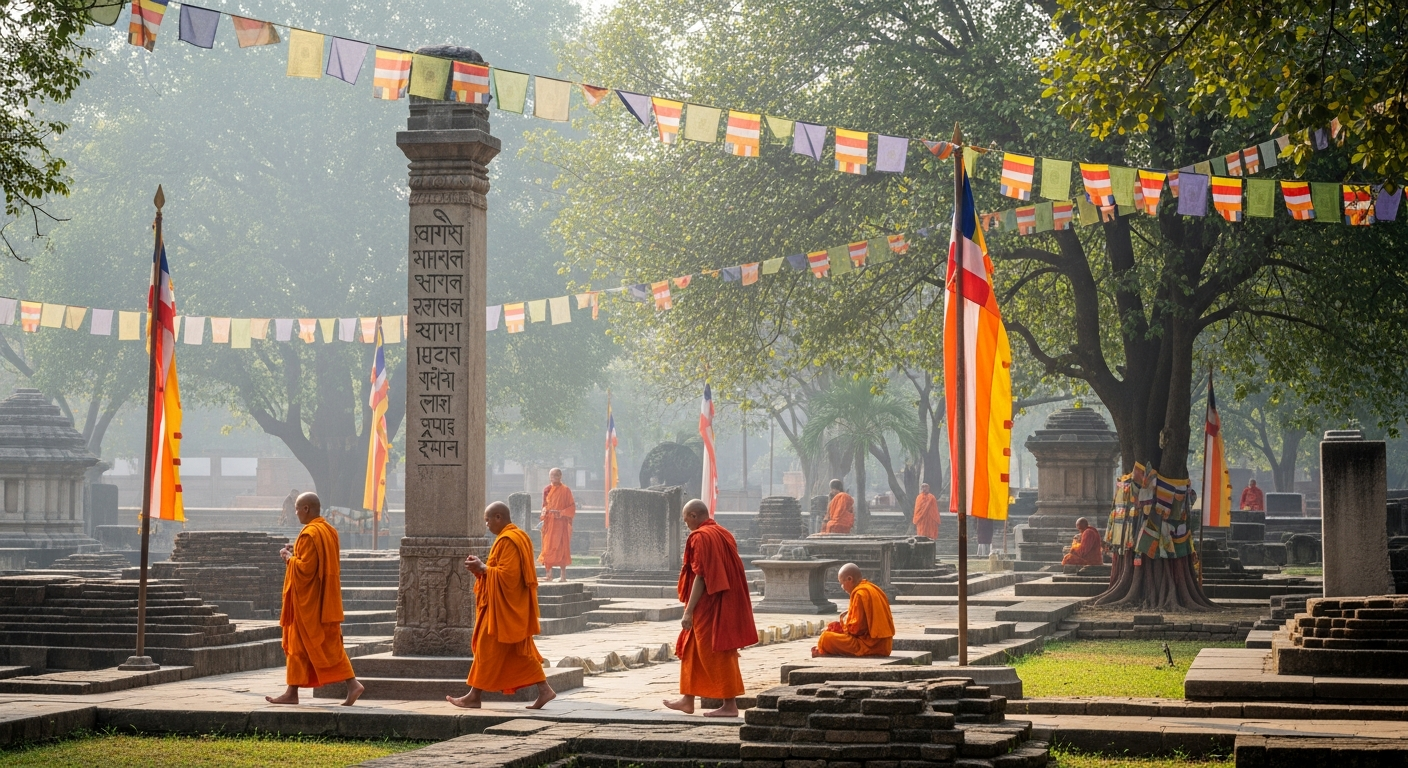
Lumbini, in the Terai plain of southern Nepal, is one of the most sacred sites on earth — the birthplace of Siddhartha Gautama, documented by the Ashoka Pillar erected in 249 BCE and confirmed by ongoing archaeological excavation. The UNESCO World Heritage Site includes the Maya Devi Temple (where a stone marker identifies the exact birthplace), the Sacred Garden with its sacred Bodhi tree and reflective pool, and a vast international monastic zone where Buddhist nations from Myanmar to Germany have built temples and monasteries in their own architectural traditions side by side.
The photography here is not merely religious documentation but a study in the relationship between faith and architecture — how different Buddhist cultures express devotion through form, material, and landscape. Professor Nasrul Eam approaches Lumbini as a meditation on photographic presence: how to photograph sacred space and its visitors with respect, restraint, and genuine empathy.
Expedition Itinerary
Day 1: Sacred Garden & Maya Devi Temple at Dawn
We arrive at the Sacred Garden at 5am. Pilgrims arrive from before dawn for circumambulation and meditation at the Bodhi tree. The Maya Devi Temple itself, enclosing the stone floor of the original shrine, is photographed with available light in the pre-dawn silence.
The Goal of the Day: Sacred space photography at extreme low light; pilgrimage documentation.
Day 2: International Monastic Zone — East
The Theravada monasteries of Sri Lanka, Myanmar, Thailand, and Cambodia line the eastern canal. Each is a complete architectural statement. The Myanmar Golden Temple is extraordinary at golden hour. The Sri Lankaramaya is active with early-morning monks.
The Goal of the Day: Comparative religious architecture; how different Buddhist traditions express the same faith.
Day 3: International Monastic Zone — West & Kapilvastu
The Mahayana monasteries of China, Japan, Korea, and Germany. The Chinese White Lotus monastery's reflection in the canal at dusk. Afternoon drive to Kapilvastu (the ancient capital of Siddhartha's father's kingdom) — active archaeological excavation.
The Goal of the Day: Reflection photography; archaeological site documentation.
Book Your Expedition
Note: Final price may vary based on specific expedition details and customizations.
Expedition Leaders
Professor Nasrul Eam is a seasoned explorer and visual storyteller who has spent over two decades traversing Asia’s diverse landscapes and cultures. As Dean of the Department of Art and Photography at Light & Composition University, he leads immersive photography expeditions to regions like the Himalayas, Sundarbans, and Bali. These journeys blend cultural exploration with hands-on learning, culminating in a complete photography diploma. With a portfolio of over 50 publications—including The Quintessence of Photography and Illuminating Nature—his work captures the profound beauty of everyday life. His background in advertising, linguistics, and visual arts enriches his mentorship, guiding participants to uncover compelling narratives through their lenses. Professor Eam’s expeditions are transformative experiences, inspiring photographers to engage deeply with the world around them.
Travel Information
Lumbini is in the Terai, near the Indian border. Flights from Kathmandu to Bhairahawa (30 min), then 20-minute drive. Best season: October–February (cooler weather — summer is very hot and humid). Important: dress modestly and follow all sacred site photography protocols.
What to Bring
• Wide-angle for temple interiors and garden
• 50–85mm for pilgrim portraiture
• Tripod for low-light Maya Devi Temple work
• Modest covering clothing (required at the sacred sites)