Expedition Overview
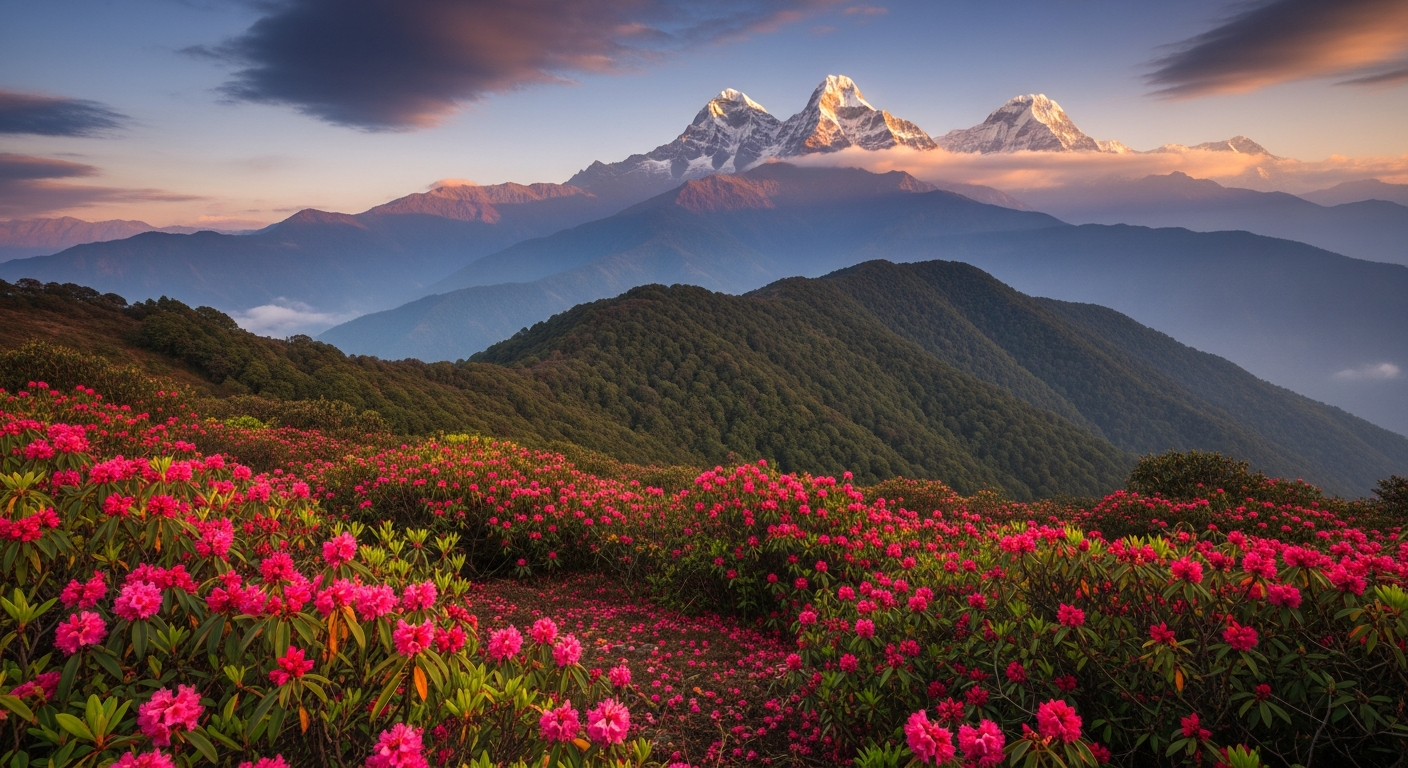
The Mardi Himal trek was officially opened in 2012 and remains far less known than its Annapurna neighbours. From the summit ridge at 4500m, the view is extraordinary: Machapuchhre (Fishtail Mountain) at almost uncomfortably close range, Annapurna South and Hiunchuli to the west, and the Pokhara Valley 3500m below. The route climbs through some of the densest rhododendron forest in Nepal — in March and April, the trees are in full bloom at every level from 2000m to 3500m.
This seven-day circuit is ideal for photographers who want high-altitude mountain views without the logistical weight of a 14-day expedition, and who want the forest photography opportunities that the Mardi route provides in abundance. Professor Nasrul Eam has pioneered the Mardi Himal route as a photography expedition, identifying compositions that the guidebooks do not mention.
Expedition Itinerary
Day 1: Pokhara to Forest Camp
Drive to Kande (1.5 hours from Pokhara). Walk into the Mardi Himal rhododendron forest immediately. Pheasants and red pandas inhabit these slopes. Forest Camp at 2600m has views emerging through the canopy.
The Goal of the Day: Forest atmosphere photography; working with filtered light through dense canopy.
Day 2: Low Camp to High Camp (4500m)
The forest thins and the ridge opens. Machapuchhre appears — its double summit a classic Himalayan silhouette. High Camp sits on the ridge with the mountain wall directly in front. Sunset is extraordinary.
The Goal of the Day: Mountain silhouette at sunset; the transition from forest to alpine zone.
Day 3: Mardi Himal Base Camp at Dawn
Before sunrise for Machapuchhre's alpenglow — the pink and gold that hits the summit before the valley floor wakes up. Explore the ridge toward Base Camp in morning light. Return to High Camp for portrait work with other trekkers and porters.
The Goal of the Day: Alpenglow on close Himalayan peaks; the dawn sequence.
Day 4: Descent via Siding Village
A route rarely taken by trekking groups. Siding is an authentic Gurung village — bamboo groves, water mills, women in traditional dress — not yet accustomed to photography tourists. Return to Pokhara through countryside.
The Goal of the Day: Undiscovered community documentation; the less-photographed route.
Book Your Expedition
Note: Final price may vary based on specific expedition details and customizations.
Expedition Leaders
Professor Nasrul Eam is a seasoned explorer and visual storyteller who has spent over two decades traversing Asia’s diverse landscapes and cultures. As Dean of the Department of Art and Photography at Light & Composition University, he leads immersive photography expeditions to regions like the Himalayas, Sundarbans, and Bali. These journeys blend cultural exploration with hands-on learning, culminating in a complete photography diploma. With a portfolio of over 50 publications—including The Quintessence of Photography and Illuminating Nature—his work captures the profound beauty of everyday life. His background in advertising, linguistics, and visual arts enriches his mentorship, guiding participants to uncover compelling narratives through their lenses. Professor Eam’s expeditions are transformative experiences, inspiring photographers to engage deeply with the world around them.
Travel Information
Pokhara is 25 minutes by air or 6 hours by road from Kathmandu. Mardi Himal permit included in ACAP. Best season: October–November for clear mountain views, March–April for rhododendron bloom.
What to Bring
• Layers for forest to 4500m (30°C range between Pokhara and High Camp)
• 70–200mm for Machapuchhre; wide-angle for forest
• Tripod for dawn ridge photography
• Rain gear (forest is wet October–November mornings)