Expedition Overview
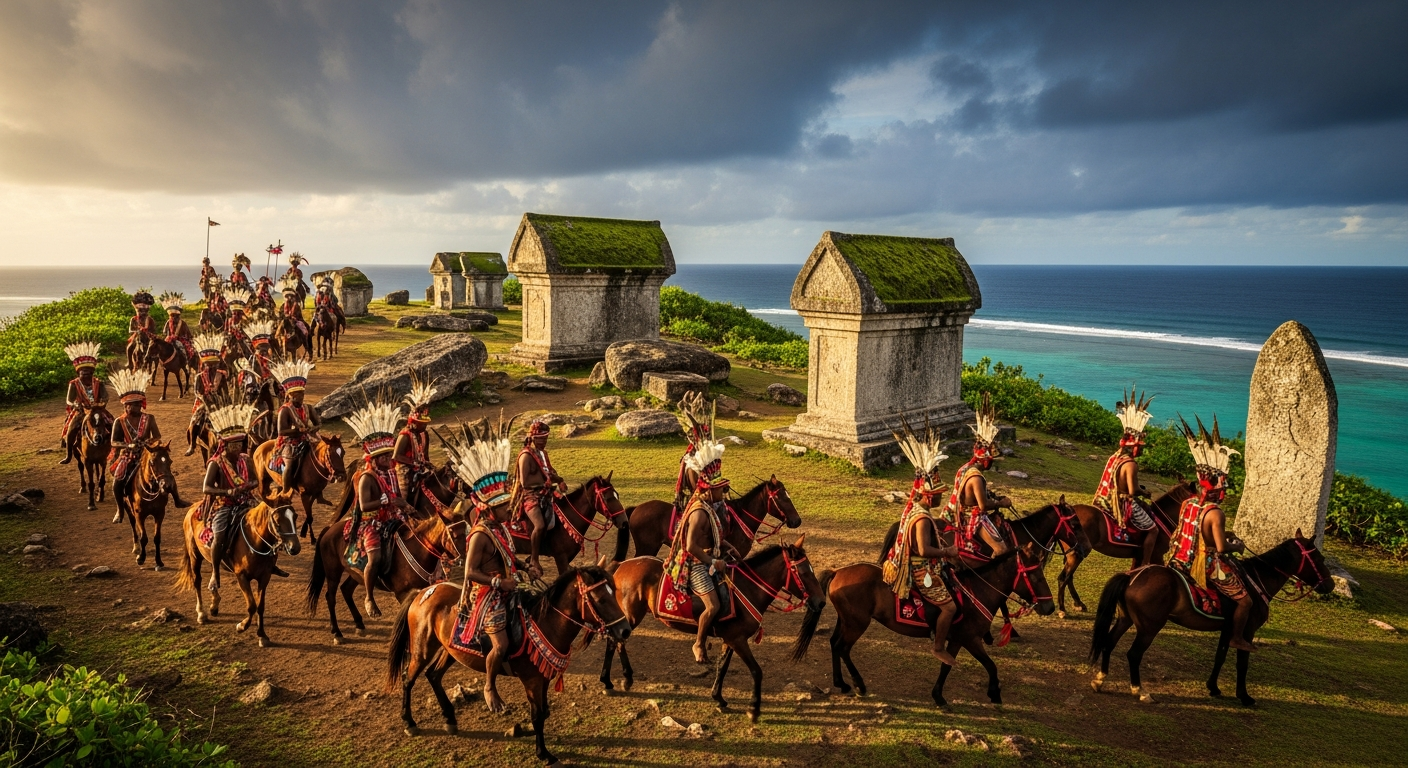
Sumba is one of the least-visited and most photogenic islands in Indonesia — a rugged, largely deforested island 200km east of Flores where the Sumbanese people maintain an animist tradition (Marapu) alongside Christianity, and where megalithic stone tombs are still being constructed and installed in village centres in the same manner as they have been for a thousand years. The Pasola festival — a ritual mounted horseback battle held in February–March — is one of the most visually extraordinary traditional ceremonies in Asia: hundreds of horsemen in ceremonial dress charging each other with blunted spears across a wide field, while the community watches and the blood drawn is believed to fertilise the coming harvest.
Professor Nasrul Eam, who photographed Pasola in 2022, considers it among the three most extraordinary cultural photography events he has ever witnessed. Even outside the festival season, Sumba delivers: the village documentation of Prailiu and Rende, with their megaliths and carved skull trees, is among the finest cultural documentary photography available anywhere in Asia.
Expedition Itinerary
Day 1: Waingapu & East Sumba Royal Villages
Fly to Waingapu from Bali. East Sumba is the territory of the traditional royal families and their stone tomb megaliths. Prailiu, the former royal village, has some of the largest and most intricately carved megaliths in Indonesia.
The Goal of the Day: Megalith photography: scale, carving detail, and relationship to the living village.
Day 2: Rende Village & Traditional Ikat
Rende is famous for the finest traditional ikat weaving in Indonesia — the hand-dyeing and weaving of cotton into the ceremonial textiles that define Sumbanese identity. A full day photographing the process from thread dyeing to completed cloth.
The Goal of the Day: Craft process documentation; the ikat dyeing and weaving sequence.
Day 3: Drive West — Weekuri Lagoon
Cross the island to the west (7 hours by road — Sumba's interior is extraordinary, a landscape unlike anything else in Indonesia: dry savanna, horses everywhere, traditional mounted herders). Weekuri is a brackish lagoon enclosed by limestone rock with turquoise water.
The Goal of the Day: Interior landscape photography; the savanna horse country of Sumba.
Day 4: Pasola Ceremony (February–March only) or West Sumba Villages
When the expedition runs in Pasola season, this day centres entirely on the festival. Outside the season, we photograph the west Sumba villages — Kampung Prai Ijing and Kampung Tarung — which have a different architectural vocabulary from the east.
The Goal of the Day: Mass festival documentary photography (Pasola); or alternative village cultural documentation.
Day 5: Tarimbang Beach & Return to Waingapu
Sumba's south coast is wild, surf-pounded, and almost empty. Tarimbang — a wide bay backed by savanna — is one of the few bays accessible by road. Return across the island to Waingapu for the flight out.
The Goal of the Day: Wild coast landscape photography; the empty south.
Book Your Expedition
Note: Final price may vary based on specific expedition details and customizations.
Expedition Leaders
Professor Nasrul Eam is a seasoned explorer and visual storyteller who has spent over two decades traversing Asia’s diverse landscapes and cultures. As Dean of the Department of Art and Photography at Light & Composition University, he leads immersive photography expeditions to regions like the Himalayas, Sundarbans, and Bali. These journeys blend cultural exploration with hands-on learning, culminating in a complete photography diploma. With a portfolio of over 50 publications—including The Quintessence of Photography and Illuminating Nature—his work captures the profound beauty of everyday life. His background in advertising, linguistics, and visual arts enriches his mentorship, guiding participants to uncover compelling narratives through their lenses. Professor Eam’s expeditions are transformative experiences, inspiring photographers to engage deeply with the world around them.
Travel Information
Fly Bali–Waingapu (1.5 hours) or Bali–Waikabubak (1 hour). Internal island transport is by chartered car. Best season: June–October (dry). Pasola: February–March (check exact dates each year — moon-dependent).
What to Bring
• Wide-angle for megalith documentation and Pasola field photography
• 300–500mm for Pasola horseman photography (spectators must stay at a distance)
• Dust protection for the dry season interior roads
• Neutral clothing (avoid bright colours at traditional ceremonies)