Expedition Overview
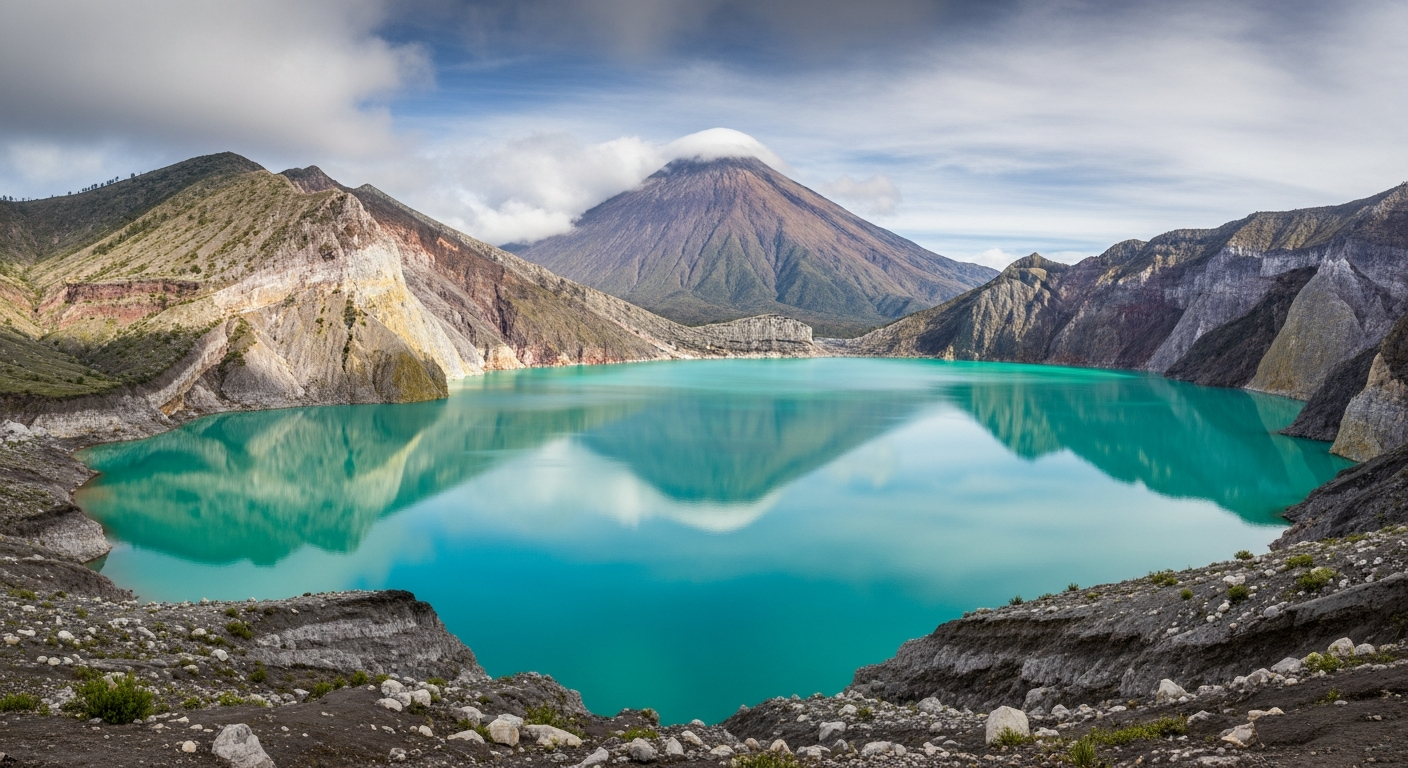
Lombok is Bali's less-visited neighbour, separated by the Wallace Line — the biogeographical boundary that divides Asian and Australian species — and dominated by the enormous cone of Mount Rinjani, at 3726m the second-highest volcano in Indonesia. The three-day trek to the Rinjani crater rim and Segara Anak lake is one of the finest multi-day mountain photography experiences in Southeast Asia: the lake sits 600m below the rim in the caldera, a hot spring steams into its edge, and on clear days the view from the summit extends to Bali, Sumbawa, and Flores simultaneously.
Below the mountain, the Sasak people — Lombok's indigenous Muslim majority — maintain a weaving tradition, a distinct architecture of bamboo longhouse villages, and a festival culture (the Bau Nyale festival, held in February–March, involves a mass gathering to collect sea worms that emerge at the beach once a year) that is entirely unlike Bali.
Expedition Itinerary
Day 1: Sembalun Valley & Trek Start
Drive to Sembalun Valley at 1200m — the starting point for the eastern Rinjani approach. Afternoon photography of the valley: enormous grassland below the volcano's flanks, traditional Sasak rice barns, and the giant silhouette of Rinjani above.
The Goal of the Day: Mountain approach photography; pre-climb landscape and community.
Day 2: Trek to Crater Rim (2641m)
6–8 hour ascent through savanna, then subalpine shrub, then open ridgeline. The crater rim reveals the full caldera: Segara Anak lake 600m below, the hot spring steaming at its edge, and the active Rinjani summit cone above. Camp on the rim for the summit attempt.
The Goal of the Day: Mountain trekking photography; the reveal at the rim.
Day 3: Rinjani Summit Sunrise (3726m) & Crater Lake
2am departure for the summit (3–4 hours from the rim camp). The summit sunrise — the shadow of Rinjani stretching west across Lombok and the entire island below — is the expedition's defining photograph. Descent to the crater lake for the final afternoon on the shore.
The Goal of the Day: Summit sunrise and volcanic shadow photography at 3726m.
Day 4: Descent & Sasak Village Sade
Descent from the crater via Senaru village. Afternoon in Sade — an intact traditional Sasak village where the weaving tradition continues and the bamboo longhouses are maintained in the traditional form.
The Goal of the Day: Indigenous village documentation; the contrast of mountain and community.
Day 5: Kuta Mandalika & Tanjung Aan Beach
Lombok's south coast has a completely different character from Bali — wide, white crescent bays with virtually no tourist infrastructure. Tanjung Aan has two bays side by side with different-coloured sand, separated by a rocky headland ideal for photography.
The Goal of the Day: Southeast Asian beach photography without the usual crowd.
Book Your Expedition
Note: Final price may vary based on specific expedition details and customizations.
Expedition Leaders
Professor Nasrul Eam is a seasoned explorer and visual storyteller who has spent over two decades traversing Asia’s diverse landscapes and cultures. As Dean of the Department of Art and Photography at Light & Composition University, he leads immersive photography expeditions to regions like the Himalayas, Sundarbans, and Bali. These journeys blend cultural exploration with hands-on learning, culminating in a complete photography diploma. With a portfolio of over 50 publications—including The Quintessence of Photography and Illuminating Nature—his work captures the profound beauty of everyday life. His background in advertising, linguistics, and visual arts enriches his mentorship, guiding participants to uncover compelling narratives through their lenses. Professor Eam’s expeditions are transformative experiences, inspiring photographers to engage deeply with the world around them.
Travel Information
Lombok International Airport (LOP) has direct connections from Bali (25 min) and Jakarta (2 hours). Best season: May–October for the summit (November–April the trail can be closed after heavy rain).
What to Bring
• Full mountain layering including heavy down jacket (summit at 3726m is very cold)
• Trekking poles (essential for the steep rim ascent and descent)
• Crampons or microspikes in early season
• Wide-angle for the crater panorama
• 70–200mm for the Rinjani shadow photograph at summit