Expedition Overview
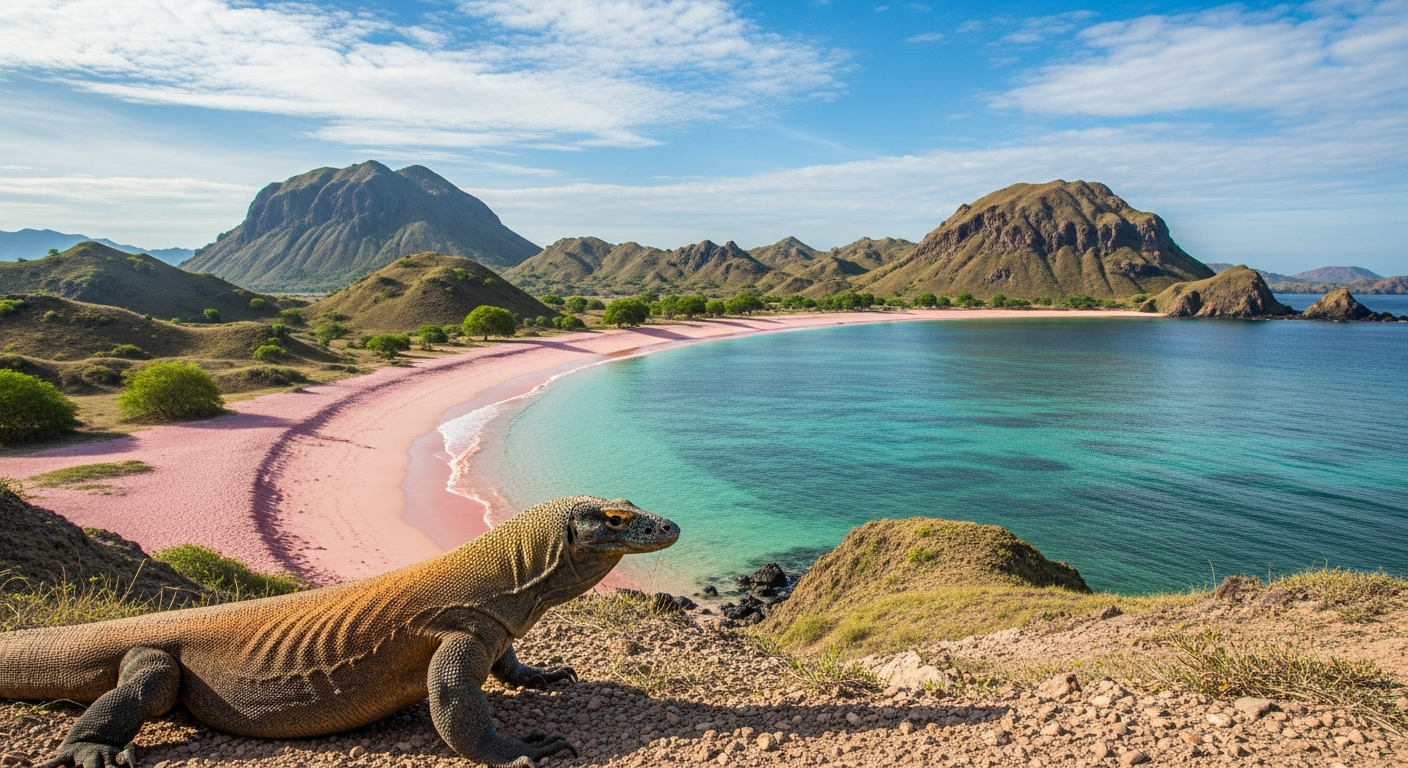
The Komodo National Park is one of the most biodiverse marine environments on earth and the last refuge of the Komodo dragon — the largest living lizard, which can reach 3 metres in length and 70kg in weight. The park covers 1733 km² of sea and island in the Flores Sea, with coral reefs that host over 1000 fish species, manta rays that aggregate year-round at Manta Point, and one of only a handful of pink sand beaches on earth.
The photography in Komodo operates across two completely different environments: the dramatic land landscape of steep volcanic islands, Komodo dragons in their natural savanna habitat, and the Padar Island viewpoint (one of Indonesia's finest) — and the marine environment, which requires underwater equipment. Professor Nasrul Eam structures this expedition to build competence in both, and provides specific guidance on Komodo dragon photography that is both effective and safe.
Expedition Itinerary
Day 1: Labuan Bajo & Padar Island Sunrise
Fly to Labuan Bajo (the gateway town on Flores) and board the live-aboard boat. First afternoon cruise to Padar Island, climbing the steep ridgeline for sunset. The three-bay view from the Padar summit is Indonesia's most extraordinary land landscape.
The Goal of the Day: Summit landscape photography; the three-bay composition at sunset.
Day 2: Komodo Island — Dragon Photography
Morning landing on Komodo Island with a park ranger. The dragons are active in the morning, moving through the dry savanna. We photograph at close range (rangers position us safely). Afternoon snorkelling at Castle Rock reef for marine photography.
The Goal of the Day: Large reptile photography at close range; the challenge of safe proximity.
Day 3: Rinca Island & Pink Beach
Rinca has a higher dragon density than Komodo and the rangers allow closer approach to nesting females. Pink Beach (Pantai Merah) — the beach sand is literally pink from coral fragment fragments — for midday snorkelling and beach photography.
The Goal of the Day: Alternative dragon habitat photography; beach colour photography.
Day 4: Manta Point & Kanawa Reef
Manta Point in the fast-flowing channel between islands is one of the most reliable manta ray sites in Asia. With an underwater housing, the mantas glide overhead in close range. Afternoon at Kanawa Island reef for coral and fish photography.
The Goal of the Day: Marine wildlife photography: mantas and reef.
Day 5: Sunrise at Sea & Return to Labuan Bajo
Final sunrise from the boat deck as we return through the archipelago. The light on the volcanic islands and the scattered reefs in the Flores Sea produces extraordinary seascape photography.
The Goal of the Day: Open-water seascape and island silhouette photography.
Book Your Expedition
Note: Final price may vary based on specific expedition details and customizations.
Expedition Leaders
Professor Nasrul Eam is a seasoned explorer and visual storyteller who has spent over two decades traversing Asia’s diverse landscapes and cultures. As Dean of the Department of Art and Photography at Light & Composition University, he leads immersive photography expeditions to regions like the Himalayas, Sundarbans, and Bali. These journeys blend cultural exploration with hands-on learning, culminating in a complete photography diploma. With a portfolio of over 50 publications—including The Quintessence of Photography and Illuminating Nature—his work captures the profound beauty of everyday life. His background in advertising, linguistics, and visual arts enriches his mentorship, guiding participants to uncover compelling narratives through their lenses. Professor Eam’s expeditions are transformative experiences, inspiring photographers to engage deeply with the world around them.
Travel Information
Fly to Labuan Bajo (LBJ) from Bali (1 hour) or Jakarta (2 hours). The expedition operates on a chartered live-aboard boat. Best season: April–November. December–March has heavy swells in the Flores Sea.
What to Bring
• Underwater housing or waterproof compact (essential for manta and reef photography)
• 70–200mm or longer for dragon photography on land
• Wide-angle for Padar summit panorama
• Polarising filter for reef snorkelling from surface