Expedition Overview
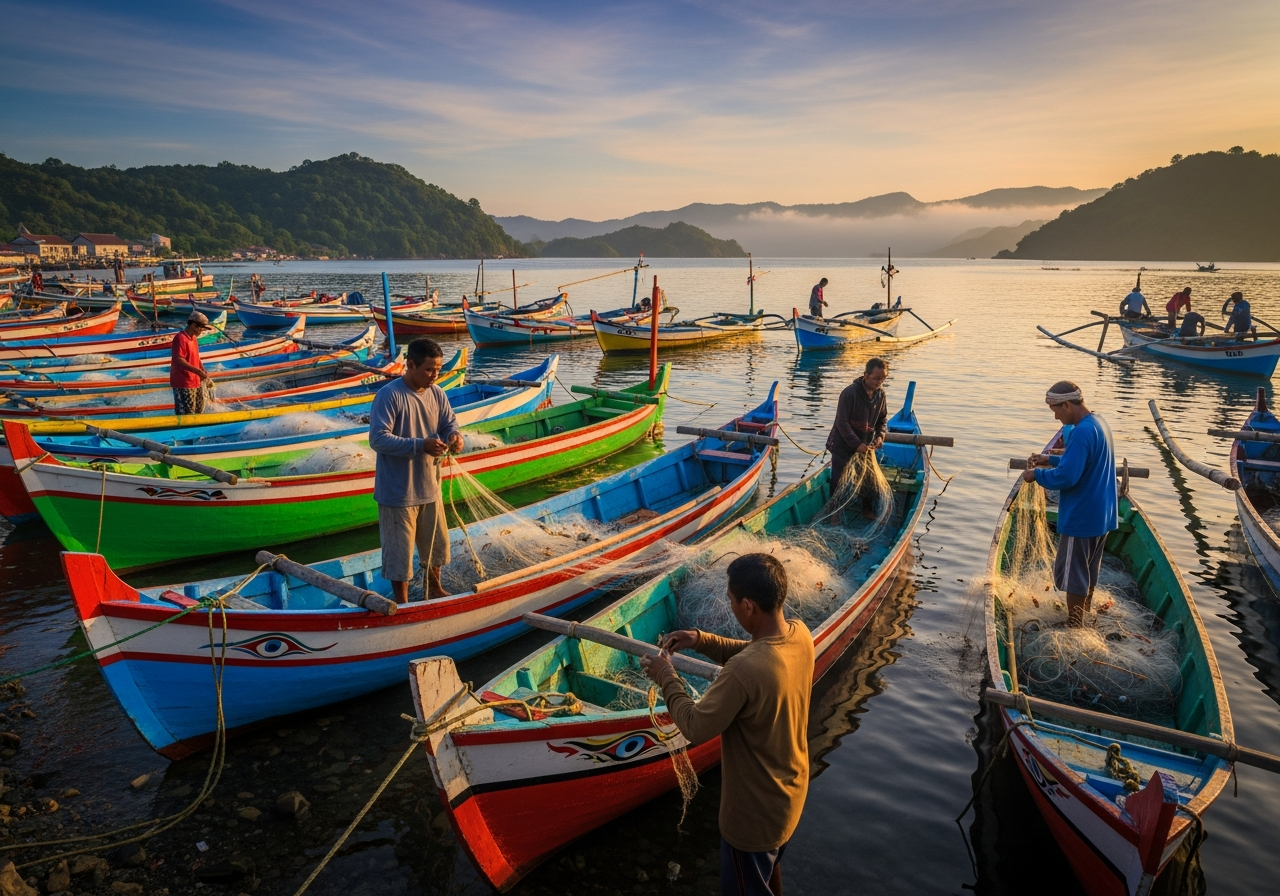
Bali's reputation as a photography destination has been built almost entirely on its temples, ceremonies, and rice paddy reflections — but the island's natural landscape is among the most varied and dramatic in Southeast Asia, and it remains substantially under-photographed. Over five days we concentrate exclusively on Bali's landscape: the UNESCO-listed Jatiluwih rice terraces in the volcanic highlands, the active caldera of Mount Batur with its obsidian lava fields and sunrise above the cloud layer, the towering multi-tiered waterfalls of the north, and the white limestone cliffs of the Bukit Peninsula where the Indian Ocean meets the island's southern edge.
Professor Nasrul Eam approaches Bali's natural world without the clichés that saturate travel photography from this island. This expedition identifies the less-visited corners of each landscape — the angles that twenty years of Instagram have left unexplored — and builds a body of work from Bali that looks nothing like the standard photographic output of a holiday there.
Expedition Itinerary
Day 1: Jatiluwih Rice Terraces — The Subak System
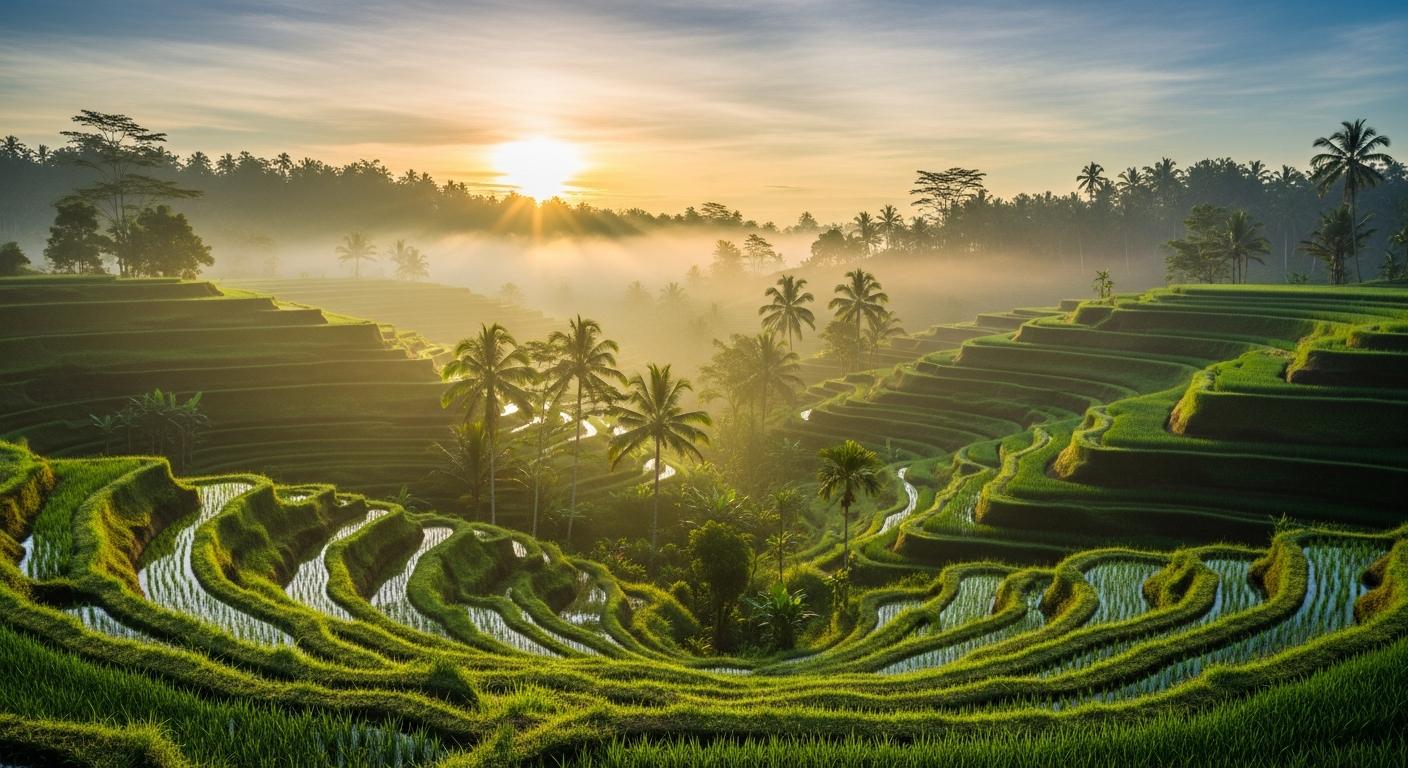
The Jatiluwih terraces cover 600 hectares of the volcanic slope of Mount Batukaru. Pre-dawn arrival positions us before the tourist buses. The morning light rakes across the curved terrace walls and water-filled paddy in a way that turns the landscape into an abstract of line and reflection.
The Goal of the Day: Abstract landscape in a known location: the unseen angle in an over-photographed subject.
Day 2: Mount Batur Caldera Sunrise
3am drive to the caldera rim above Kintamani. Sunrise above the cloud layer — the caldera lake and the 1994 lava field below, the cone of Batur rising from the mist. The light changes from orange through gold to blue in thirty minutes.
The Goal of the Day: Volcanic landscape photography at extreme dynamic range.
Day 3: Sekumpul & Gitgit Waterfalls
Sekumpul in the northern highlands is Bali's most spectacular waterfall — seven cascades dropping 80 metres through dense jungle into a pool. The approach is a 45-minute jungle walk. Gitgit, 20km west, is lower but more accessible and has a different photographic character.
The Goal of the Day: Multi-tiered waterfall photography; long exposure in a humid jungle environment.
Day 4: Munduk Highland Mist
Munduk sits at 1200m in the central highlands — coffee and clove plantations, lake-basin views, and the extraordinary morning mist that fills the valleys below and creates a sea-of-cloud effect from the ridge.
The Goal of the Day: Sea-of-cloud and mist photography from altitude; the coffee landscape.
Day 5: Bukit Peninsula Cliffs & Indian Ocean
The southern peninsula's white limestone cliffs drop sheer to turquoise water below. Pre-dawn for the cliff-top positions. Sunset from the Pura Luhur Uluwatu temple complex — waves crashing below, the horizon pink.
The Goal of the Day: Coastal cliff photography; ocean light at golden hour.
Book Your Expedition
Note: Final price may vary based on specific expedition details and customizations.
Expedition Leaders
Professor Nasrul Eam is a seasoned explorer and visual storyteller who has spent over two decades traversing Asia’s diverse landscapes and cultures. As Dean of the Department of Art and Photography at Light & Composition University, he leads immersive photography expeditions to regions like the Himalayas, Sundarbans, and Bali. These journeys blend cultural exploration with hands-on learning, culminating in a complete photography diploma. With a portfolio of over 50 publications—including The Quintessence of Photography and Illuminating Nature—his work captures the profound beauty of everyday life. His background in advertising, linguistics, and visual arts enriches his mentorship, guiding participants to uncover compelling narratives through their lenses. Professor Eam’s expeditions are transformative experiences, inspiring photographers to engage deeply with the world around them.
Travel Information
Fly to Ngurah Rai International Airport (Denpasar). No visa required for most nationalities (30-day visa-on-arrival). Best season: April–October (dry season). November–March is wetter but delivers extraordinary mist and dramatic cloud.
What to Bring
• Wide-angle zoom (16–35mm equivalent) for terraces and cliffs
• 70–200mm for compressing volcanic features
• Graduated ND filter for cliff-top sunrise
• Polarising filter for waterfall pools
• Lightweight tripod
• Rain sleeve (tropical showers arrive without warning)
Where Will Your Lens Take You Next?
Every horizon holds a new masterclass. Explore 68 worldwide fieldwork routes, interactive satellite maps, confirmed small-group departure dates, and regional optical dossiers.
Expeditions Overview & Master Map
Explore 68 worldwide expedition stops, interactive satellite coordinates, faculty leaders, and complete academic fieldwork curriculum.
Destinations & Lighting Specs
Examine comprehensive regional field dossiers detailing optical lighting conditions, microclimates, cultural protocols, and camera gear.
2026–2027 Departure Matrix
Search confirmed departure windows by season, country, and faculty leader. Small groups guaranteed with 4–8 photographers maximum.