Grey Chicago by Olga Kulemina
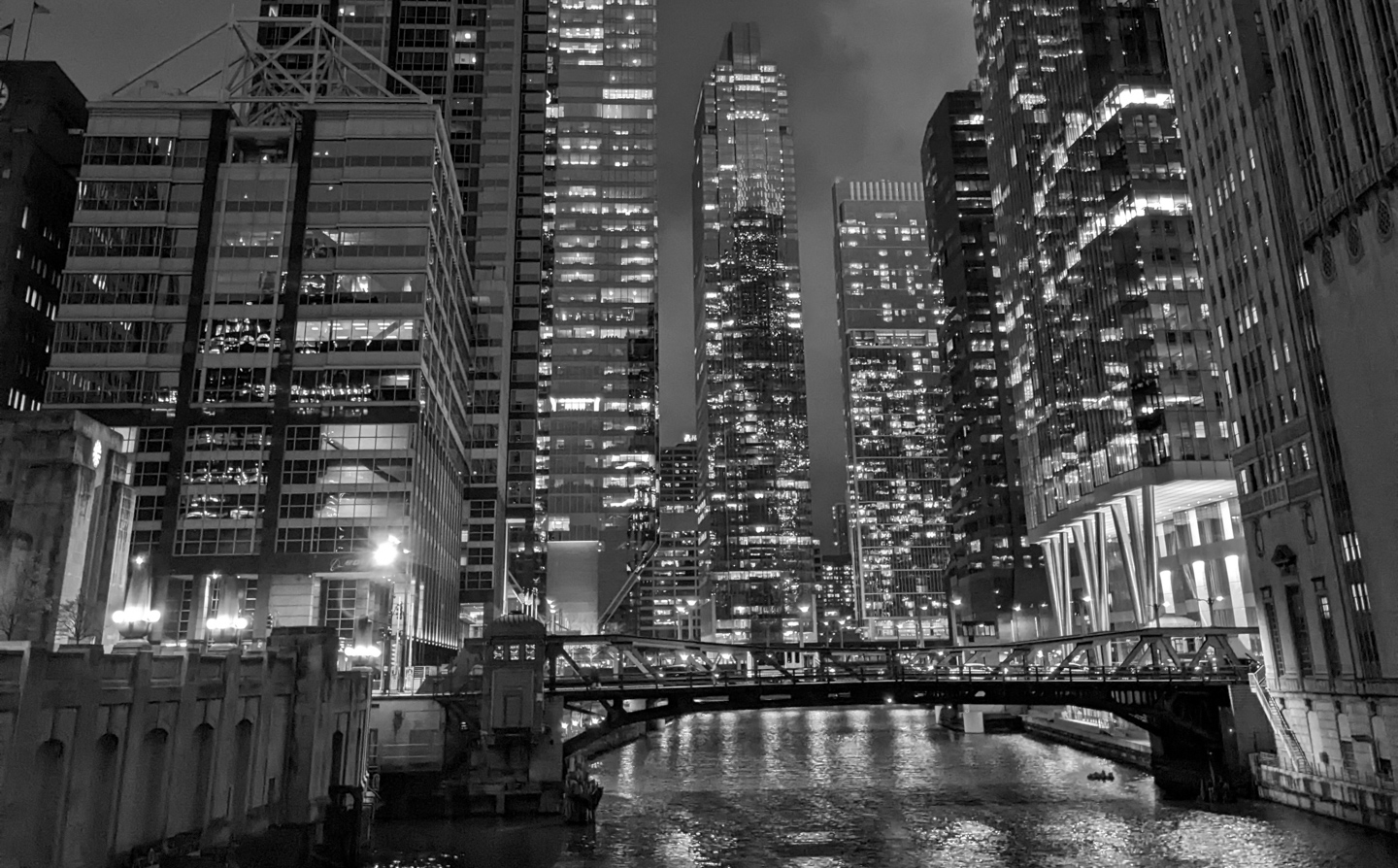
Captured on a quiet Friday evening from a Chicago bridge, this photograph masterfully utilizes a monochrome palette to emphasize the moody, grey expanse of the sky. The photographer expertly balances the static, heavy clouds against the dynamic, shimmering reflections dancing upon the river below. This interplay of light and shadow creates a profound sense of equilibrium, inviting the viewer to contemplate the stillness of the urban landscape. The image is award-worthy for its sophisticated use of contrast and its ability to transform an ordinary city moment into a timeless, evocative study of atmosphere and urban rhythm.
Olga Kulemina
Born in Russia and currently based in the United States, Olga Kulemina is a dedicated photographer with a profound passion for documenting the emotional resonance of her travels. Her diverse portfolio spans from the intricate details of architecture and art spaces to the organic beauty of nature, all captured with a keen eye for unique color palettes and textures. Through her lens, Kulemina seeks to preserve fleeting moments of discovery, ultimately aiming to share the joy and curiosity she finds in the world with an international audience.
Resonance Score Breakdown
Transparency Note: The resonance score (6.3/20) is calculated based on social engagement metrics collected before the award announcement.
Expert Photography Reviews · 6
The Weight of Still Water
Dear reader, I have been thinking about the way we carry the heavy air of a city inside our own chests. We walk through streets that feel like canyons, surrounded by stone and steel, yet we are constantly looking for a place where the noise might finally settle.
Read the reflection →The Weight of Stillness
If the sky were to mirror the depth of our own silences, would we still be so afraid of the grey? We spend our lives chasing vibrant colors, convinced that meaning is found only in the loudest hues of joy or the deepest crimsons of grief.
Read the reflection →Reviews & Comments
Share your thoughts about this award-winning photograph. Your reviews contribute to the community engagement score.
Chicago’s brutalist geometry here echoes the stark, industrial melancholy of Moholy-Nagy’s New Bauhaus experiments. Kulemina’s use of a humble Pixel 4a to capture these shimmering river reflections feels like a digital nod to the grain of early 20th-century silver prints. It’s a quiet, rhythmic tension I haven’t felt in years. While the composition leans heavily on familiar urban tropes, the way she’s rendered that heavy, grey sky makes me stop and truly look again.
The shutter speed drags, turning the Chicago river into a blurred, silver ribbon. It’s a long take, a moment stretched until the city’s concrete weight dissolves into pure texture. I’m struck by the silence here; it’s the kind of frame an editor keeps because the pacing is perfect. The clouds don’t move, yet the water breathes. It’s a film that refused to cut, and honestly, I’d watch this loop for hours. It’s hauntingly still.
Chicago’s river doesn’t just reflect the sky; it consumes it. Kulemina’s frame forces us into the abyss where the concrete meets the void. I’ve stared at these ripples until my eyes ached, feeling the crushing weight of that grey, indifferent expanse. It’s not a cityscape, but a meditation on erasure. When the light fails to penetrate the water, the darkness finally begins to speak. It’s a cold, necessary truth I can’t look away from.
We look at this Chicago river and we don’t see a city; we see a conversation between the heavy sky and the restless water. It’s a portrait of a place that’s forgotten its own name. I’ve stood on bridges just like this, waiting for the wind to tell me a secret. It’s lonely, but it’s honest. This is a photograph that asks to be returned to, because it’s finally listening to the silence.
Chicago’s river usually pulses with the friction of labor and transit, yet here it’s reduced to a shimmering, silent void. Why strip the city of its grit to favor this sterile, monochrome aesthetic? It’s technically precise, but I find the erasure of the urban struggle unsettling. Whose Chicago are we actually seeing when the human element vanishes entirely? I’m left cold by this polished emptiness. Does beauty require us to ignore the city’s real, messy pulse?
Before the eye identifies the architecture, something in the chest tightens. The grey expanse of Kulemina’s Chicago doesn’t just sit there; it demands a physiological surrender. I feel the cold river dampness against my own skin. It’s a quiet, rhythmic pulse of light on water that anchors the heavy sky. When I return to this, I’m not looking at a city anymore. I’m just holding my breath, waiting for the ripples to finally settle.