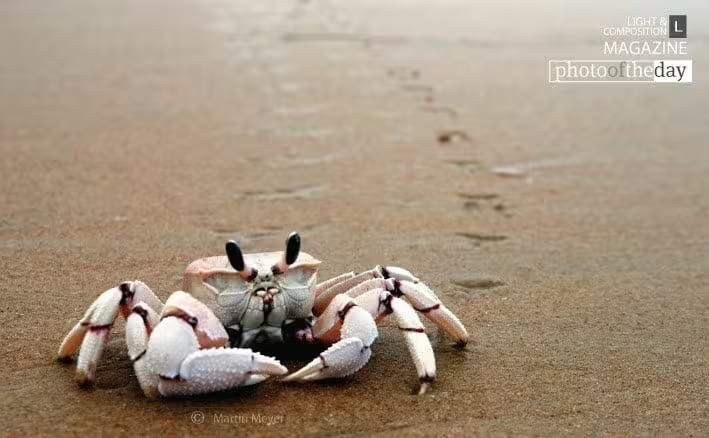
Heres Looking at You by Martin Meyer
In this captivating shot, an inquisitive crab approaches the lens on the expansive, sun-drenched shores of Chidengulle Beach, Northern Mozambique. By timing the shoot to coincide with the early morning low tide, the photographer captured the raw, minimalist beauty of the coastline. The image highlights the fascinating interaction between the small crustacean and the vast, open landscape, emphasizing the quiet wonder of coastal wildlife. Its award-worthy quality lies in the precise timing and the intimate perspective, which transforms a fleeting encounter into a compelling narrative of discovery within the natural world.
Martin Meyer
Based in Cape Town, South Africa, Martin Meyer is a distinguished photographer and qualified field guide who has spent years documenting the natural wonders of the African continent. Alongside his partner Nicole, he has built a multifaceted career specializing in bespoke photographic safaris and high-quality stock imagery. With extensive experience leading expeditions across Southern and East Africa, Meyer combines his deep knowledge of natural history with a keen artistic eye, consistently capturing the unique charm and diverse ecosystems of the regions he explores.
Resonance Score Breakdown
Transparency Note: The resonance score (9.9/20) is calculated based on social engagement metrics collected before the award announcement.
Expert Photography Reviews · 4
The Weight of the Small
I remember the blue ceramic bowl that sat on my grandmother’s kitchen counter for twenty years. It was never empty; it held loose change, keys, and the occasional dried petal from a garden that no longer exists.
Read the reflection →The Margin of the Map
We often mistake the city for its stone and steel, forgetting that the true geography of a place is defined by who is permitted to occupy its edges.
Read the reflection →Reviews & Comments
Share your thoughts about this award-winning photograph. Your reviews contribute to the community engagement score.

Getting this close to a crab on an open beach usually means the animal’s been cornered or harassed into a defensive posture. I’ve spent enough mornings in the sand to know that a crustacean doesn’t just wander toward a lens unless it’s terrified. It’s a sharp, clean shot, but I can’t shake the feeling that this proximity was extracted, not earned. I’d trade that technical clarity for a little more respect for the creature’s space.
Why does this crab feel like a prop in a tourist brochure? Meyer traps the creature against a sterile, sun-drenched void, stripping away the grit of the Mozambican coast. It’s technically sharp, sure, but it feels hollow. I’m left wondering: whose curiosity are we actually documenting here? The lens dominates the frame, reducing a living ecosystem to a minimalist aesthetic. It’s pretty, but it doesn’t respect the subject. I find myself wanting the crab to just scuttle away.
You got down in the sand for this one, didn’t you? Most people would’ve stood tall, but you chose the crab’s eye view. It’s a small, quiet moment, yet I can feel the heat of that Mozambique morning radiating off the frame. You waited for that tiny creature to acknowledge you, and that connection makes the vast beach feel intimate. It’s honest work. You didn’t just take a picture; you shared a brief, curious encounter.
The crab’s placement at the lower quadrant creates a necessary fulcrum against the vast, empty horizon. It’s a precarious balance. The negative space doesn’t just breathe; it exerts a crushing weight on the subject. I’ve grown tired of wildlife sentimentality, but the sheer geometric discipline here forces a pause. The frame holds because the crustacean’s rigid posture mirrors the horizon line. It’s a cold, calculated alignment. Finally, a beach shot that doesn’t rely on cheap light.