Sleepy Head by Chris Lambert
Captured in the quiet, dim light of 5:00 AM, this intimate portrait of a cat waiting for breakfast highlights the photographer's ability to find beauty in the mundane. By focusing on the feline's whiskers and sleepy expression, the image transforms a routine morning wake-up call into a charming, character-driven narrative. The technical execution, managed at a high ISO to accommodate the low-light conditions, preserves the texture of the fur while maintaining a soft, atmospheric quality. This photograph is award-worthy for its relatable storytelling and the photographer's keen eye for capturing personality within a domestic setting.
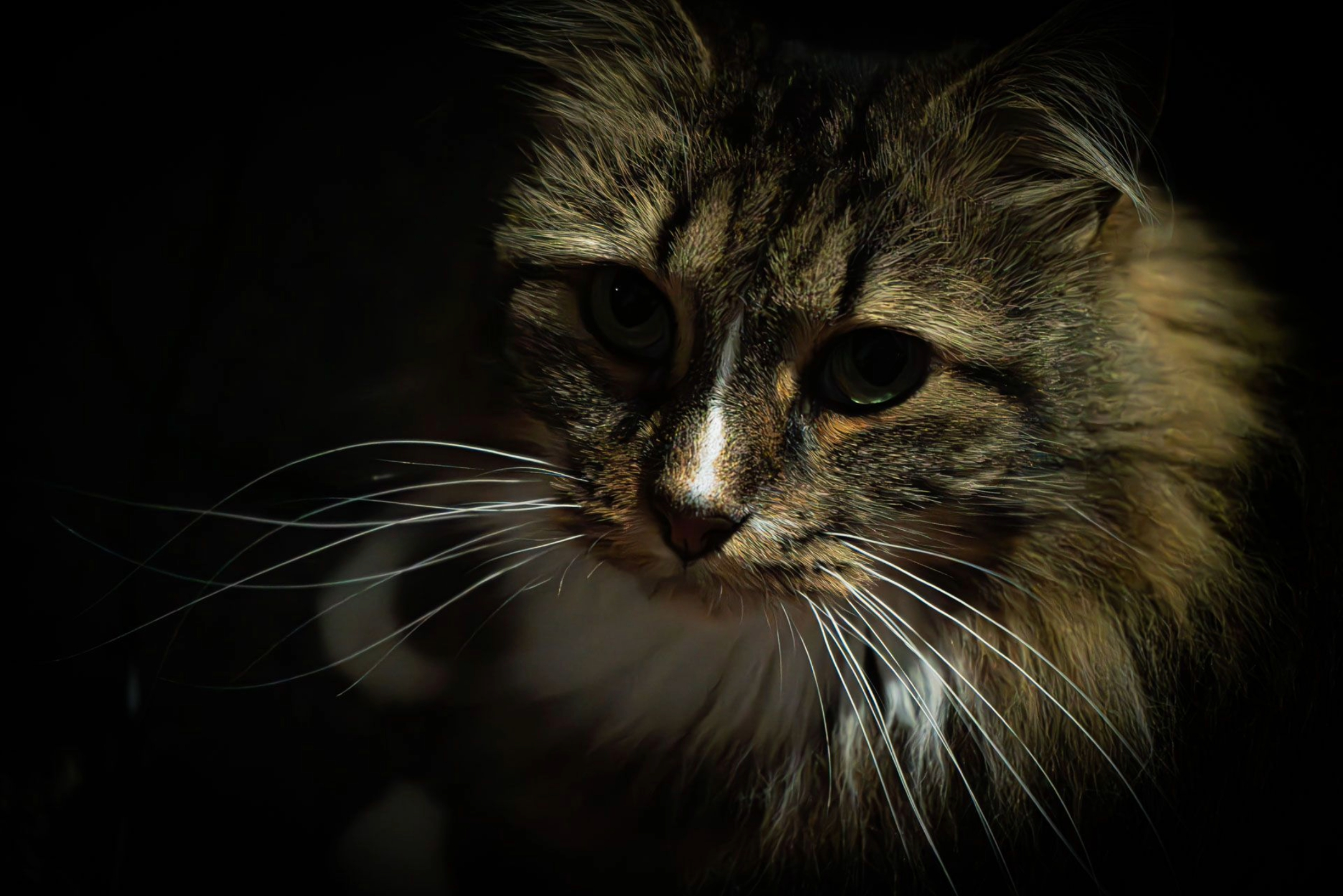
Exposure 1/125sec @ f/5.6 | ISO 8000 | Focal Length 70mm
Chris Lambert
Born in Melbourne, Chris Lambert now resides in regional Victoria. With four years of professional experience, he has cultivated a diverse portfolio spanning concert, street, and portrait photography. Lambert is known for his artistic approach, frequently experimenting with color palettes and monochrome aesthetics to refine his unique visual voice. His work reflects a commitment to technical versatility and a constant exploration of new photographic techniques.
Resonance Score Breakdown
Transparency Note: The resonance score (6.7/20) is calculated based on social engagement metrics collected before the award announcement.
Expert Photography Reviews · 8
The Architecture of Morning
There is a peculiar, heavy silence that exists only in the hours before the sun has fully committed to the day. It is a threshold time, a space where the world feels thin and the boundaries between the sleeper and the waking world are porous.
Read the reflection →The Velvet Hour
The morning air tastes of cold metal and the lingering ghost of last night’s rain. Before the sun has fully uncurled itself, there is a specific, heavy silence that presses against the skin like a damp wool blanket.
Read the reflection →Reviews & Comments
Share your thoughts about this award-winning photograph. Your reviews contribute to the community engagement score.
At ISO 8000, the sensor’s noise floor begins to encroach upon the fine detail, yet the focal plane remains remarkably precise across those whiskers. The diffraction of light at f/5.6 creates a soft, gentle bokeh that doesn’t distract from the feline’s gaze. I’m genuinely moved by how the lens resolves the individual hairs against the dim morning ambient light. It’s a delicate balance of optical physics and intimacy that I’ve rarely seen captured so honestly.
ISO 8000 in a domestic portrait? It’s a bold, gritty choice that pushes the sensor into a beautiful, painterly noise. I’m genuinely moved by how the grain dissolves the cat’s whiskers into the shadows. Why resolve every hair when the blur captures the heavy, pre-dawn lethargy so much better? It’s closer to the impressionistic decay of a lumen print than a sharp wildlife shot. Lambert’s refusal to chase clinical perfection makes this feel alive.
Most wildlife shots I review are frantic, desperate for drama. This is different. It’s quiet. By pushing the ISO to 8000, Lambert embraced the grain, turning a domestic morning into something painterly. I’ve seen thousands of pet portraits, but the way those whiskers catch the dim light makes me want to reach out and touch them. It’s a small, honest moment that’ll still feel human in thirty years. That’s why it won; it’s perfectly, stubbornly ordinary.
The composition relies on a tight triangular convergence, with the feline’s snout acting as the primary vertex. The whiskers create a series of radiating vectors that disrupt the frame’s negative space, effectively balancing the heavy, dark mass of the ears. It’s a precise geometric solution to a low-light problem. I’m genuinely charmed by how the soft focus on the periphery creates a perfect gradient of depth. It’s a masterclass in spatial equilibrium.
Domesticity isn’t just a backdrop; it’s a power dynamic. Why does this cat’s sleepy gaze feel like a demand for service rather than a moment of connection? Lambert captures the texture of the fur, but he ignores the hierarchy of the household. It’s technically competent, yet I find myself bristling at the entitlement inherent in the frame. Who owns this morning ritual? Does the cat exist for our comfort, or does it have its own agency?
Before the eye identifies the cat, something in the chest softens. It’s that heavy, pre-dawn stillness, the way the whiskers catch the dim light like frayed nerves. I’ve felt this exact, quiet demand for breakfast in my own kitchen, a shared vulnerability between species. When I return to this a year from now, I’ll still feel that sudden, rhythmic slowing of my pulse. It’s a small, domestic ache that lingers long after the screen goes dark.
A cat waiting for breakfast isn’t a sprint, but the physiology of anticipation remains the same. The whiskers are twitching, the pupils dilated—this is the micro-second before the pounce or the meow. Lambert caught the stillness perfectly. It’s the frame where the tension hasn’t yet broken into action. I’ve spent my life chasing that exact transition. It’s quiet, it’s precise, and honestly, it makes me want to reach out and scratch behind those ears.
There’s a quiet vulnerability in those whiskers, caught just before the world wakes up. It’s a rare thing to see a cat look this unguarded, as if the photographer simply sat on the floor and waited for permission to exist in that space. I feel a sudden, sharp ache for my own old tabby back home. It’s not just a shot of a pet; it’s a soft, honest conversation between two living things.