Sacré Bleu Sacré Cœu by Swati Iyer
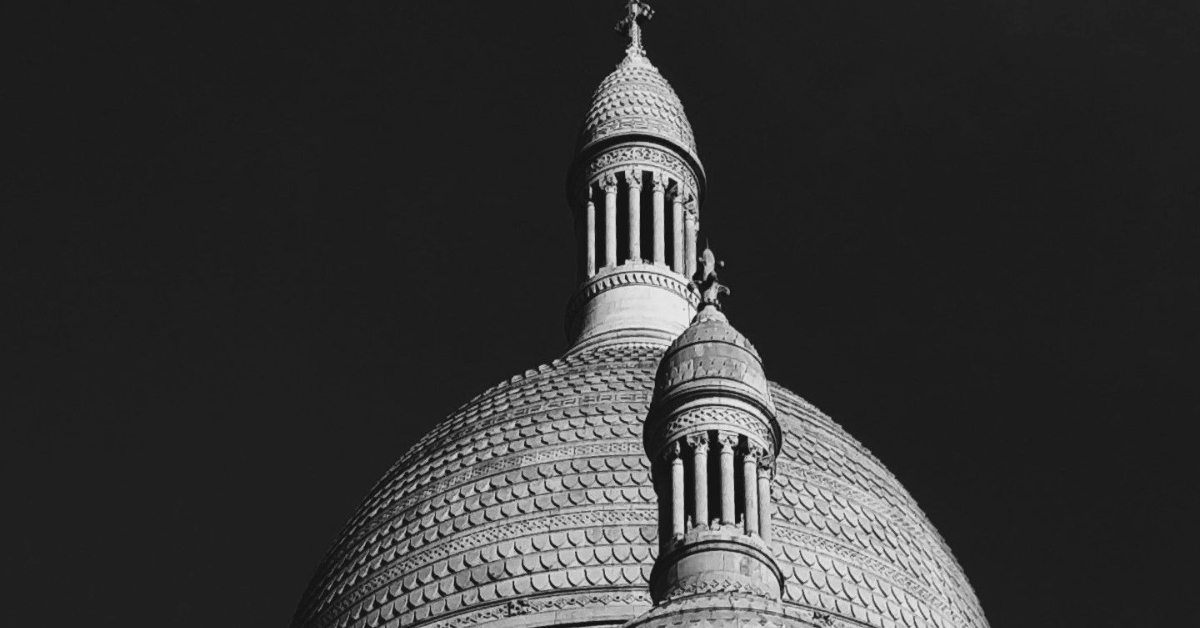
During a solo excursion to Paris, the photographer encountered the Sacré-Cœur in all its architectural splendor. While the initial perspective captured the entire structure, the decision to zoom in on the dome against the expansive sky highlights the intricate craftsmanship of the design. By stripping away color in favor of a black-and-white palette, the image emphasizes the geometric elegance and textures of the landmark. This deliberate focus transforms a familiar tourist destination into a study of form and light, earning recognition for its refined composition and the photographer's ability to isolate beauty within a grand, complex subject.
Swati Iyer
Based in the energetic city of The Hague, Dutch photographer Swati Iyer possesses a profound appreciation for the artistry found within ordinary moments. With a sharp eye for detail, she captures the essence of her surroundings, whether documenting the peacefulness of nature or the activity of modern life. Swati utilizes both professional DSLR equipment and the spontaneity of mobile photography to ensure she is always prepared to document life's brief, captivating narratives.
Resonance Score Breakdown
Transparency Note: The resonance score (7.0/20) is calculated based on social engagement metrics collected before the award announcement.
Expert Photography Reviews · 4
The Weight of Stone
There is a specific silence that lives in the high places of a city. It is not the absence of sound, but the absence of the people who built the stone.
Read the reflection →The Weight of Stone
I remember sitting on a bench in a small village in Umbria, watching an old mason repair a crumbling wall. He didn't use a level or a string line; he just held each stone in his calloused hands, feeling for the balance, the way it wanted to sit against its neighbor.
Read the reflection →Reviews & Comments
Share your thoughts about this award-winning photograph. Your reviews contribute to the community engagement score.
At f/1.7, the OnePlus 5’s sensor struggles against the diffraction limit, yet Iyer’s capture of the Sacré-Cœur’s dome is surprisingly sharp. The focal plane renders the stone’s texture with clinical precision, stripping away the sky’s distraction. I’m genuinely moved by how the monochromatic conversion isolates the architectural geometry from the optical noise. It’s a rare moment where a mobile lens transcends its physical constraints, revealing a crystalline structural elegance that my own eyes simply couldn’t resolve.
I’ve spent decades tracing the lineage of architectural abstraction, from Moholy-Nagy’s New Vision to the stark precision of the Bauhaus. Iyer’s choice to isolate the dome against that void recalls the graphic rigor of Renger-Patzsch, yet it’s the digital grain here that genuinely thrills me. It’s a brave, sharp departure from the romanticism we usually associate with Paris. It doesn’t just document stone; it forces a confrontation with the geometry of faith itself. I’m quite impressed.
The dome’s curvature anchors the frame, forcing the eye into a rigid, geometric dialogue with the negative space above. It’s a disciplined excision of the Parisian skyline. The monochromatic tonality strips away the noise, leaving only the structural skeleton. I’m genuinely struck by how the light clings to the stone’s texture. The composition doesn’t falter; it holds the weight of the architecture with a cold, necessary precision that finally justifies the subject’s ubiquity.
Most architectural shots of the Sacré-Cœur are postcards; they’re forgettable. What separates this from the thousands I’ve reviewed is the restraint. By cropping into the dome’s geometry against that stark, empty sky, Iyer forces us to confront the stone’s weight rather than the city’s fame. It’s a bold, quiet study of form. Honestly, looking at the way the light catches those curves, I felt a sudden, sharp ache for Paris. It’s a keeper.