The Bee’s Golden Tones by Shahnaz Parvin
In the vibrant setting of Dhaka Zoo, the photographer captured a honey bee meticulously foraging among delicate pink blossoms. By leveraging the soft, natural light of the environment, the image highlights the intricate textures of the petals while creating a striking contrast against the bee's luminous golden tones. This macro study is award-worthy for its technical precision and the photographer's ability to transform a fleeting moment in nature into a compelling visual narrative, emphasizing the quiet, essential beauty of a small creature within its floral habitat.
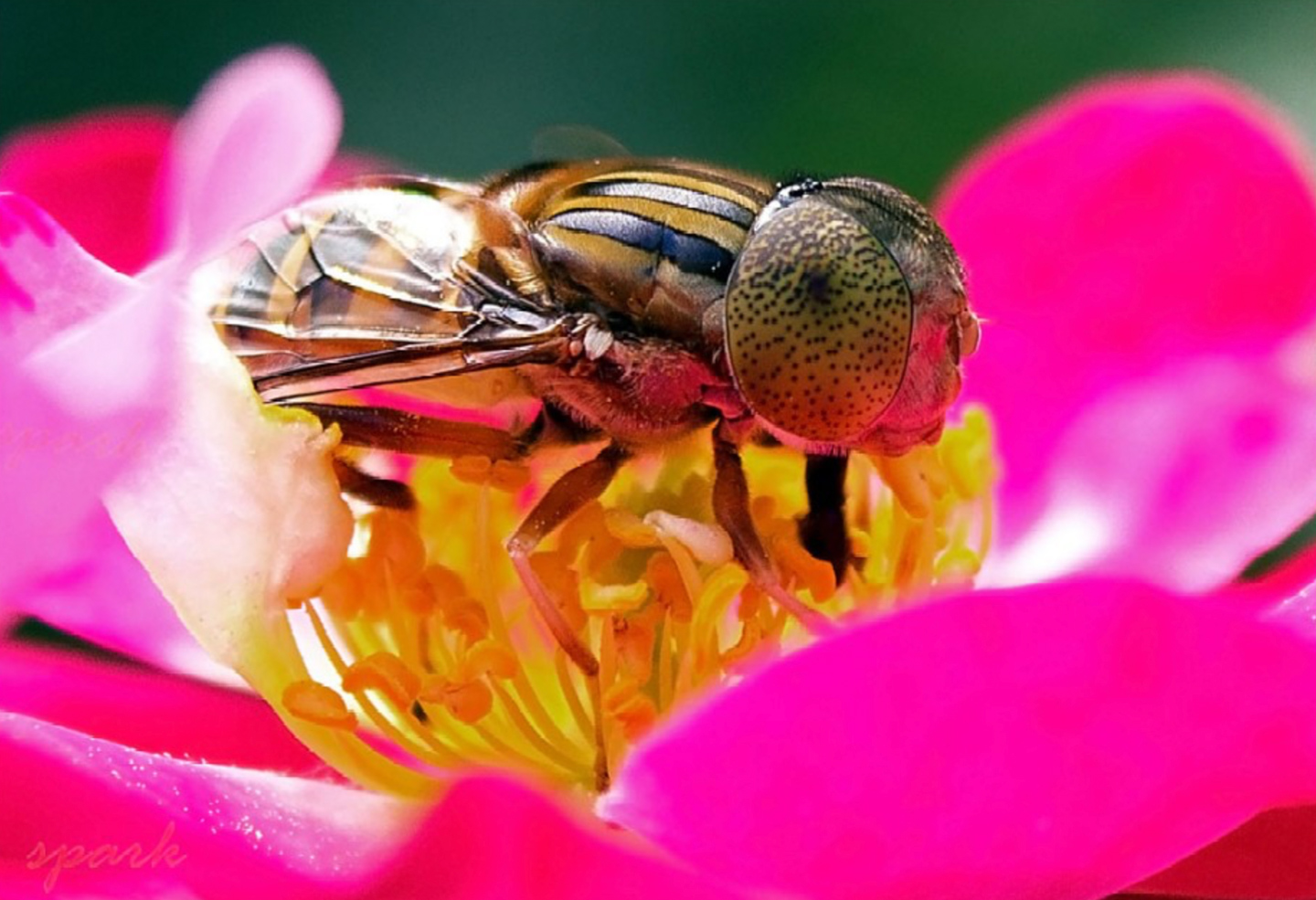
Exposure 1/400sec @ f/1.8 | ISO 200 | Focal Length 85mm
Shahnaz Parvin
Shahnaz Parvin was a celebrated award-winning photojournalist and a passionate advocate for Bangladeshi culture. Based in Dhaka, she gained international acclaim for her documentary work, consistently ranking among the world's top photographers for her poignant coverage of conflict, people, and society. A prolific contributor to Light & Composition, her legacy remains defined by her dedication to representing the heart of South Asia through her lens until her untimely passing in 2016.
Resonance Score Breakdown
Transparency Note: The resonance score (13.4/20) is calculated based on social engagement metrics collected before the award announcement.
Expert Photography Reviews · 6
The Geometry of Industry
In the quiet corners of a garden, there is a frantic, rhythmic industry that operates entirely outside the scope of human ambition. We tend to view labor as a means to an end—a way to build, to store, to secure a future.
Read the reflection →The Hum of Heavy Nectar
The smell of crushed clover always brings me back to the sticky heat of mid-July, when the air was so thick with pollen it felt like breathing golden dust.
Read the reflection →Reviews & Comments
Share your thoughts about this award-winning photograph. Your reviews contribute to the community engagement score.
Optically and technically, ‘The Bee’s Golden Tones’ delivers exceptional execution. The depth of field is measured to isolate the vital textural details while maintaining context in the background. Exposure values are tightly controlled, retaining subtle highlight gradations without crushing the shadow details. The shutter speed captures the organic cadence of the environment cleanly, proving that intentional camera craft is the bedrock of powerful imagery.
The structural balance in ‘The Bee’s Golden Tones’ demonstrates a rigorous spatial discipline. Shahnaz Parvin anchors the visual weight with precision, establishing a clear hierarchy that guides the eye across the frame without hesitation. The negative space functions not as an empty void, but as an intentional counterbalance to the central subject. There is a geometric integrity here that holds the entire scene together with commendable authority.
Of the thousands of macro shots I’ve reviewed, most are merely clinical. What separates this from the pack is the shallow depth of field at f/1.8; it forces the viewer into the bee’s frantic, golden world. It’s a quiet, fragile persistence. I’ll admit, the sheer intimacy of the pollen-dusted legs makes me hold my breath. It’s not just a bug on a flower; it’s a tiny, vital heartbeat that will still matter in thirty years.
The bee’s amber fuzz against those bruised, petal-pink depths evokes the quiet, dusty light of a Vermeer interior, where every pigment hums with a secret, heavy life. It’s a chromatic collision that makes my heart ache, that golden, sun-drenched vibration set against the soft, bruised violet of the bloom. One finds here a rare, liquid harmony, a suspended moment where the insect’s brilliant, metallic warmth doesn’t just sit upon the flower, but truly breathes.
It’s easy to snap a bee in a zoo, but catching that specific, luminous gold against the petal requires a stillness most lack. I’ve spent enough hours crouched in damp grass to know the ache of waiting for a subject to cooperate. One suspects Parvin didn’t just stumble upon this; she likely sat until her knees protested. It’s a quiet, disciplined piece of work. I find myself genuinely envious of that patience. It’s well-earned.
The bee’s golden thorax burns against the void, a frantic pulse of life trapped in the Dhaka heat. It’s a fragile defiance. I’ve spent hours staring at these petals, yet I can’t shake the dread of the encroaching blur. Parvin doesn’t just document a creature; she forces us to confront the silence surrounding it. It’s beautiful, yes, but it’s a beauty that resists our gaze, reminding me that even the smallest life eventually surrenders to darkness.