Early Morning Serenity by Saniar Rahman Rahul
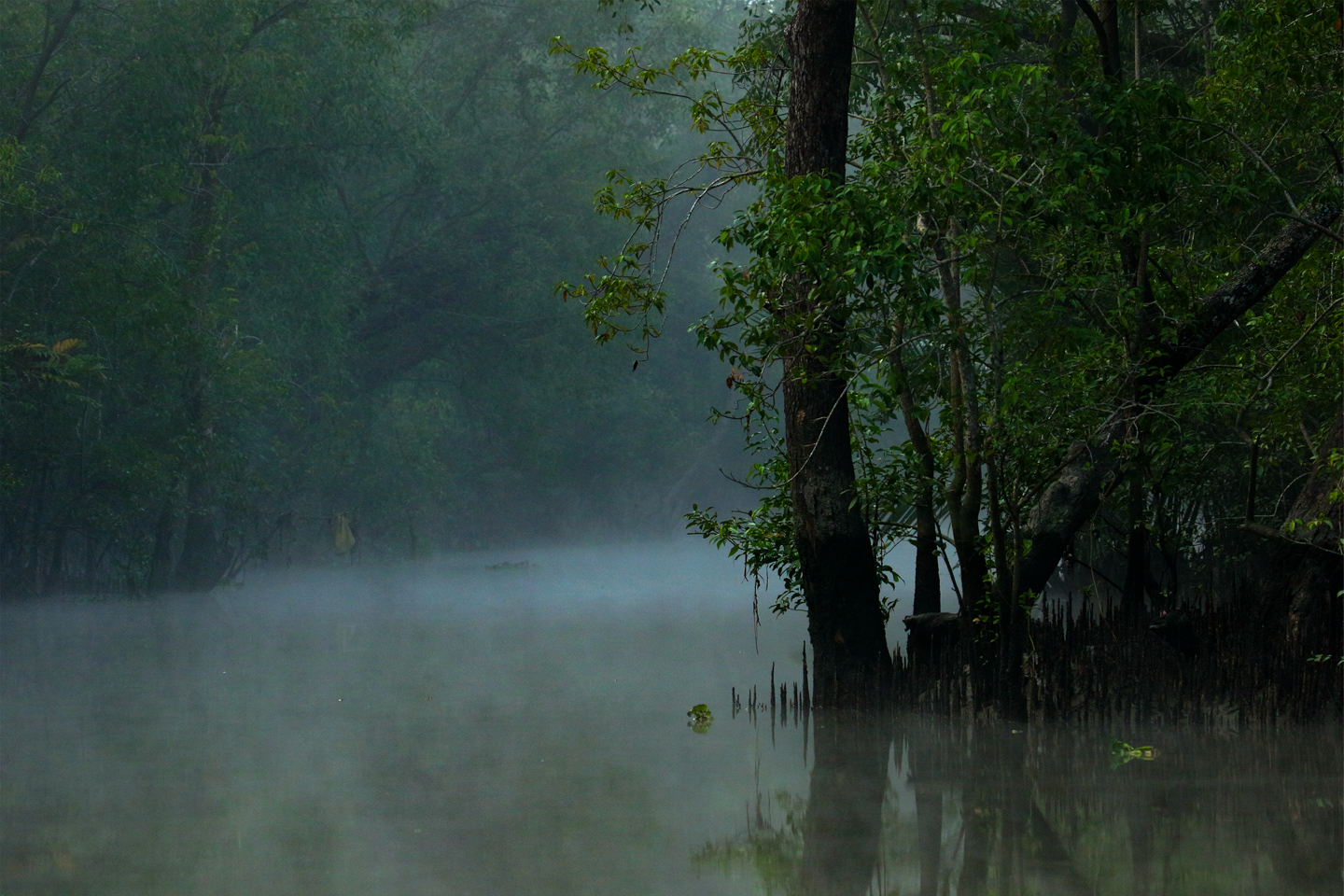
Captured within the ethereal landscapes of the Sundarbans National Park, this photograph documents a Common Sandpiper navigating the mudflats during a quiet December morning. The photographer utilized a 600mm lens to isolate the bird against the vast, misty backdrop of the mangrove forest, emphasizing the interplay between the delicate subject and the expansive, fog-veiled environment. This image is award-worthy for its masterful use of negative space and the serene, poetic atmosphere it evokes, transforming a simple wildlife encounter into a refined study of natural harmony and stillness.
Saniar Rahman Rahul
Based in Dhaka, Bangladesh, Saniar Rahman Rahul is an accomplished Art Director at Grey Worldwide with a career spanning decades in the advertising and graphic design industries. His photographic journey began in childhood, inspired by his father, and was later refined through his extensive professional background in pre-press and advertising media. Known for his keen eye for detail and atmospheric storytelling, Rahul has been a recognized presence in the photography community since winning his first major award in 2010, consistently blending technical precision with a deep appreciation for the natural world.
Resonance Score Breakdown
Transparency Note: The resonance score (7.7/20) is calculated based on social engagement metrics collected before the award announcement.
Expert Photography Reviews · 6
The Quietude of Being
Seneca once remarked that we are often more occupied with the noise of our own minds than with the world that actually surrounds us.
Read the reflection →The Breath of the Mist
There is a specific, muted quality to the air just before the sun fully asserts itself, when the fog clings to the ground like a damp wool blanket. In the north, we call this the white silence.
Read the reflection →Reviews & Comments
Share your thoughts about this award-winning photograph. Your reviews contribute to the community engagement score.
The sandpiper’s stride is caught mid-extension, but the timing’s off by a heartbeat. The bird’s center of gravity hasn’t fully shifted into the lead leg, leaving the movement feeling hesitant rather than decisive. I’ve spent my life chasing that singular, explosive millisecond of peak tension. Here, the bird is just walking. It’s a pretty scene, sure, but it lacks the physiological snap of a true peak moment. I wanted to see the full, committed reach.
Before the eye identifies the sandpiper, something in the chest softens. The mist acts as a sensory buffer, slowing my pulse to match the stillness of the mudflats. It’s a quiet, fragile activation of the nerves. I’ve returned to this frame three times today, and each time, the negative space feels more like a deep, exhaled breath. It doesn’t just document a bird; it pulls the silence of the Sundarbans directly into my own lungs.
The frame operates on a strict horizontal axis, bisected by the sandpiper’s placement at the intersection of the lower-left third. It’s a masterclass in spatial equilibrium. The 600mm compression flattens the depth, forcing the bird into a precise geometric relationship with the negative space of the fog. I’m genuinely moved by how the bird’s vector anchors the entire composition. It’s a perfect equation of mass against void, solving the problem of stillness with absolute mathematical elegance.
The Sundarbans don’t offer second chances. With that 600mm lens, Rahul caught the sandpiper just as the mist began to peel back. It’s quiet, almost haunting. I’ve spent years chasing the chaos of the city, but this stillness hits different. If he’d fired a fraction later, the bird would’ve blurred into the mud. He nailed the timing. The negative space breathes. It’s a rare, fleeting heartbeat of nature captured before the fog swallowed it whole.
The fog swallows the Sundarbans. A single sandpiper stands on the mud. It’s a study in restraint. I’ve spent minutes just breathing with this frame. The bird doesn’t demand attention; it exists within the grey. Nothing here is accidental. The empty corner is not empty. It’s the weight of the mist. It’s the silence of the tide. I feel a strange, quiet ache looking at it. Rahul knows when to stop. He lets the space hold.
The frame’s geometry relies on the sandpiper’s placement, anchoring the vast, negative space of the mudflats. It’s a precarious balance. The fog compresses the picture plane, forcing the eye toward the subject’s sharp, linear silhouette. I’ve rarely seen such disciplined isolation. The tension between the bird’s stillness and the expansive, blurred backdrop holds perfectly. It doesn’t collapse into sentimentality. It’s a rigorous study of spatial weight that finally forces me to stop and breathe.