The Act of Closing by Heron Pereira
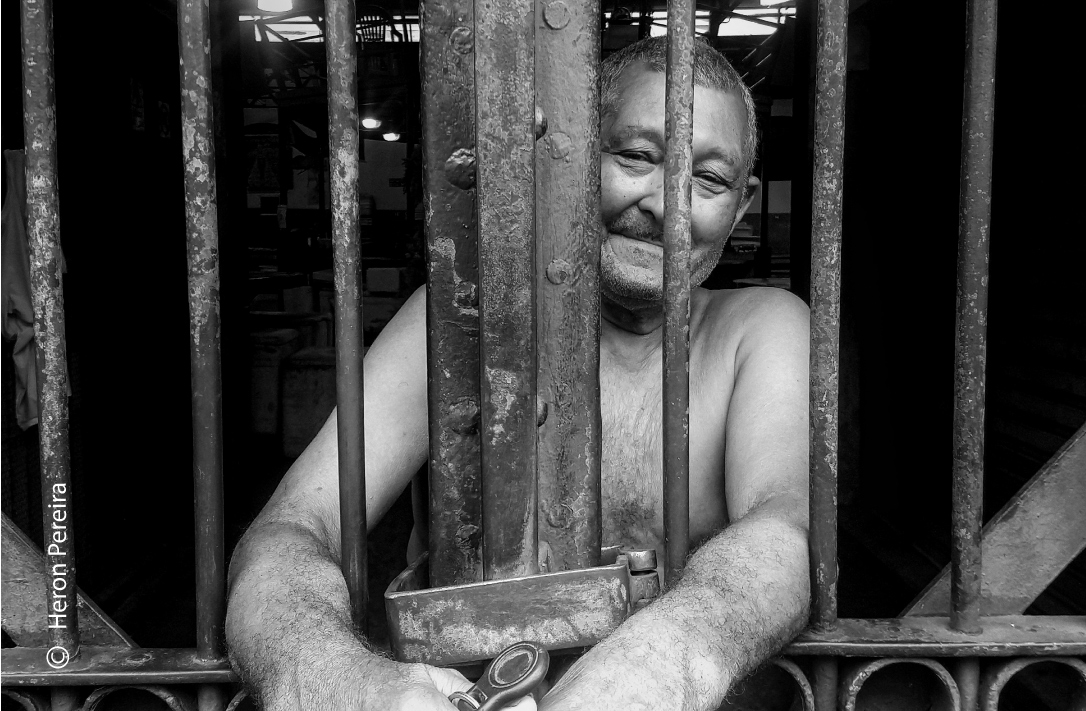
Captured at the historic Ver-o-Peso fish market in Belém, Brazil, this poignant black and white photograph documents a worker during the market's Sunday closure. The image serves as a powerful metaphor for the conclusion of a cycle, symbolizing the act of letting go and the quiet transition toward new beginnings. By focusing on the stillness of a space usually defined by its frantic energy, the photographer highlights the human element within a traditional setting. The composition is award-worthy for its evocative storytelling and its ability to transform a mundane moment of closure into a profound visual reflection on change and renewal.
Heron Pereira
Born in Belém, Pará, Brazil, Heron Pereira is a dedicated photographer currently based in Marituba. With over eight years of experience, he specializes in street photography, masterfully blending architectural heritage with the raw emotion of human experience. His work is defined by a search for unique perspectives and a rhythmic sensibility inspired by his deep passion for music. Through his lens, Pereira strives to achieve a perfect harmony between visual storytelling and artistic expression, establishing himself as a compelling voice in contemporary photography.
Resonance Score Breakdown
Transparency Note: The resonance score (7.9/20) is calculated based on social engagement metrics collected before the award announcement.
Expert Photography Reviews · 4
The Quiet After the Market
There is a particular kind of exhaustion that only settles over a city when the stalls are finally empty and the last of the shouting has faded into the humid air.
Read the reflection →The Architecture of Silence
We spend our lives building cathedrals of noise, filling the air with the frantic rhythm of commerce and the sharp edges of our daily demands. We are always in motion, a tide that refuses to ebb, convinced that if we stop, the world will unravel.
Read the reflection →Reviews & Comments
Share your thoughts about this award-winning photograph. Your reviews contribute to the community engagement score.

There’s a haunting stillness here that echoes the weary dignity of Walker Evans’s Depression-era subjects, yet Pereira’s lens captures a distinctly modern, humid exhaustion. It’s a quiet departure from the frantic, high-contrast street photography we’ve seen since Cartier-Bresson. I’m genuinely moved by how the Moto G6’s sensor renders the low-light textures of the market floor; it’s a gritty, honest materiality that feels entirely fresh. It’s not just a closing market; it’s a profound, tactile meditation on time.
Most photographers would’ve fled the Ver-o-Peso once the tourists vanished. Pereira stayed for the silence. It’s a rare thing to see a Moto G6 handled with such restraint, capturing the weary geometry of a market at rest. I’ve spent enough hours shivering in damp fields to recognize the patience required here. He didn’t just stumble upon this stillness; he earned it. It’s a quiet, honest bit of work. I find myself quite moved by it.
The market’s frantic pulse has finally ebbed. He stood here in the cooling hour, watching the light retreat from the damp concrete of Ver-o-Peso. It’s a quiet surrender. I’ve felt that same ache when the day’s work ends and the shadows lengthen. There’s a sacred stillness in his posture, a grace found only when the crowds vanish. It doesn’t feel like an ending to me; it feels like a long, held breath before the world begins again.
You caught the market when the noise finally died, and that’s where the truth hides. Most people only see the chaos of Ver-o-Peso, but you saw the exhaustion in the way he’s closing up. It’s quiet, heavy, and deeply human. I felt a sudden, sharp ache in my chest looking at his hands. You didn’t just document a worker; you felt the weight of his day. And that’s exactly why this works. You waited. I can feel it.