Assortment of Spices by Catherine Ferraz
In this evocative food study, the photographer meticulously curated a vibrant assortment of spices, sourcing them from local markets in Antigua to capture their raw, textural essence. By utilizing natural light, the composition emphasizes the subtle interplay of contrast and tone, elevating humble ingredients into a sophisticated visual narrative. The image succeeds through its deliberate focus on authenticity, transforming a simple collection of spices into a sensory experience. This award-worthy photograph demonstrates a masterful balance of technical precision and artistic intent, inviting the viewer to appreciate the heritage and cultural significance embedded within every grain and color.
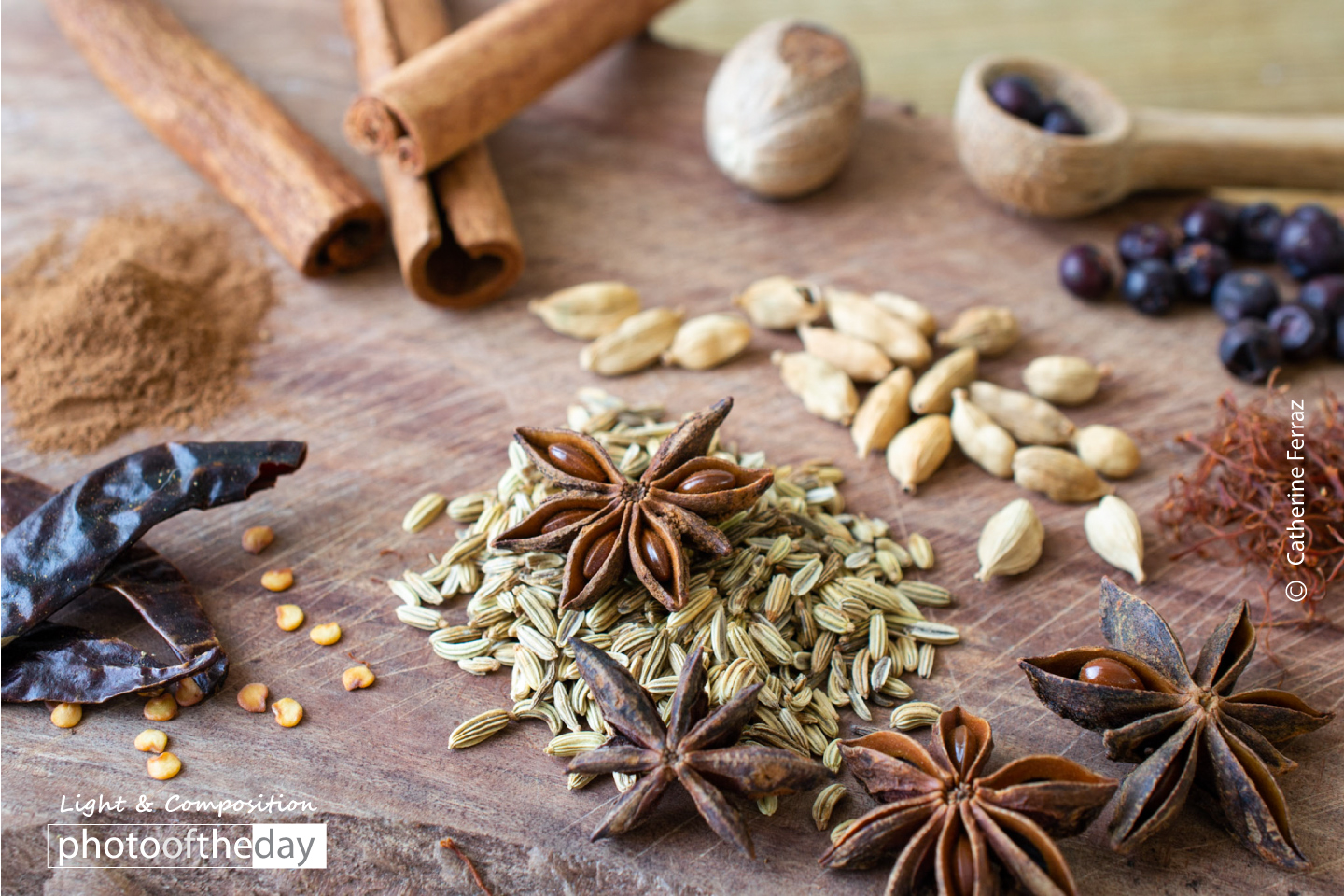
Exposure 1/2.5sec @ f/7.1 | ISO 100 | Focal Length 40mm
Catherine Ferraz
Based in St. John’s, Antigua, Catherine Ferraz is a dedicated food photographer and copywriter whose work is deeply influenced by her upbringing in Trinidad and Antigua. Immersed in a rich tapestry of culinary traditions from a young age, she has developed a keen eye for the authentic beauty found in simple, everyday cuisine. Her photographic practice focuses on creating emotional connections, aiming to showcase the unique heritage and memories behind every dish by capturing the creator's perspective with intimacy and grace.
Resonance Score Breakdown
Transparency Note: The resonance score (7.7/20) is calculated based on social engagement metrics collected before the award announcement.
Expert Photography Reviews · 8
The Weight of Grounded Things
There is a particular stillness that arrives when the air is heavy with the scent of dry earth and sun-warmed stone. In the north, we rarely experience this; our light is thin, filtered through layers of mist or the sharp, biting clarity of frost.
Read the reflection →The Alchemy of Dust
Why do we seek to categorize the earth beneath our feet, labeling the dust as either common or precious? We spend our lives sorting the world into neat piles, convinced that by naming a thing, we have somehow mastered its essence.
Read the reflection →Reviews & Comments
Share your thoughts about this award-winning photograph. Your reviews contribute to the community engagement score.
Most food photography is disposable, but this holds up. I’ve seen thousands of spice shots, yet Catherine’s work avoids the usual clutter. The 0.4-second exposure softens the textures, turning grains into a landscape rather than just ingredients. It’s the deliberate, rhythmic spacing of the mounds that keeps my eye moving. Honestly, it makes me want to reach out and touch the grit. In thirty years, this won’t look dated; it’ll still feel like a warm, tactile memory.
It’s refreshing to see such vibrant, unmuted reds and yellows. Down here, those wavelengths vanish within meters, swallowed by the water’s density. I’ve spent my life fighting the refractive index and backscatter just to capture a fraction of this clarity. Seeing these spices so crisp and dry, without a single particle of suspended silt, makes me want to reach out and touch them. It’s a beautiful, terrestrial luxury that we simply don’t get in the abyss.
It’s a curious exercise to view these spices as if they were a site plan. The mounds act as massing models, their granular textures mimicking the raw, tactile surfaces of a brutalist facade. I’m struck by how the light rakes across the pigments, defining depth where there is none. It’s a landscape of micro-topography. I find myself wanting to walk through these dunes, though I know it’s just a clever, beautiful lie of scale.
Spices don’t move, but the light does. Ferraz captured these grains with a stillness that feels almost sacred. It’s clean, sure, but where’s the pulse? I’m looking for the chaos of the St. John’s market, the grit under the fingernails. This is a beautiful study, but it’s too controlled for my blood. I miss the human element—the hand reaching in, the sudden spill. It’s technically perfect, but it’s missing the heartbeat of the street.
The frame’s geometry relies on the rhythmic repetition of granular mounds. It’s a calculated grid, though the peripheral spill threatens to collapse the order. The spatial tension between the ochre and crimson heaps creates a necessary fulcrum. It’s rigid, yet I’m genuinely unsettled by the slight imbalance in the upper quadrant. The composition doesn’t quite resolve its own weight. It’s a near-miss, but the structural discipline holds the frame together just enough to merit attention.
Edward Weston’s Pepper No. 30 taught us that organic form demands sculptural reverence, yet Ferraz’s spices offer a different, granular dialogue. The 40mm macro lens captures a topographical chaos that recalls the tactile intensity of early still-life studies. It’s a relief to see such vibrant, unpretentious color handled with this level of restraint. I’m genuinely struck by the way the light catches the turmeric’s dust; it’s a small, beautiful defiance against the clinical perfection of modern food photography.
Before the eye identifies the turmeric or the heat of the chili, something in the chest tightens. It’s a sudden, visceral hunger for a place I haven’t visited. The granular textures trigger a sensory memory of dry, Caribbean heat. When I return to this, the colors feel less like spices and more like a quiet, internal pulse. I’ve found myself craving that specific, dusty warmth—it’s a rare, grounding stillness that follows me into sleep.
We look at these spices and we don’t just see ingredients; we see the hands that gathered them in Antigua. Catherine Ferraz listened to the earth before she clicked the shutter. There’s a pulse in the turmeric and the deep, dusty red of the chili. It’s a portrait of a landscape, really. I find myself wanting to reach out and touch the grain. It’s a photograph that asks to be returned to, again and again.