Experimenting Low Key by Kirsten Bruening
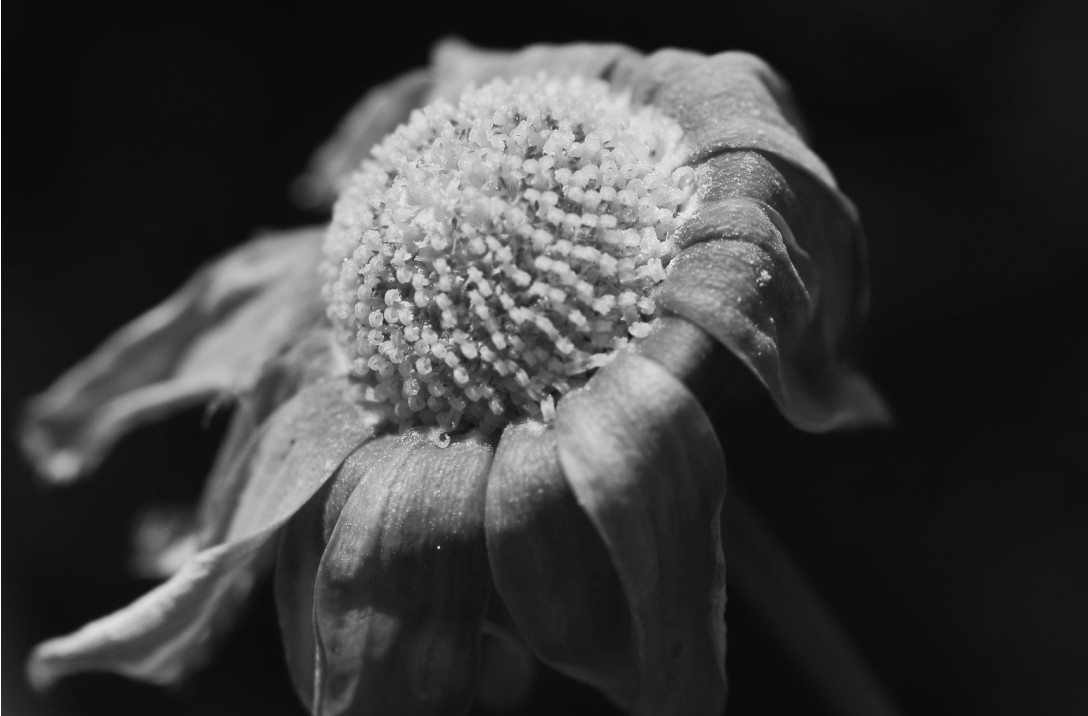
Captured on a bright, warm April afternoon, this image represents a deliberate exploration of low-key photography. By utilizing the intense spring sunlight, the photographer masterfully manipulated the contrast between illumination and darkness to create a striking monochromatic composition. The choice to strip away color emphasizes the intricate play of light and shadow, highlighting the subject's form with dramatic intensity. This photograph is award-worthy for its successful application of high-contrast techniques, demonstrating how a simple, natural light source can be transformed into a powerful narrative tool that evokes mood and artistic depth through the timeless medium of black and white.
Kirsten Bruening
Based near Cologne, Germany, Kirsten Bruening is a dedicated photographer whose creative journey began in childhood with the exploration of analogue techniques. Following a fifteen-year hiatus, she returned to the craft with a renewed focus on black and white imagery, particularly within the realms of nature, portraiture, and wildlife. Driven by the belief that light and shadow are the ultimate conduits for emotion and beauty, she is currently pursuing formal studies to further refine her technical expertise and artistic vision.
Resonance Score Breakdown
Transparency Note: The resonance score (10.0/20) is calculated based on social engagement metrics collected before the award announcement.
Expert Photography Reviews · 8
The Architecture of Shadow
I often find myself lingering in the narrow alleyways of Cologne, where the sun struggles to reach the cobblestones, forced to carve out thin, sharp slivers of light against the soot-stained brick. There is a quiet honesty in these pockets of darkness.
Read the reflection →The Wisdom of Shadows
We are taught to seek the light, to stand where the sun is brightest and leave nothing hidden. Yet, there is a profound grace in the shadows. They are not merely the absence of illumination, but a quiet sanctuary where things are allowed to rest.
Read the reflection →Reviews & Comments
Share your thoughts about this award-winning photograph. Your reviews contribute to the community engagement score.
At f/6.3, the Nikon’s sensor captures a crisp focal plane that pushes past mere observation. The diffraction of light across those textures is, in the strictest physical sense, extraordinary. I’m genuinely moved by how the 50mm lens resolves the micro-contrast here; it’s a rare moment where the optics don’t just record, they reveal. It’s a sharp, clinical dance of photons that makes me feel like I’m finally seeing the world’s hidden, monochromatic architecture.
Spring sunlight in Cologne is rarely this obedient. One suspects Bruening spent a fair few afternoons wrestling with that D800 before the shadows finally behaved. It’s a clean, disciplined study, though I’d have preferred a bit more grit in the mid-tones. Still, there’s a quiet patience here that I find genuinely refreshing. She didn’t just stumble upon this; she waited for the light to surrender. It’s a decent bit of craft, earned through persistence.
By stripping away color, Bruening forces us to confront the raw relationship between solid and void. The light doesn’t just illuminate; it carves. I’m struck by how the deep shadows swallow the structural datum, leaving only the sharpest edges of the fenestration. It’s a bold abstraction, yet I can’t help but wonder what’s lost in the darkness. It’s a beautiful lie, but it’s a lie nonetheless, hiding the very space that gives this structure life.
1/400sec at f/6.3, ISO 100, 50mm. It’s a standard configuration, yet it’s effective here. The shutter speed is overkill for a static subject, but it’s a safe hedge against motion blur. I’m actually impressed by the restraint shown with the D800’s sensor. She didn’t over-process the shadows into digital noise. The aperture choice keeps the focal plane sharp without losing the subject’s texture. It’s technically sound. The numbers finally align with the intent.
The frame hits like a sudden blackout in a crowded theater. It’s a sharp, violent cut from the spring sun into pure, velvet shadow. I love the way the light clings to the edges, defining the subject with a cinematic tension that refuses to resolve. It’s a single, held breath. The shutter speed caught exactly what it needed—no motion blur, just the stillness of a frame the editor would never dare to cut.
Cologne’s light is unforgiving, but Kirsten caught it. That 1/400th shutter speed was the difference between a muddy mess and this sharp, high-contrast punch. I love how the shadows carve out the form; it’s pure Moriyama grit. One tenth of a second later and the light would’ve bled into the dark, collapsing the frame entirely. It’s tight, it’s honest, and it’s fast. You didn’t hesitate. That’s how you catch the city breathing. Well done.
A 50mm lens on a Nikon D800 demands intimacy, but at what cost? I’ve spent weeks in the field waiting for a subject to trust my presence, yet this feels like a studio setup imposed on nature. It’s technically sharp, sure, but I can’t help but feel a coldness here. Was the creature cornered to achieve this low-key drama? I’d trade all that contrast for a single sign that the animal wasn’t just a prop.
The deep, velvet shadows here act as a silent partner, swallowing the room to leave only the essential. That sliver of spring light catching the skin feels almost sculptural, reminiscent of a Caravaggio study where the darkness isn’t empty, but heavy with intent. It’s intimate, isn’t it? By stripping away the clutter, Kirsten forces us to confront the subject’s quiet solitude. I’m truly moved by how the absence of place defines the person so completely.