A Journey to Paris by Kirsten Bruening
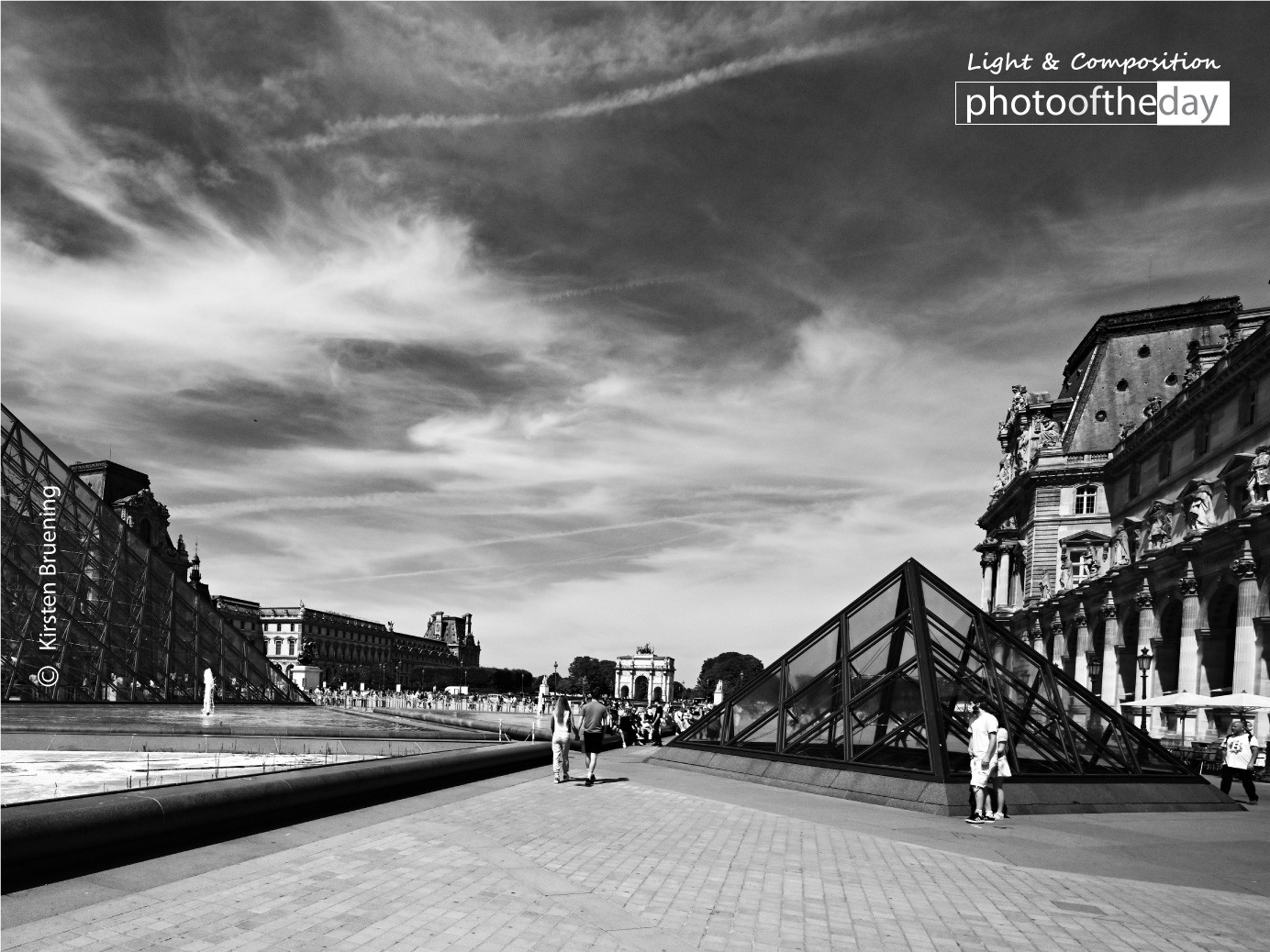
Captured at the heart of the historic Louvre museum in Paris, this photograph masterfully frames the iconic architecture against the expansive French sky. By utilizing an ultra-wide 14mm focal length, the photographer emphasizes the grandeur of the site's historic axis, drawing the viewer into the interplay between classical structure and modern glass geometry. The technical precision of the exposure highlights the clean lines and textures of the courtyard, showcasing a sophisticated eye for composition. This image stands out for its ability to transform a globally recognized landmark into a fresh, compelling visual narrative that balances scale with intimate detail.
Kirsten Bruening
Based near Cologne, Germany, Kirsten Bruening is a dedicated photographer whose creative journey began in childhood with the tactile exploration of analogue film. Following a fifteen-year hiatus, she returned to the craft with a renewed focus on the evocative power of light and shadow, particularly within nature, portraiture, and wildlife genres. Currently pursuing formal academic studies in photography, she continues to refine her technical expertise and artistic vision, aiming to capture the profound emotional beauty inherent in the world around her.
Resonance Score Breakdown
Transparency Note: The resonance score (10.1/20) is calculated based on social engagement metrics collected before the award announcement.
Expert Photography Reviews · 7
The Weight of Stone and Sky
There is a quiet conversation that happens between the earth and the heavens when we stop to listen. We build our monuments to reach upward, carving our intentions into stone, hoping to anchor ourselves against the passing of time.
Read the reflection →The Weight of Stone
We walk through history as if it were a hallway. We touch the walls. We expect them to hold us.
Read the reflection →Reviews & Comments
Share your thoughts about this award-winning photograph. Your reviews contribute to the community engagement score.
The sky’s pale, bruised violet, reminiscent of a Morandi still life, bleeds into the Louvre’s limestone with such aching tenderness that I’m momentarily breathless. It’s not merely architecture; it’s a symphony of cool, chalky greys and the sharp, metallic glint of glass, where one finds the light doesn’t just fall—it lingers, suspended in a delicate, atmospheric tension that feels like the very breath of Paris caught in a quiet, chromatic exhale.
It’s a technically sharp frame, but where are the people? I’ve spent my life looking for the pulse of a city in the eyes of those who walk its streets. Here, the Louvre is grand, but it’s empty of life. It feels like a stage set waiting for a play that never starts. I’m left craving a single human connection in all that glass and stone. It’s cold, and honestly, I’m feeling a bit lonely.
Paris is a city of tourists, yet here, the courtyard is hauntingly vacant. It’s a rare feat to catch the Louvre without a sea of selfie sticks. One suspects Bruening spent a shivering dawn or a dozen failed afternoons waiting for this silence. I’ve stood in that very spot, usually jostled by crowds, so I genuinely envy the stillness she’s captured here. She didn’t just find this shot; she clearly earned it through sheer, stubborn patience.
The Louvre’s stone pulls back. It leaves a vast, pale sky. I’ve stood in this courtyard, but I’ve never felt the air move like this. It’s quiet. The glass pyramid doesn’t shout; it breathes. Nothing here is accidental. The empty corner is not empty. It’s a pause. A rare, wide silence. I find myself holding my breath, waiting for the stone to settle. It’s a relief to see Paris stripped of its noise.
Of the thousands of Louvre shots I’ve reviewed, most are just postcards. What separates this is the 14mm distortion; it doesn’t just document the architecture, it forces the glass pyramid to lean into the sky, creating a tension that feels alive. It’s a bold gamble that pays off. I’ve stood in that courtyard a dozen times, but looking at this, I actually felt the dizzying scale of the place all over again. It’s earned its longevity.
At 14mm, the Z7’s sensor resolves the Louvre’s stone textures with startling fidelity. By stopping down to f/10, Bruening avoids the diffraction limit while keeping the focal plane deep enough to render the glass geometry razor-sharp. I’m genuinely moved by how the light refracts across those metallic edges; it’s a rare, clinical beauty. It’s not just a travel shot—it’s a precise calibration of light and architecture that forces the eye to see what’s usually ignored.
The Louvre’s glass geometry demands a dialogue with the void, yet here, the light feels strangely apologetic. It’s too bright, too eager to reveal, leaving no sanctuary for the eye to rest. I’ve walked these stones at dusk, where the shadows swallow the history whole, but this frame refuses that depth. It’s technically precise, sure, but it’s afraid of the dark. I find myself longing for a single, honest patch of black to anchor the soul.
Nice title!!! and the image is just perfect… some day I’ll go to Paris.