Flower of an Hour by Siew Bee Lim
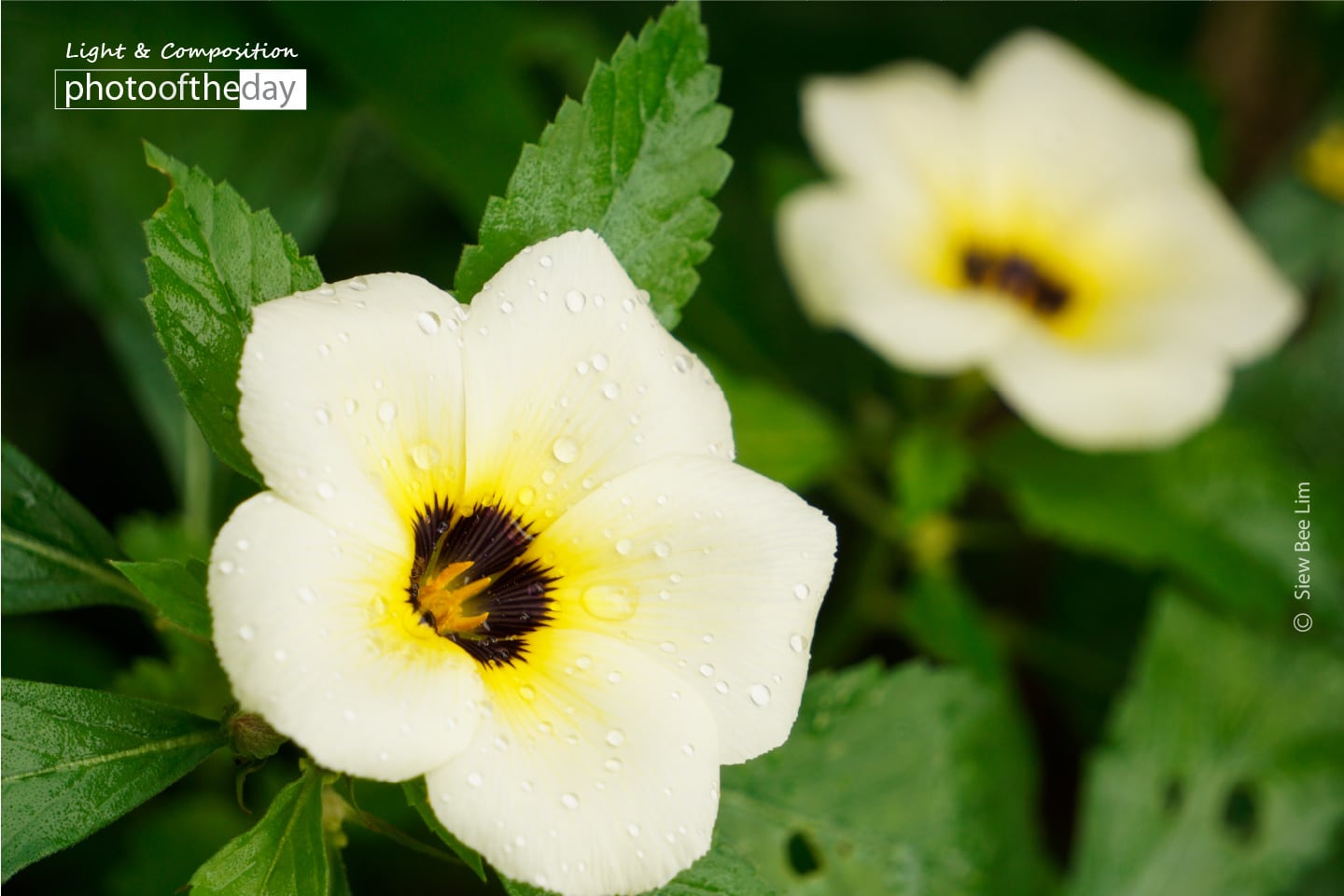
Captured in the quiet aftermath of a morning shower, this delicate study of Hibiscus trionum—the flower of an hour—showcases the ephemeral beauty of nature. The photographer utilized the soft, diffused light of a cloudy day to highlight the fresh textures and intricate details of the petals, avoiding the harshness of direct sunlight. This composition is award-worthy for its masterful control of tone and its ability to transform a simple neighborhood encounter into a serene, meditative portrait of botanical grace, demonstrating a keen eye for the subtle nuances of close-up photography.
Siew Bee Lim
Born in Singapore in 1965, Siew Bee Lim is a dedicated photographer who balances her professional background in programming with a growing passion for the visual arts. Though she initially explored photography as a hobby during her early career, she has recently committed to formalizing her skills through the Light & Composition platform. Drawing inspiration from her lifelong love of literature and Chinese painting, she seeks to bridge the gap between technical precision and artistic expression, viewing her current photographic journey as a meaningful evolution of her creative identity.
Resonance Score Breakdown
Transparency Note: The resonance score (11.8/20) is calculated based on social engagement metrics collected before the award announcement.
Expert Photography Reviews · 4
The Briefness of Being
There is a particular grace in things that do not intend to last. We spend so much of our lives building monuments, seeking permanence, and trying to hold onto the light as it shifts across the floor.
Read the reflection →The Weight of an Hour
We measure time in years, in seasons, in the slow retreat of the ice. But there is a smaller time, a time that exists in the margins of the day. It is the time it takes for a shadow to shift across a stone, or for a single breath to leave the lungs.
Read the reflection →Reviews & Comments
Share your thoughts about this award-winning photograph. Your reviews contribute to the community engagement score.
It’s tempting to dismiss botanical studies as mere echoes of Blossfeldt’s clinical precision, yet Lim’s Hibiscus trionum breathes with a different urgency. The diffused light softens the petals into a translucent, painterly depth that recalls the delicate silver-gelatin prints of Imogen Cunningham. I’m genuinely moved by how she captures the fleeting, fragile geometry of the bloom. It’s a quiet, meditative conversation with the ephemeral that feels entirely fresh, avoiding the tired tropes of typical macro photography.
Rain clings to the petals. It’s a heavy, quiet weight. I find myself holding my breath, afraid the vibration of my pulse might bruise the bloom. The background doesn’t exist. It’s just a soft, grey void. The flower occupies the center, yet it’s the surrounding nothingness that defines the form. Nothing here is accidental. The empty corner is not empty. It’s a pause. I’ve never seen a morning feel this still. It’s enough.
The frame’s geometry hinges on the central stamen, anchoring the chaotic sprawl of petals. It’s a disciplined exercise in spatial tension. The negative space doesn’t merely surround the subject; it dictates the rhythm of the composition. I’ve grown weary of botanical sentimentality, yet the structural rigour here demands respect. The tonal transition from the dark, saturated throat to the translucent edges creates a fulcrum that holds the entire picture plane in perfect, quiet equilibrium.
It’s a technically precise study, yet I’m left cold. Why do we insist on isolating the Hibiscus trionum from the urban sprawl of Singapore? By stripping away the context of the neighborhood, Lim turns a living organism into a sterile object of consumption. Does this botanical grace exist in a vacuum, or are we just ignoring the concrete it’s rooted in? I find this deliberate erasure of place unsettling. Whose gaze benefits from this sanitized, quiet beauty?