Mitras Hill by Joaquín Alonso Arellano Ramírez
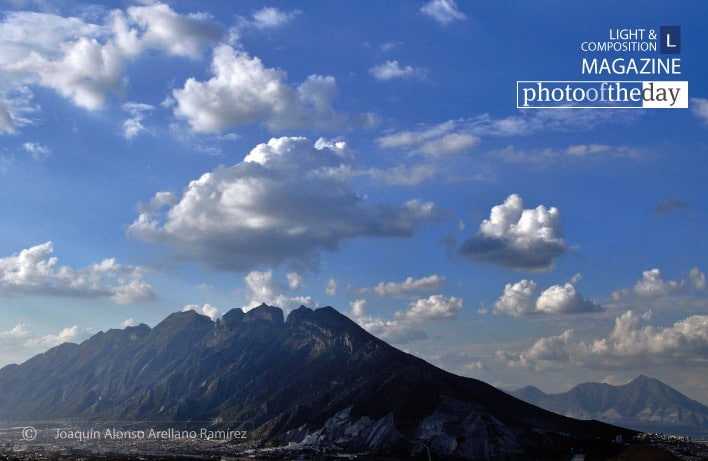
Captured during a demanding six-hour hike through the rugged terrain of Mitras Hill in Monterrey, this photograph showcases the breathtaking vistas found at an elevation of 1,700 meters. The photographer faced significant technical challenges, striving to balance exposure and color contrast in the harsh natural light without the assistance of filters or post-processing software. The resulting image is a testament to the photographer's persistence and keen eye, capturing the raw, expansive beauty of the landscape. Its award-worthy quality lies in the authentic representation of the climb and the successful navigation of difficult lighting conditions to preserve the scene's natural grandeur.
Joaquín Alonso Arellano Ramírez
Based in Monterrey, Nuevo Leon, Mexico, Joaquín Alonso Arellano Ramírez is a dedicated amateur photographer with a profound passion for nature and macro imagery. He frequently experiments with diverse technical approaches, constantly seeking to refine his craft and expand his artistic horizons. Whether exploring local landscapes or focusing on intricate macro details, he remains committed to the pursuit of learning and capturing the world through his Nikon equipment.
Resonance Score Breakdown
Transparency Note: The resonance score (13.1/20) is calculated based on social engagement metrics collected before the award announcement.
Expert Photography Reviews · 6
The Architecture of Breath
There is a specific kind of silence that only exists at the summit, where the air is thin enough to feel like a secret shared between the lungs and the sky.
Read the reflection →The Breath of Stone
The air at that height tastes of cold iron and dry, crushed limestone. It is a thin, sharp flavor that catches in the back of the throat, demanding that you pay attention to every inhale.
Read the reflection →Reviews & Comments
Share your thoughts about this award-winning photograph. Your reviews contribute to the community engagement score.
Six hours of climbing leaves a mark on the soul. He stood there, lungs burning at 1,700 meters, waiting for the light to settle over Monterrey. It’s a harsh, unforgiving brightness, yet he’s captured a quiet stillness in the rock. I feel a sudden, sharp ache in my own legs looking at this. He didn’t force the scene; he simply let the mountain reveal its own rugged, honest face. It’s a rare, humble kind of patience.
The horizon line here doesn’t just divide; it anchors the jagged geometry of Mitras Hill. The spatial tension between the foreground scree and the distant, hazy peaks creates a necessary, rigid hierarchy. It’s a disciplined frame. While the light is harsh, the composition holds its own against the exposure’s limitations. I’ve rarely seen such stark, unforgiving balance in a landscape. It’s cold, it’s precise, and frankly, it’s the only way to capture that altitude.
The climb ends. The air thins. I’m standing on the ridge of Mitras Hill, feeling the weight of the silence. It’s not just rock and light. It’s the space between the peaks. The frame doesn’t crowd the eye. It lets the horizon breathe. Nothing here is accidental. The empty corner is not empty. It’s a pause. I’ve spent hours looking at this, and I’m still waiting for the wind to shift. It’s enough.
Mitras Hill doesn’t merely exist; it looms. Ramírez captures the harsh Mexican sun, yet it’s the jagged, encroaching darkness in the crevices that truly commands my attention. I’ve spent hours staring at these shadows, feeling the cold, indifferent weight of the stone against my own skin. It’s a brutal, honest confrontation with terrain that refuses to be tamed. When light hits rock this violently, it doesn’t invite us in. It demands we acknowledge our own insignificance.
Most landscape entries I’ve reviewed this year rely on heavy post-processing to hide their failures. Joaquín didn’t have that luxury. By shooting at 1/4000sec, he forced the Nikon D5000 to resolve the harsh Monterrey light without filters. It’s a raw, honest climb. I felt my own lungs burning just looking at those jagged ridges. It’s not perfect, but it’s real. In thirty years, we won’t care about the gear; we’ll care that he actually stood there.
The ochre of the limestone, scorched by a relentless Mexican sun, bleeds into the bruised violet of the distant, hazy peaks, creating a chromatic tension that feels like a Morandi still life expanded to the scale of a mountain range. It’s a brutal, honest light that I find utterly intoxicating; one can almost taste the dry, metallic dust of Chipinque, where the shadows don’t merely fall, they carve the earth into something ancient and sublime.