The Round Pattern Window by Siew Bee Lim
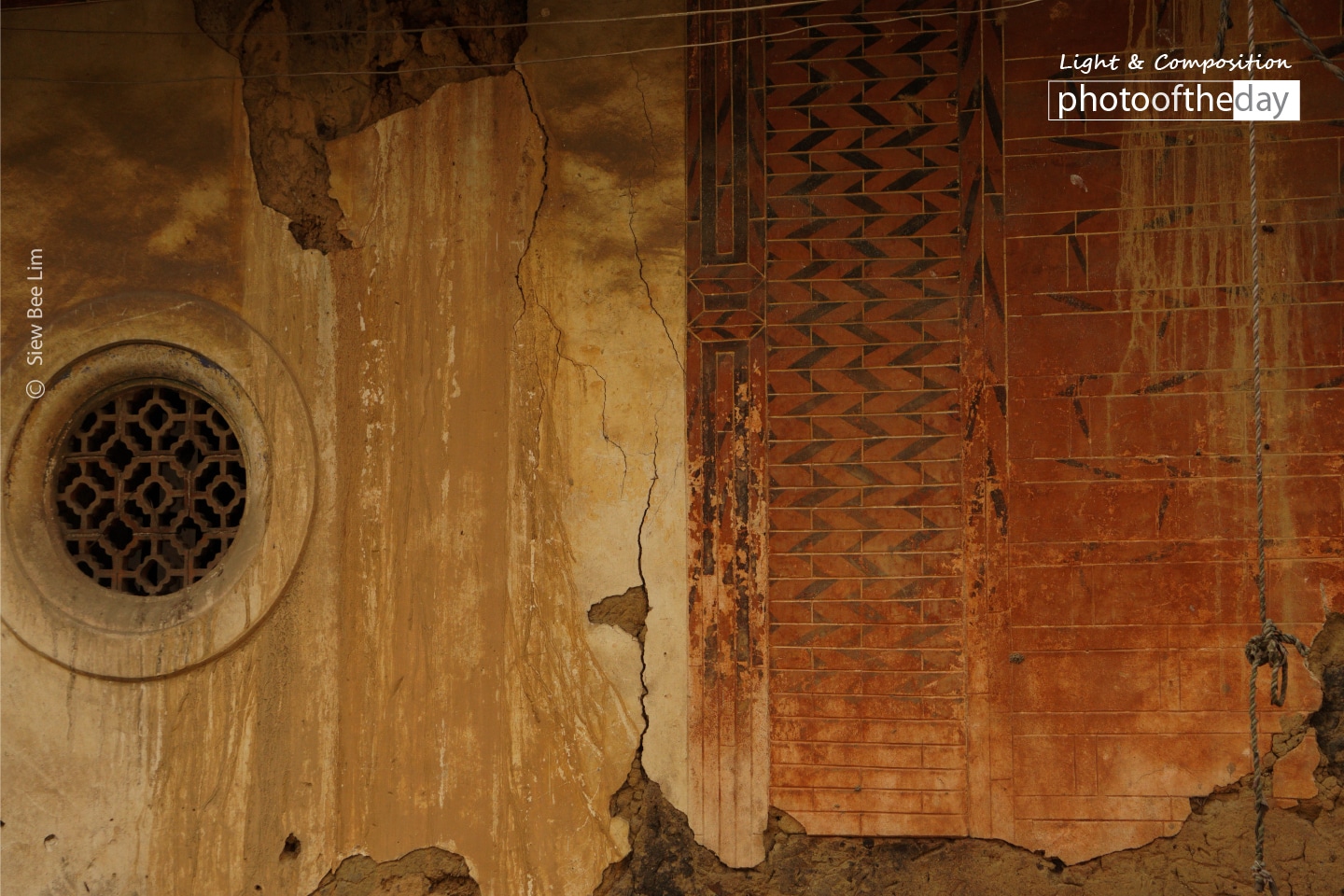
During a tour of Quanzhou, Fujian, the photographer discovered an old house constructed primarily of soil, featuring a striking round patterned window. Intrigued by the architectural details, she captured the unique geometry of the structure, which remains in active use with a protective layer of glass. The image highlights the distinctive red brick wall patterns characteristic of the local Quanzhou culture. This photograph is award-worthy for its keen eye for cultural heritage and the elegant way it frames traditional architectural elements against a rustic, historical backdrop, transforming a simple village scene into a compelling study of texture and form.
Siew Bee Lim
Born in Singapore in 1965, Siew Bee Lim is a dedicated photographer who balances her professional background as a programmer with a lifelong passion for the arts. Though she initially explored photography through early darkroom sessions, she has returned to the craft with a renewed commitment to formal education and artistic growth. Drawing inspiration from her appreciation for Chinese painting and a desire to refine her creative vision, she continues to develop her technical expertise and unique perspective through the Light & Composition platform.
Resonance Score Breakdown
Transparency Note: The resonance score (10.4/20) is calculated based on social engagement metrics collected before the award announcement.
Expert Photography Reviews · 3
Framing the Quiet
I remember sitting in a tea house in a small village outside of Chengdu, watching an old man trace the patterns of a wooden lattice with his thumb. He wasn't looking through the window at the street; he was looking at the way the light hit the dust motes caught in the frame.
Read the reflection →The Geometry of Silence
There is a specific, heavy stillness that descends when the light is filtered through a barrier, turning sharp edges into something softer, more deliberate. In the deep midwinter, when the sun is trapped behind a thick, milky veil of cloud, the world loses its shadows.
Read the reflection →Reviews & Comments
Share your thoughts about this award-winning photograph. Your reviews contribute to the community engagement score.
The red brick lattice doesn’t merely frame the world; it interrogates it. By trapping light within these geometric voids, the wall forces the sun to surrender its clarity to the encroaching dark. I’ve stared at this window until my eyes ached, feeling the weight of the soil pressing against the glass. It’s a haunting architecture of exclusion. When shadow occupies the pattern so completely, it’s no longer a wall—it’s a silence that refuses to be ignored.
The focal plane here is razor-thin, perfectly resolving the porous, granular texture of the Quanzhou soil against the glass’s subtle refractive index. I’m genuinely moved by how the lens captures the diffraction of light across those aged brick patterns; it’s a masterclass in micro-contrast. The bokeh, a function of a wide aperture, softens the surrounding history, letting the window’s geometry breathe. It’s rare to see such optical precision applied to something so beautifully, stubbornly rustic.
f/5.6 at 35mm, ISO 200. A standard focal length for a standard observation. The depth of field is adequate, but it doesn’t isolate the brickwork’s texture as sharply as I’d prefer. It’s technically competent, yet safe. I’ve seen enough of these windows to know they demand more contrast. Still, the alignment is precise. It’s a clean capture. I find myself wishing for a tighter aperture to really bite into those red clay edges.